
The Complete Home Emergency Kit Checklist (2026 Edition)
4 min read
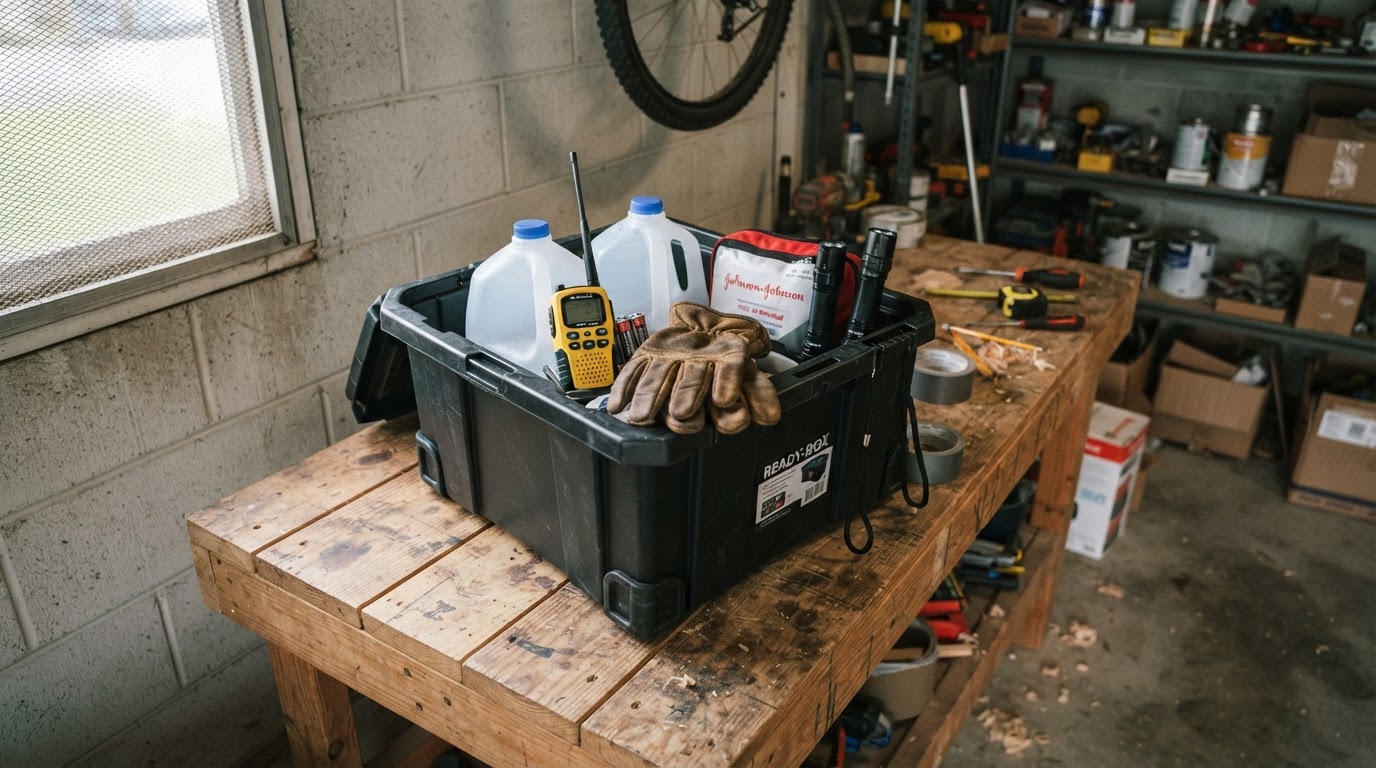
On this page
A Ready.gov-based home emergency kit you can finish in a weekend — then adjust for flood, wildfire, hurricane or winter, and actually maintain.
Whatever hazard tops your state page, the boring foundation is the same: a kit you can reach in the dark. Ready.gov and FEMA have published this list for years. Most households still do not have one. This page is the version you can finish on a Saturday, then tune to flood, fire, wind, or ice.
This is not a shopping-influencer haul and not a substitute for an evacuation order. If local officials say leave, you leave. The kit is what you grab on the way out — or what you live on if you are told to shelter in place.
The Ready.gov core (do this first)
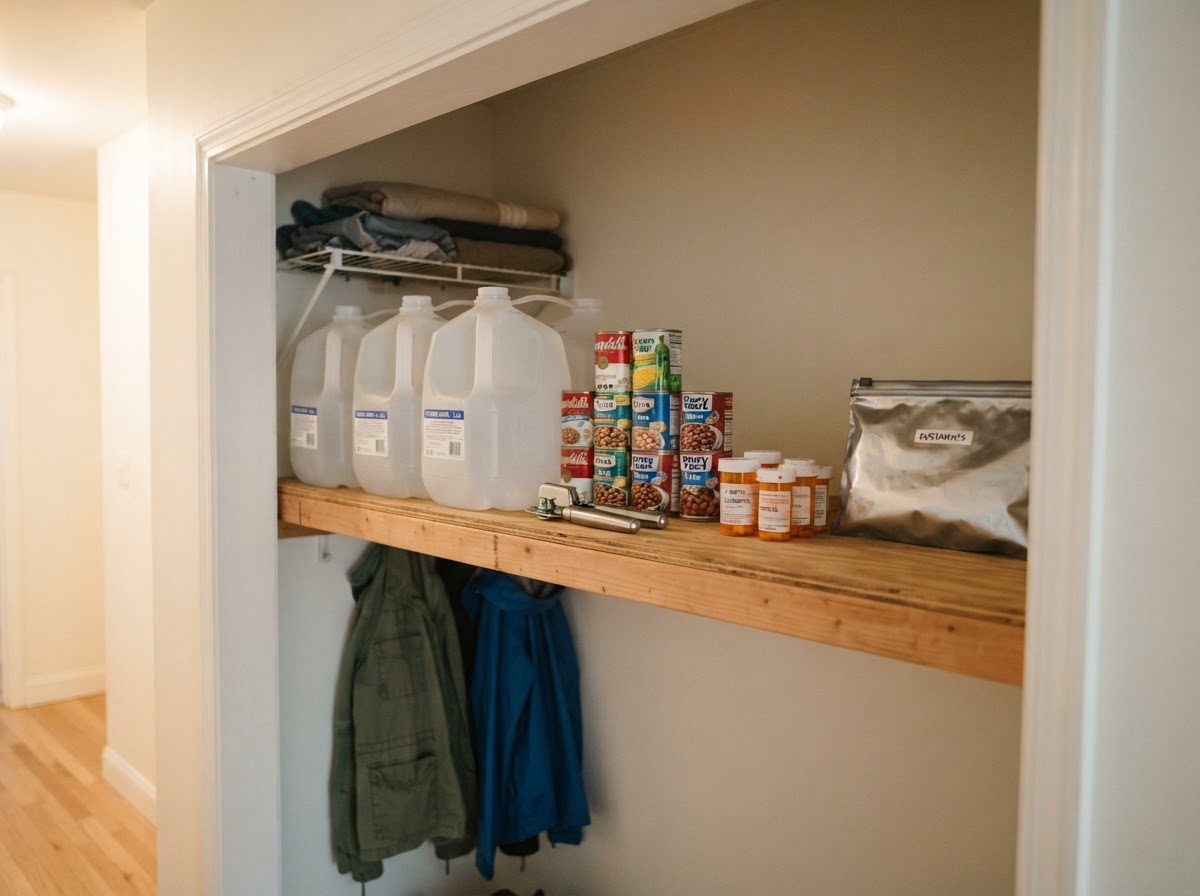
- Water: one gallon per person per day. Ready.gov’s baseline is at least three days. In hurricane country, think closer to two weeks if you can store it.
- Non-perishable food for the same period, plus a manual can opener. Skip anything that needs a full fridge after the power dies.
- Flashlights and extra batteries. Skip decorative candles as your plan — they start house fires after storms.
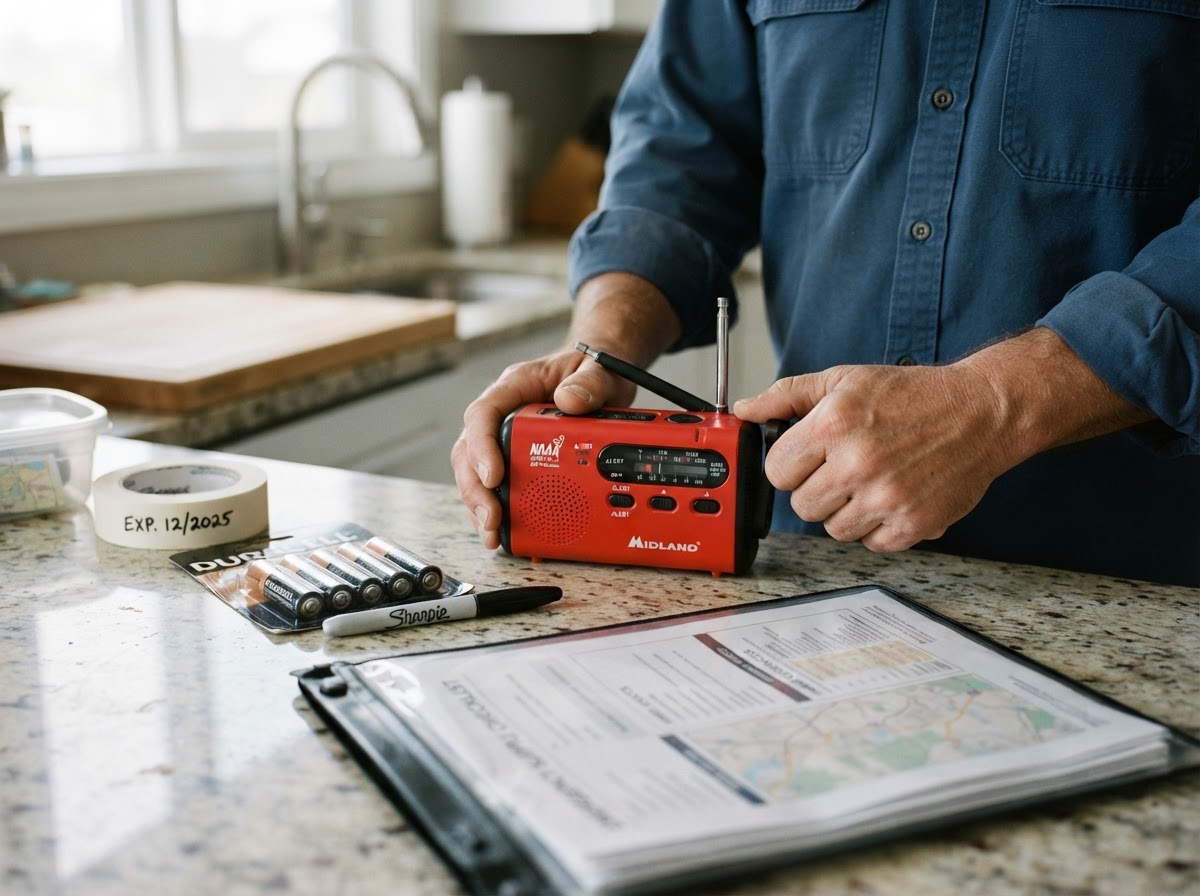
- A battery-powered or hand-crank NOAA weather radio. Cell towers fail. This does not.
- A first-aid kit and at least a week of prescription medications, plus copies of the prescriptions.
- Phone chargers and a charged power bank. One cable you have already tested on your actual phone.
- Copies of insurance policies, IDs, and bank records in a waterproof pouch. Photograph the same stack and store the photos off-site or in the cloud.
- Cash in small bills. Card networks and ATMs are not a plan during a multi-day outage.
If you only do one extra thing this weekend, put the documents and the medications in the pouch. Food you can buy the day before a named storm. A replacement birth certificate you cannot.
Adjust the kit to the hazard that actually hits your house
Open your state profile, note the two highest bars, and add only what those bars demand.
Hurricane and flood. Waterproof document bags, tarps, work gloves, and whatever your local guidance says for window protection. Keep the kit on an upper floor if you live in a surge or river floodplain — a plastic bin in the basement is how people lose the kit and the house in the same hour. See FloodSmart and your county evacuation zone, not a national blog’s packing list.
Wildfire. A true grab-and-go bag by the door: N95s or better for smoke, a change of clothes, pet carriers, and the document pouch. Defensible space is a different job (clear the 0–5 foot zone). The bag is for the afternoon the sheriff says you have twenty minutes.
Winter storm and extreme cold. Blankets, warm layers, a way to heat one room that will not kill you with carbon monoxide, and a plan to drip faucets. NOAA and CDC winter guidance is blunt about generators and grills: outdoors, never in the garage.
Earthquake. The kit still matters, but so does what is not in a bag: a strapped water heater, a clear path to an interior wall, and shoes under the bed. USGS and Ready.gov earthquake pages are the source, not a movie.
Where to keep it, and how not to forget it
One kit at home, in the room you would actually leave through. A thinner duplicate in the car trunk if you commute. A third at work only if you can carry it. Label the water with the fill date. Set a phone reminder every six months — when you change clocks, or on the first 90°F day — to rotate food, test the radio, and replace expired meds.
A kit assembled in 2019 and never opened is a box of expired granola and a dead radio. That is not preparedness. That is clutter.
Questions we get
Is three days really enough?
Ready.gov’s baseline is three days because that is what most households will actually store. After a major hurricane, some neighborhoods wait longer for power and roads. If you have the space, two weeks of water and calories is the grown-up version — especially on the Gulf and Atlantic coasts.
Do I need a generator in the kit?
No. A generator is a separate, dangerous appliance. If you buy one, follow manufacturer and CDC guidance: outdoors, dry, far from windows. Carbon monoxide kills people who “just ran it in the garage for an hour.”
What about pets?
Food, bowls, leashes, carriers, and vaccination records go in the same grab pile. Hotels and shelters fill. Have a backup place that takes animals written down on paper.
Official sources
This is general preparedness information, not an emergency order and not insurance advice. Print the checklist, finish it, and check your printable kit list against the hazards on your state page.
About our guidance
Our guides are grounded in publicly available information from official sources such as FEMA, NOAA, USGS and Ready.gov. Information is general in nature — always verify details for your specific property and policy with official sources and your insurer.
Related guides
 InsuranceLender-Placed Flood Insurance: The Expensive Backup If Your Policy LapsesYour lender can force-place flood insurance if your policy lapses — and bill you for it, usually at a higher price. Here is how…Oct 15, 2026Read guide →
 InsuranceWhat Happens to Your NFIP Policy If Congress Lets the Program LapseCongress extended the NFIP through December 11, 2026. If the program lapses, existing policies stay in force and claims get paid…Oct 15, 2026Read guide →
 InsuranceExcess Flood Insurance: Coverage Above NFIP's $250,000 LimitThe NFIP caps flood coverage at $250,000 for the building and $100,000 for contents. If your home would cost more to rebuild,…Oct 15, 2026Read guide →