
What Homeowners Insurance Actually Covers in a Natural Disaster
4 min read
On this page
A standard HO-3 usually covers wind and fire — and usually excludes flood and earthquake. Here is the plain-English split, plus the questions to ask before the storm.
The most expensive hour in disaster recovery is the one where you learn, after the water is in the house, that the policy never covered that peril. This page is a briefing, not a policy. Read your declarations page. Then call your agent with the questions at the bottom. Nothing here is insurance or legal advice.
What a standard HO-3 usually covers
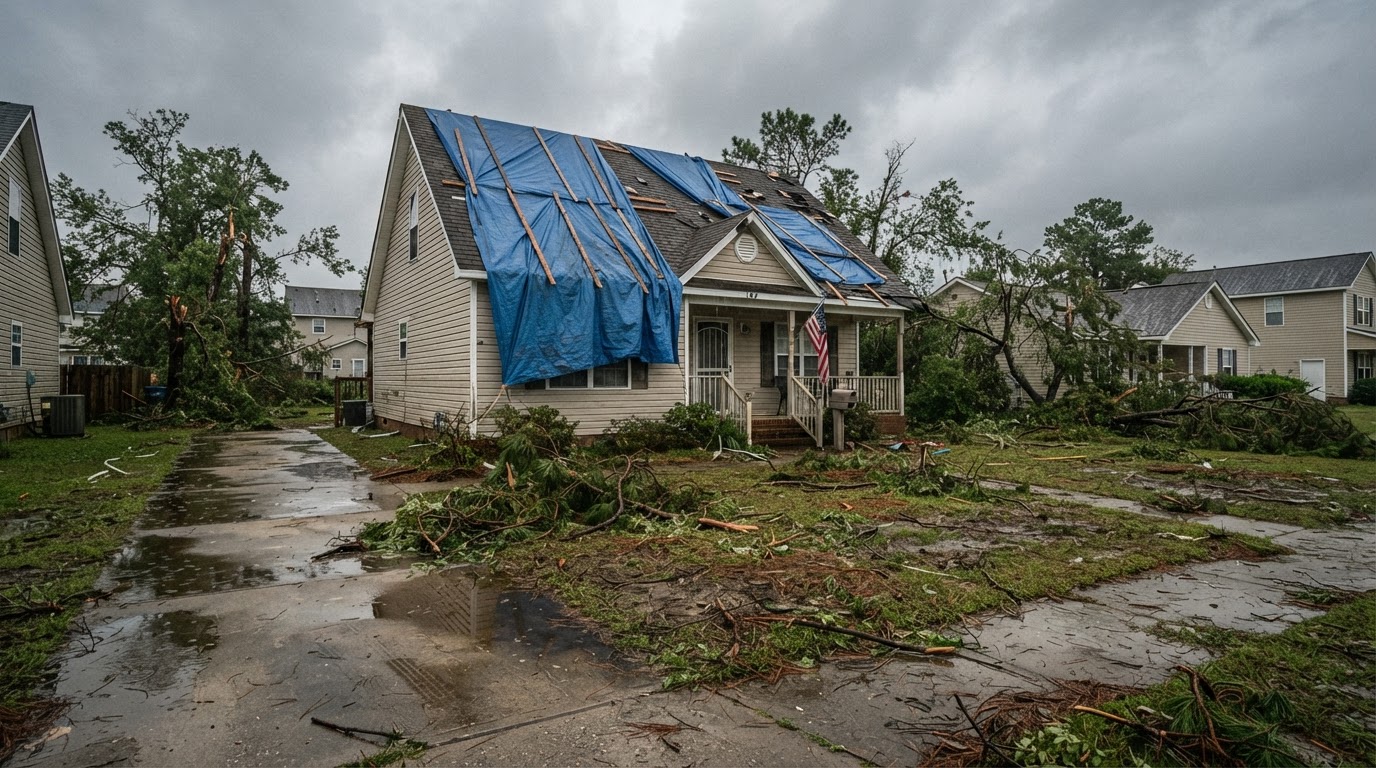
Most U.S. homeowners policies sold as HO-3 form coverage treat the dwelling as “open perils” with a list of exclusions. In practice, that usually includes wind from tornadoes, hurricanes, and severe thunderstorms; fire, including many wildfires; hail; lightning; and the weight of ice and snow. Those are the events that generate the claims adjusters see every spring in the Plains and every autumn on the Gulf.
Details still bite. Coastal and some inland wind policies carry a separate hurricane or named-storm deductible — often 1–5% of the dwelling limit, not a flat $1,000. A 2% deductible on a $400,000 Coverage A limit is $8,000 out of pocket before the insurer owes a dollar for wind. Ask whether that deductible is triggered by a named storm, by a wind speed, or by a county emergency order. The answer is on the form, not in a blog.
What is almost never on that policy

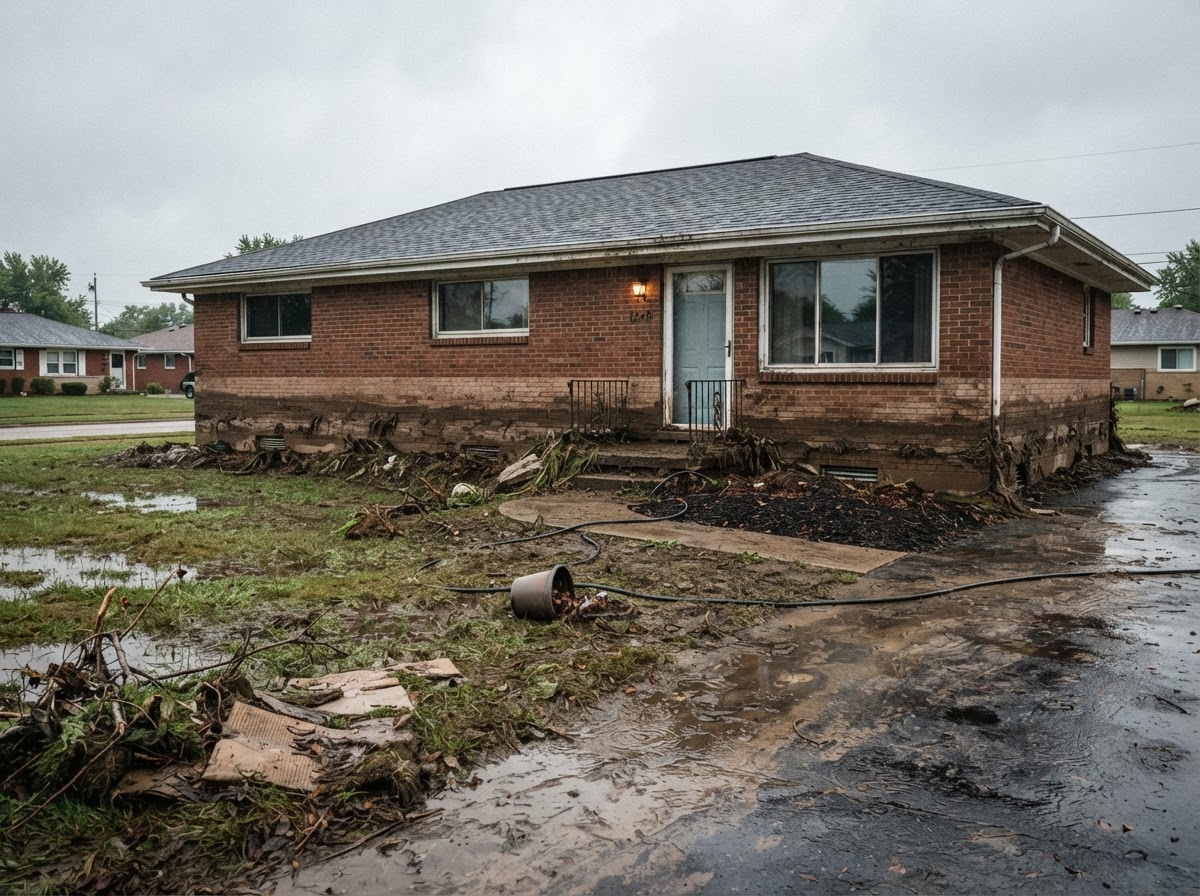
Flood. Surface water, storm surge, river overflow, and “I never flooded before” backyard inundation are excluded. You buy a separate policy through the National Flood Insurance Program (FloodSmart / FEMA) or a private flood insurer. NFIP policies typically carry a 30-day waiting period. Buying on the day the cone includes your county is how people end up uninsured. Check the FEMA flood map for the address, then decide. Zone X is not a promise.
Earthquake. Ground movement is excluded. California’s CEA market is the famous one; USGS maps show meaningful shaking well outside California — the New Madrid zone, the Pacific Northwest, Alaska, Utah, parts of South Carolina. Coverage is a separate policy or endorsement. A cracked chimney after a small event is a bad time to learn that.
Landslide, mudflow, and “earth movement.” These often sit in a coverage gap: excluded from HO-3, from flood, and from earthquake. Some households need a difference-in-conditions or other specialty form. If your lot is a steep burn scar above a canyon, say that out loud to a specialist — not only to the captive agent who sold the auto bundle.
If you only do one thing
Open the declarations page and highlight three lines: dwelling limit (rebuild cost, not market value), the wind/hurricane deductible, and whether flood or earthquake is listed at all. Then open FloodSmart and the FEMA map for the same address. That is a one-hour job. It is the one that prevents the expensive surprise.
Questions to take to your agent
- Is my wind or hurricane deductible a flat dollar amount or a percentage of Coverage A?
- Is the dwelling limit enough to rebuild at today’s labor and materials — including ordinance-or-law / code upgrades?
- Is water backup (sump, sewer) included, or an endorsement?
- If private insurers will not write me, does my state FAIR plan or wind pool apply, and what does it exclude?
- For my two highest hazards on the state profile, which peril is excluded and who sells the extra policy?
State insurance departments — not this website — regulate what must be offered where you live. If an insurer non-renews after a wildfire season, the department’s consumer page is the next click, not a Facebook group.
Questions we get
Does homeowners insurance cover a hurricane?
Wind, often yes, subject to the hurricane deductible. Flood from the same storm, usually no — that is NFIP or private flood. One storm, two policies. See our hurricane-coverage guides and FloodSmart.
I am in Zone X. Can I skip flood insurance?
You can skip it. You should not assume you are safe. FEMA and FloodSmart are explicit that a large share of claims come from outside high-risk zones. Lenders in AE/VE zones will force-place coverage. In X, the choice is yours and the waiting period still applies.
Is this a recommendation to buy a specific policy?
No. HomeRiskMap does not sell insurance and is not affiliated with FEMA or any carrier. We explain how official programs are usually structured so you know which questions to ask.
Official sources
- FloodSmart / National Flood Insurance Program
- FEMA — flood insurance
- FEMA Flood Map Service Center
- Ready.gov
- USGS (earthquake and landslide context)
Check the hazard bars for your state, then read the policy you already pay for. The gap is almost always flood or earthquake. Close it before the season, not after the claim.
If your agent cannot explain the wind deductible or the flood exclusion in one minute, ask for the form language in writing. Keep that email with the rest of the claim folder. After a disaster you will not remember a phone call.
About our guidance
Our guides are grounded in publicly available information from official sources such as FEMA, NOAA, USGS and Ready.gov. Information is general in nature — always verify details for your specific property and policy with official sources and your insurer.
Related guides
 InsuranceLender-Placed Flood Insurance: The Expensive Backup If Your Policy LapsesYour lender can force-place flood insurance if your policy lapses — and bill you for it, usually at a higher price. Here is how…Oct 15, 2026Read guide →
 InsuranceWhat Happens to Your NFIP Policy If Congress Lets the Program LapseCongress extended the NFIP through December 11, 2026. If the program lapses, existing policies stay in force and claims get paid…Oct 15, 2026Read guide →
 InsuranceExcess Flood Insurance: Coverage Above NFIP's $250,000 LimitThe NFIP caps flood coverage at $250,000 for the building and $100,000 for contents. If your home would cost more to rebuild,…Oct 15, 2026Read guide →