
How Much Does Flood Insurance Cost? Average Premiums Explained
4 min read
On this page
- Understanding Flood Insurance Costs
- Key Factors That Affect Flood Insurance Premiums
- Average Flood Insurance Premiums by Flood Zone
- How Deductibles Affect Your Premium
- NFIP vs. Private Flood Insurance
- How to Get a Flood Insurance Quote
- Discounts on Flood Insurance
- Mandatory vs. Voluntary Flood Insurance
- Real-World Example: A Typical Coastal Home
- Actionable Conclusion
Flood insurance costs vary by flood zone, home value, and coverage levels. Learn about average premiums and how FEMA's NFIP sets rates to protect your home.
Understanding Flood Insurance Costs
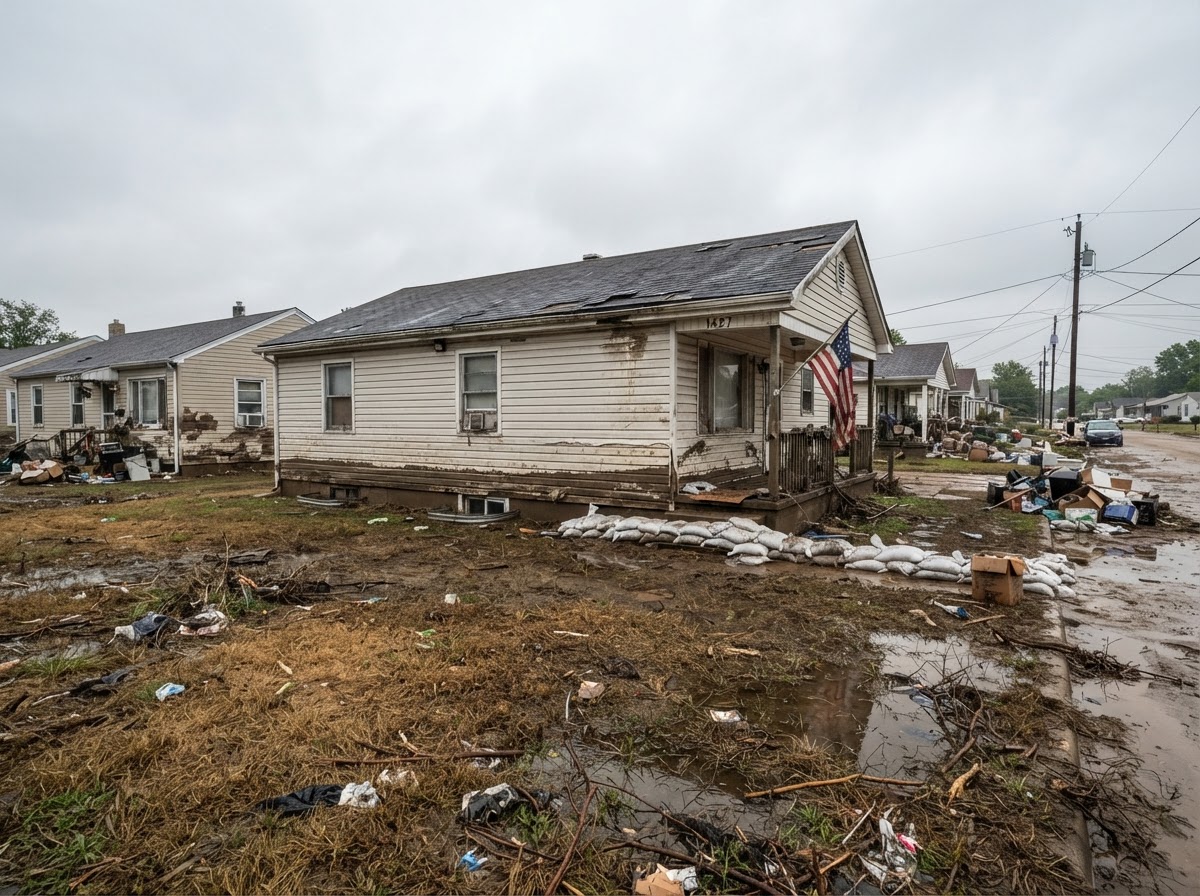
Flood insurance is a critical financial safeguard for homeowners in flood-prone areas. The cost of a policy depends on several factors, including your property's flood risk, the amount of coverage you choose, and the type of policy. According to the Federal Emergency Management Agency (FEMA), the average annual premium for a National Flood Insurance Program (NFIP) policy is about $700, but this can vary significantly—from under $400 to over $5,000—based on your specific circumstances.
Key Factors That Affect Flood Insurance Premiums
Your flood insurance premium is determined by your property's flood zone, base flood elevation, building characteristics, and the coverage limits you select. Here are the primary factors:
- Flood Zone: Properties in high-risk zones (A and V) have higher premiums than those in low- or moderate-risk zones (B, C, X). The higher the risk of flooding, the more you pay.
- Building Details: The age, structure, and elevation of your home matter. Elevated homes on pilings or those built to meet community floodplain management standards often pay less. Your home's first floor elevation relative to the Base Flood Elevation (BFE) is a key factor.
- Coverage Limits: The NFIP offers up to $250,000 in building coverage and $100,000 in contents coverage. Selecting higher deductibles can lower your premium.
- Location: Proximity to water bodies, flood protection measures (levees, dams), and historical flood data influence rates.
Average Flood Insurance Premiums by Flood Zone
While actual premiums vary, FEMA provides estimates for different risk categories:
- Low-to-Moderate Risk Zones (B, C, X): Policies in these areas may cost as little as $400–$600 per year. Preferred Risk Policies (PRP) are available for properties in lower-risk zones at reduced rates.
- High-Risk Zones (A, V): Expect premiums ranging from $700 to $2,000 or more. Homes in V zones (coastal high-hazard) often see the highest rates, exceeding $3,000 annually in some cases.
- Rated Zones (D): These are areas of undetermined risk, and premiums vary based on available data.
Note that these are rough averages. Your actual quote will depend on detailed factors.
How Deductibles Affect Your Premium
Choosing a higher deductible can reduce your annual premium. The NFIP offers deductibles from $1,000 to $10,000. For example, increasing a deductible from $1,000 to $5,000 might lower your premium by 20-30%. However, ensure you can cover the deductible out-of-pocket if a flood occurs. Learn more about deductible options on FEMA's FloodSmart website.
NFIP vs. Private Flood Insurance
While the NFIP is the most common source of flood insurance, private insurers also offer policies. Private insurance may provide higher coverage limits (up to $500,000 or more for buildings) and can sometimes be cheaper for low-risk properties. However, private policies are not subsidized by the government, so rates can be volatile. Always compare quotes. FEMA maintains a list of Write-Your-Own (WYO) companies that issue NFIP policies.
How to Get a Flood Insurance Quote
To get an accurate premium estimate, you need to:
- Determine your property's flood zone using FEMA's Flood Map Service Center. Enter your address to see the current flood hazard map.
- Contact an insurance agent who participates in the NFIP. You can find one via FloodSmart's agent locator.
- Provide details about your home: square footage, number of floors, foundation type, and the lowest floor elevation.
Discounts on Flood Insurance
You may qualify for discounts if your community participates in the Community Rating System (CRS). Under CRS, communities implement floodplain management activities that reduce flood risk, resulting in premium discounts of 5% to 45% for policyholders. Check with your local floodplain manager to see if your community is enrolled. Additionally, installing flood openings, elevating utilities, and obtaining an Elevation Certificate can lower your rate.
Mandatory vs. Voluntary Flood Insurance
If your property is in a high-risk flood zone (A or V) and you have a federally backed mortgage, your lender will require you to purchase flood insurance. For others, coverage is voluntary. However, even areas with "low" flood risk can experience flooding; about 25% of NFIP claims come from zones outside high-risk areas. Consider purchasing a Preferred Risk Policy for as little as $400 per year to protect your investment.
Real-World Example: A Typical Coastal Home
Imagine a two-story, single-family home in a Gulf Coast V zone, valued at $300,000, with a first-floor elevation at the BFE. Building coverage of $250,000 and contents of $100,000 with a $2,000 deductible might result in an annual premium around $2,400. By elevating the home 2 feet above BFE, the premium could drop to $1,600. Using a $5,000 deductible could further reduce it to $1,200.
Actionable Conclusion
Flood insurance premiums are highly individualized, but understanding the factors can help you manage costs. Start by checking your flood zone on the FEMA Map Service Center, then get a quote from an NFIP agent. Evaluate deductibles and consider private options. If you live in a CRS community, inquire about discounts. For most homeowners, flood insurance is an affordable way to avoid catastrophic financial loss. Don't wait until a storm is forecast—purchase a policy before the 30-day waiting period expires.
About our guidance
Our guides are grounded in publicly available information from official sources such as FEMA, NOAA, USGS and Ready.gov. Information is general in nature — always verify details for your specific property and policy with official sources and your insurer.
Related guides
 InsuranceLender-Placed Flood Insurance: The Expensive Backup If Your Policy LapsesYour lender can force-place flood insurance if your policy lapses — and bill you for it, usually at a higher price. Here is how…Oct 15, 2026Read guide →
 InsuranceWhat Happens to Your NFIP Policy If Congress Lets the Program LapseCongress extended the NFIP through December 11, 2026. If the program lapses, existing policies stay in force and claims get paid…Oct 15, 2026Read guide →
 InsuranceExcess Flood Insurance: Coverage Above NFIP's $250,000 LimitThe NFIP caps flood coverage at $250,000 for the building and $100,000 for contents. If your home would cost more to rebuild,…Oct 15, 2026Read guide →