
How to Read a FEMA Flood Map for Your Address
4 min read
On this page
- Why Reading a FEMA Flood Map Matters
- Step 1: Find Your Official Flood Map
- Step 2: Understand the Map Legend and Colors
- Step 3: Identify Your Flood Zone and BFE
- Step 4: Use the Map Tools to Measure Distance and Elevation
- Step 5: What the Results Mean for You
- Additional Tips for Accurate Interpretation
- Conclusion
Learn how to use FEMA's Flood Map Service Center to find and interpret flood risk for your exact address, including flood zones, base flood elevations, and what they mean for your insurance requirements.
Why Reading a FEMA Flood Map Matters
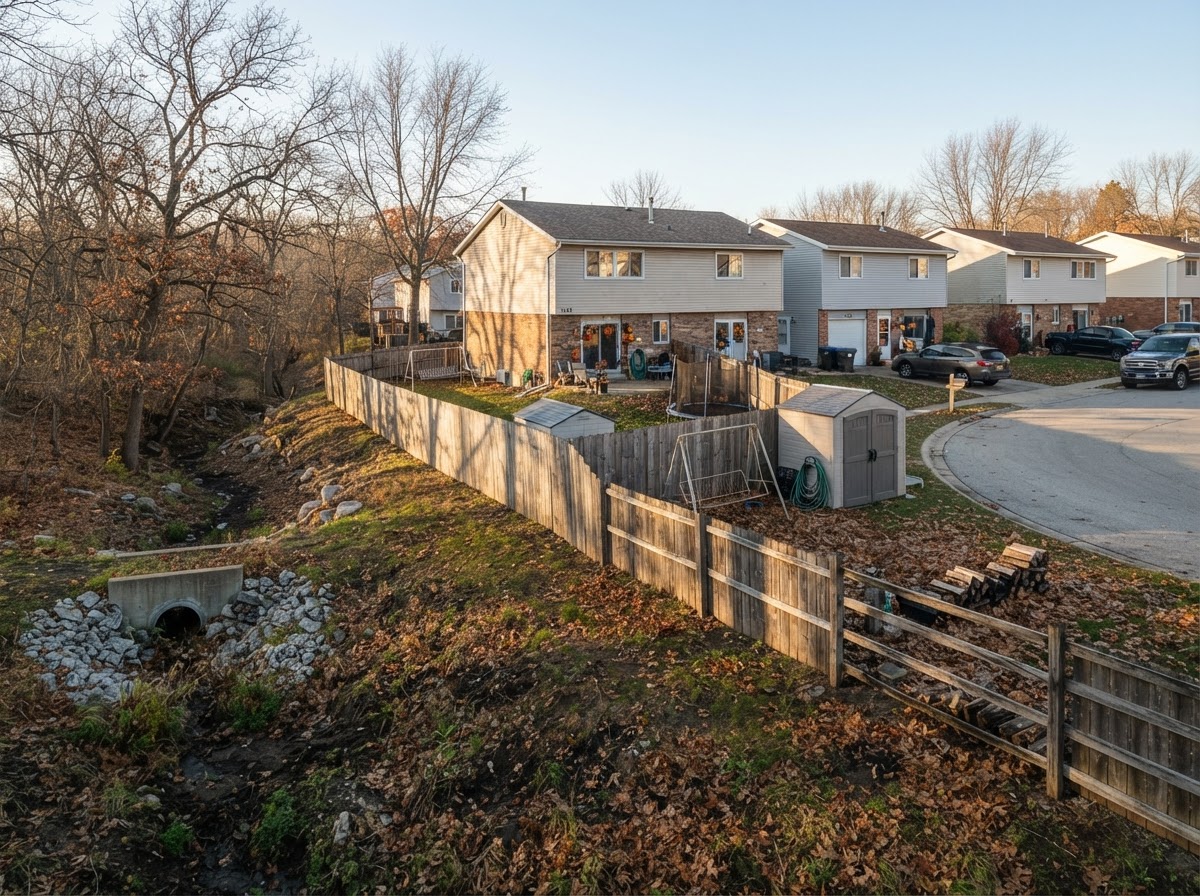
Understanding your property's flood risk is essential for protecting your home and finances. FEMA flood maps (also called Flood Insurance Rate Maps or FIRMs) show the likelihood of flooding in your area. These maps determine whether you are in a high-risk zone, which can affect your flood insurance requirements and premiums. By learning to read the map for your exact address, you can make informed decisions about mitigation and insurance.
Step 1: Find Your Official Flood Map
Go to FEMA's Flood Map Service Center (MSC). Enter your address in the search bar. The interactive map will zoom to your location. You can toggle between the current FIRM and any preliminary maps (if newer versions are under review). Ensure you are viewing the correct map panel; the panel number appears in the map legend.
Step 2: Understand the Map Legend and Colors
The legend explains the flood zones and base flood elevations. Key elements to look for:
- Special Flood Hazard Area (SFHA): High-risk zones, usually shaded in blue or orange. These start with the letter A or V.
- Zone A: Approximate flood zone – no detailed elevation analysis. Flood depths vary.
- Zone AE: Detailed flood zone with base flood elevation (BFE) provided.
- Zone V: High-risk coastal zone with wave action (found along coasts and the Great Lakes).
- Zone X (shaded): Moderate flood risk – area with 0.2% annual flood chance (500-year flood).
- Zone X (unshaded): Minimal flood risk – outside SFHA.
The legend also shows roads, waterways, and reference markers. Look for the "Effective Date" to ensure you’re using the current map.
Step 3: Identify Your Flood Zone and BFE
Once you locate your property, identify the flood zone(s) that cover it. If your home is in Zone AE, V, or A (with BFE shown), note the Base Flood Elevation – the height floodwaters are expected to reach during a 1% annual chance flood (100-year flood). This number is usually in feet relative to mean sea level (e.g., BFE 10'). Your property's elevation (found on construction drawings or a survey) should be above the BFE to avoid flooding. If you're in Zone A without BFE, talk to a surveyor or check nearby BFEs.
Step 4: Use the Map Tools to Measure Distance and Elevation
The MSC map has tools to measure distances and query elevation data. Click the "Measurement" toolbar to draw a line to a nearby water source or to see the distance to a floodway boundary. Use the "Identify" button to click on a zone and get more details. For elevation, you can download the FIRMette (a printable version of your map panel) which includes a cross-section showing BFE and ground elevations.
Step 5: What the Results Mean for You
If your property lies within an SFHA (zones A, AE, A1-30, V, VE, V1-30), your lender will likely require flood insurance as a condition of your mortgage. Even if not required, Ready.gov strongly recommends flood insurance for all homeowners. Outside the SFHA, you may still obtain lower-cost Preferred Risk Policies. Always check the effective date and note that flood maps change over time – check for Letters of Map Change (LOMC) if you believe your map is incorrect.
Additional Tips for Accurate Interpretation
- Print or save your FIRMette: Go to "Print" in the MSC to create a FIRMette – a custom map panel with your property outlined. Keep this for your records.
- Check both effective and preliminary maps: If a new map is pending, your zone may change. See FEMA's preliminary maps page for details.
- Consult a professional: For elevation certificate needs, contact a licensed land surveyor or engineer. FEMA's Risk Rating 2.0 now incorporates additional factors beyond just the zone.
- Know local floodplain regulations: Your local community may adopt stricter standards. Check with your county's floodplain manager for building requirements.
Conclusion
Reading a FEMA flood map is a straightforward process that empowers you to understand your home's flood risk. Use the Flood Map Service Center to find your map, interpret the zones and BFEs, and take appropriate action – whether that's getting an elevation certificate, purchasing flood insurance, or elevating your home. For more guidance, visit FEMA's flood map guidance and Ready.gov's flood preparedness page.
About our guidance
Our guides are grounded in publicly available information from official sources such as FEMA, NOAA, USGS and Ready.gov. Information is general in nature — always verify details for your specific property and policy with official sources and your insurer.
Keep exploring
Related guides
 InsuranceExcess Flood Insurance: Coverage Above NFIP's $250,000 LimitThe NFIP caps flood coverage at $250,000 for the building and $100,000 for contents. If your home would cost more to rebuild,…Oct 15, 2026Read guide →
 How Elevation Certificates Lower Your Flood Insurance PremiumLearn how an elevation certificate can save you hundreds on flood insurance by accurately showing your home's flood risk. This…Jun 21, 2026Read guide →
 Flooded While Inside: Your Survival GuideIf your home floods while you're inside, every second counts. Learn the life-saving steps from FEMA, the CDC, and Ready.gov to…Jun 21, 2026Read guide →