
How to Read Your Homeowners Insurance Declarations Page
5 min read

On this page
Your declarations page is the summary of your homeowners insurance policy. Learn what each section means and how to spot coverage gaps, especially for natural disasters.
What Is a Declarations Page?
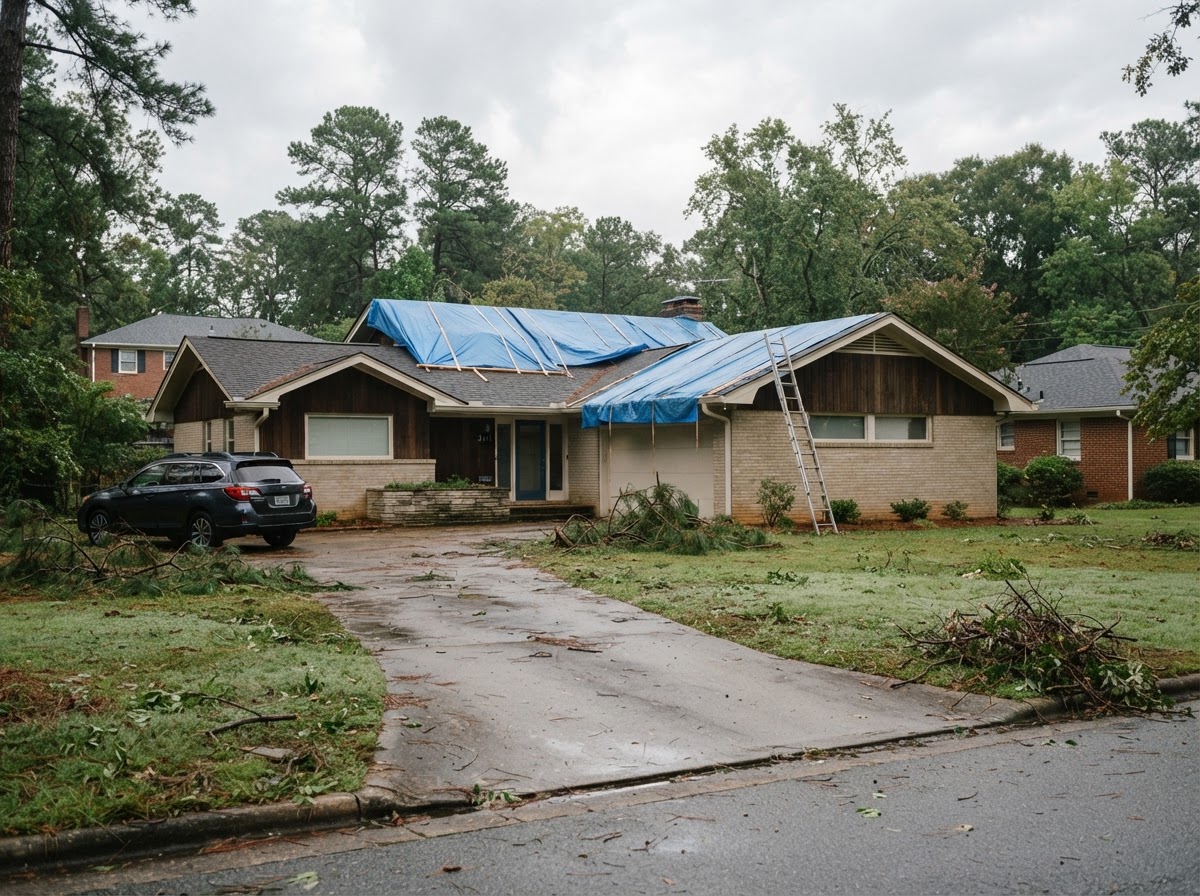
Your homeowners insurance declarations page (often called the “dec page”) is the first page of your policy. It summarizes your coverage, limits, deductibles, and premiums. Think of it as the “cheat sheet” for your insurance. Knowing how to read it helps you understand what you're protected against – and what you're not.
This guide breaks down each key section, using terms defined by the National Association of Insurance Commissioners and guidance from FEMA and Ready.gov.
Policy Period

The policy period shows the effective and expiration dates (e.g., January 1, 2025 to January 1, 2026). Your coverage only applies to losses that occur during this period. Mark your calendar two months before renewal to shop around and check for changes.
Named Insured and Property Address
This section lists the policyholder’s name and the insured property’s address. Verify that the address matches your home exactly. If you have a secondary residence or rental property, ensure the correct property is listed.
Coverage Limits
The declarations page breaks coverage into several categories, each with a dollar limit. These limits are the maximum your insurer will pay for a covered loss.
Coverage A – Dwelling
This covers the structure of your home (walls, roof, foundation). It should be enough to rebuild your home at current construction costs, not your home’s market value. The FEMA Building Science Branch recommends insuring for 100% of replacement cost. If you live in a flood-prone area, remember that standard homeowners policies exclude flood damage; you need separate NFIP or private flood insurance.
Coverage B – Other Structures
This applies to detached structures like garages, sheds, fences, or guest houses. The limit is usually a percentage of Coverage A (e.g., 10%). Ask your agent if this is enough to cover your backyard shed or fence.
Coverage C – Personal Property
This covers belongings such as furniture, electronics, and clothing. Policies often use actual cash value (depreciated) or replacement cost coverage. Replacement cost pays for new items of like kind and quality, while actual cash value subtracts depreciation. The Ready.gov guide suggests creating a home inventory to ensure your limit is adequate.
Coverage D – Loss of Use
If your home is uninhabitable due to a covered loss, this pays for additional living expenses (hotel, meals). The limit is typically a percentage of Coverage A. After a wildfire or hurricane, you might need this for weeks or months. FEMA’s DisasterAssistance.gov notes that insurance is the primary source – so review this number.
Liability and Medical Payments
Coverage E – Personal Liability
This protects you if a visitor is injured on your property or if you accidentally damage someone else’s property. Standard limits are $100,000 to $300,000. Consider an umbrella policy for extra protection, especially if you have assets.
Coverage F – Medical Payments to Others
This pays minor medical bills for guests injured on your property, regardless of fault. Typical limits are $1,000 to $5,000. It’s not a substitute for health insurance, but it can help prevent lawsuits.
Deductibles
The deductible is the amount you pay out-of-pocket before insurance kicks in. For homeowners policies, you may have separate deductibles for specific perils:
- All‑peril deductible – applies to most claims (e.g., fire, theft).
- Wind/hail deductible – common in hurricane-prone states, often a percentage (2%–5%) of the dwelling limit. Check your state's regulations; some allow flat dollar amounts.
- Earthquake deductible – if you have an endorsement, it’s usually a percentage (10%–20%). The USGS Earthquake Hazards Program provides risk maps to help you decide if you need this.
High deductibles lower premiums but can leave you with a big bill after a disaster. Make sure you have an emergency fund to cover your highest deductible.
Endorsements and Exclusions
The declarations page lists endorsements (changes to your policy) and exclusions (what’s not covered). Common examples:
- Water backup endorsement – covers damage from sewer or sump pump backups (not covered under standard policies).
- Ordinance or law coverage – pays extra to bring your rebuilt home up to current building codes. FEMA’s Building Science emphasizes code compliance for resilience.
- Flood exclusion – standard policies exclude flood. You must buy separate flood insurance. Check the FEMA Flood Map Service Center to see your risk.
- Earthquake exclusion – also excluded; available as an endorsement or separate policy from the California Earthquake Authority or similar state pools.
- Mold exclusion – many policies cap mold coverage at a low amount. Consider a mold endorsement if you live in a humid area.
Premium and Discounts
The declarations page shows the total premium and any discounts applied (e.g., multi‑policy, security system, new home). If you have a discount for storm shutters or a wind‑rated roof, make sure it’s listed. After a disaster, FEMA’s Ready campaign notes that mitigation improvements can lower both insurance costs and risk.
How to Check for Gaps
- Compare limits to replacement cost – Use a home rebuild cost calculator from a reputable source or ask your agent for a replacement cost estimate.
- Know your natural hazard risks – Visit the FEMA Flood Map, USGS earthquake map, and NOAA’s storm history to identify perils common in your area.
- Review exclusions and endorsements annually – Your needs change, and insurers update policy forms. Ask about adding coverage for risks you face.
- Ask about replacement cost vs. actual cash value – For personal property, replacement cost is usually better. Confirm your policy language.
Conclusion
Your declarations page is your roadmap to understanding insurance coverage. By knowing what each section means, you can spot gaps and take action before a disaster strikes. Review your dec page at renewal, update limits when your home’s value changes, and consider additional policies for floods, earthquakes, or other exclusions. Use official resources like FEMA, Ready.gov, USGS, and NOAA to assess your risk. A well‑read dec page is your first step toward true home resilience.
About our guidance
Our guides are grounded in publicly available information from official sources such as FEMA, NOAA, USGS and Ready.gov. Information is general in nature — always verify details for your specific property and policy with official sources and your insurer.
Related guides
 InsuranceLender-Placed Flood Insurance: The Expensive Backup If Your Policy LapsesYour lender can force-place flood insurance if your policy lapses — and bill you for it, usually at a higher price. Here is how…Oct 15, 2026Read guide →
 InsuranceWhat Happens to Your NFIP Policy If Congress Lets the Program LapseCongress extended the NFIP through December 11, 2026. If the program lapses, existing policies stay in force and claims get paid…Oct 15, 2026Read guide →
 InsuranceExcess Flood Insurance: Coverage Above NFIP's $250,000 LimitThe NFIP caps flood coverage at $250,000 for the building and $100,000 for contents. If your home would cost more to rebuild,…Oct 15, 2026Read guide →