
How to Research Natural Disaster Risks Before Moving to a New State
4 min read
On this page
Before you move, use FEMA's National Risk Index, NOAA maps, and state emergency management resources to understand your new home's hazard risks. This guide shows you exactly where to look.
Why You Need to Check Natural Disaster Risks Before Moving
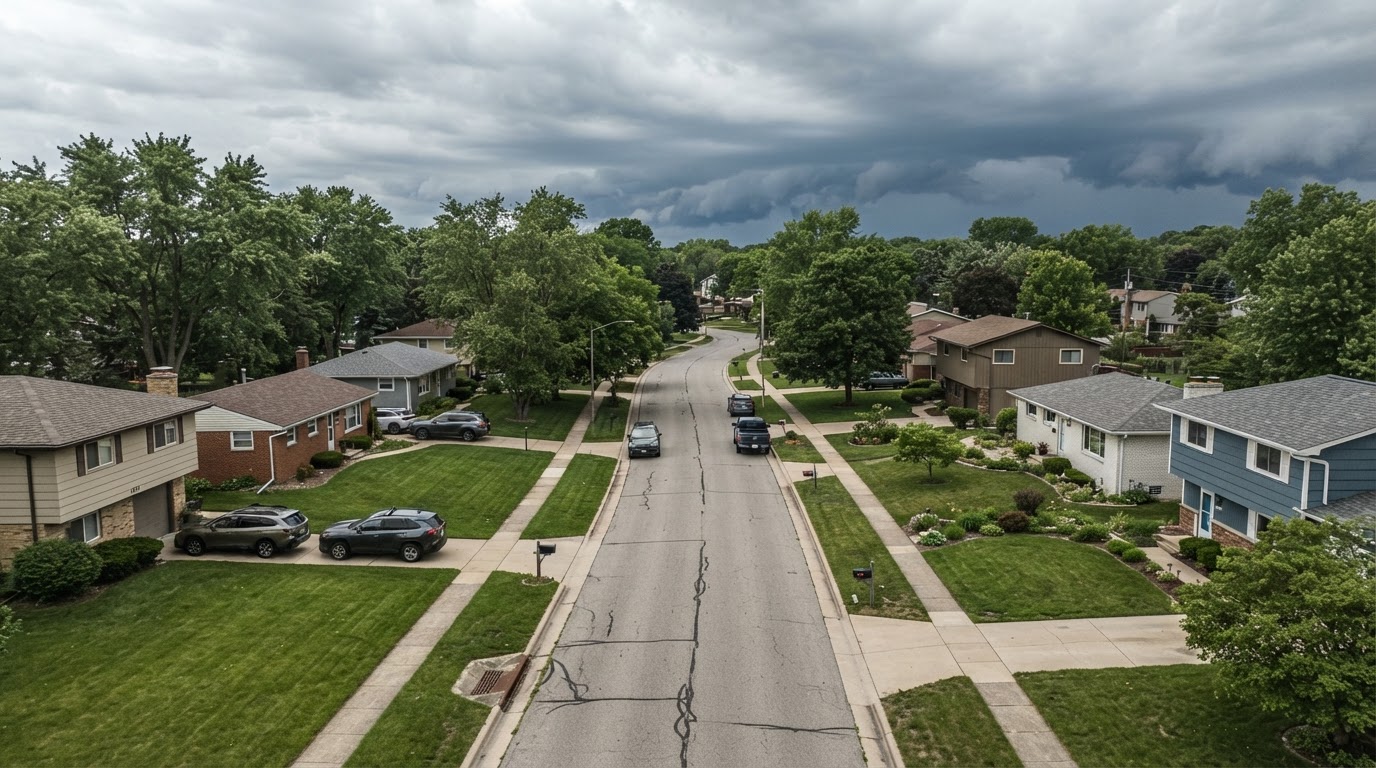
When you're house-hunting in a new state, it's easy to focus on square footage, school districts, and commute times. But the natural hazards your future home might face—floods, hurricanes, earthquakes, wildfires, tornadoes—can affect your safety, insurance costs, and property value. Fortunately, official government tools make it simple to research these risks before you sign a lease or make an offer.
Start with FEMA's National Risk Index

The FEMA National Risk Index (NRI) is your one-stop shop for comparing natural hazard risks across the United States. It rates counties and census tracts for 18 natural hazards, including:
- Earthquake
- Flooding (riverine and coastal)
- Hurricane
- Tornado
- Wildfire
- Winter weather
- Extreme heat
- Landslide
- Tsunami
The NRI assigns a risk score—from Very Low to Very High—based on expected annual losses, social vulnerability, and community resilience. Simply enter the county or address you're considering. The tool also provides a side-by-side comparison with other areas.
How to Use the NRI Effectively
- Look at the "Expected Annual Loss" score for each hazard. This tells you the projected economic impact per year.
- Check the "Social Vulnerability" score—higher means the community may have less capacity to prepare for and recover from disasters.
- Use the map layer to see multiple hazards at once. For example, you might find that a county has high earthquake risk but low flood risk.
Dive Deeper into Specific Hazards
Flood Risk
Flooding is the most common natural disaster in the U.S. Even properties outside designated floodplains can flood. Start with FEMA's Flood Map Service Center to see whether your potential home lies in a Special Flood Hazard Area (SFHA). But remember: FEMA maps may be outdated. For a more dynamic view, use FloodSmart.gov or the National Water Prediction Service for river flood forecasts.
Wildfire Risk
If you're moving to the West, Southwest, or parts of the Southeast, wildfire risk is critical. The Wildfire Risk to Communities website, created by the USDA and US Forest Service, provides interactive maps showing burn probability, wildfire likelihood, and exposure. You can zoom in to neighborhood-level detail.
Earthquake Risk
The U.S. Geological Survey (USGS) Earthquake Hazards Program offers a seismic hazard map that shows peak ground acceleration—the shaking you might expect in an earthquake. Enter your location to see the probability of strong shaking over time. Also check whether the state has a seismic building code (common in California, Oregon, Washington, and parts of the Midwest).
Hurricane and Coastal Storm Risk
For Atlantic and Gulf Coast states, visit the National Hurricane Center for historical track maps and surge zones. FEMA's Coastal Flood Hazard Mapping can show storm surge risk. Look for properties that are at least 5 feet above base flood elevation to reduce risk.
Tornado Risk
Tornadoes can occur anywhere, but the highest risk is in the central U.S. (Tornado Alley). The NOAA Storm Prediction Center provides climatology maps and severe weather outlooks. While you can't predict exactly where a tornado will hit, you can assess the frequency in your target county. Also check if the area has local tornado shelters or safe rooms.
Check State Emergency Management Resources
Every state has an emergency management agency that publishes hazard mitigation plans and risk assessments. These documents often include county-level risk rankings and historical disaster data. Search for "[State Name] Hazard Mitigation Plan" or visit Ready.gov for state-specific links. For example, Florida's Division of Emergency Management has a detailed county hazard profile tool.
Look Beyond the Hazard: Insurance and Building Codes
Risk is only part of the picture. You also need to know whether you can afford to insure the home and whether the structure is built to withstand disasters. Call local insurance agents to get quotes for homeowner's insurance and, if in a flood zone, flood insurance (required for federally backed mortgages in SFHAs). Ask about windstorm deductibles in hurricane-prone states.
Check the state's building code adoption. The International Code Council publishes county-level adoption maps. Stricter codes (e.g., Florida's post-2002 codes) reduce risk significantly.
Use Multiple Data Sources
No single source tells the whole story. Combine information from:
- FEMA National Risk Index
- FloodMap.gov (FEMA flood maps)
- USGS Earthquake Hazards
- NOAA National Weather Service
- Weather Underground historical data
- State hazard mitigation plans
- Local emergency management offices
Also talk to neighbors and local real estate agents—they can share firsthand experiences with storms or other hazards.
Actionable Conclusion
Don't let the perfect house become a disaster. Spend an hour with these free government tools before you move. You'll gain peace of mind, avoid costly surprises, and be better prepared to protect your family and home. Bookmark this page and start your research at FEMA's National Risk Index.
About our guidance
Our guides are grounded in publicly available information from official sources such as FEMA, NOAA, USGS and Ready.gov. Information is general in nature — always verify details for your specific property and policy with official sources and your insurer.
Related guides
 InsuranceLender-Placed Flood Insurance: The Expensive Backup If Your Policy LapsesYour lender can force-place flood insurance if your policy lapses — and bill you for it, usually at a higher price. Here is how…Oct 15, 2026Read guide →
 InsuranceWhat Happens to Your NFIP Policy If Congress Lets the Program LapseCongress extended the NFIP through December 11, 2026. If the program lapses, existing policies stay in force and claims get paid…Oct 15, 2026Read guide →
 InsuranceExcess Flood Insurance: Coverage Above NFIP's $250,000 LimitThe NFIP caps flood coverage at $250,000 for the building and $100,000 for contents. If your home would cost more to rebuild,…Oct 15, 2026Read guide →