
How to Shut Off Gas, Water, and Electricity Before a Storm
5 min read
On this page
Learn how to safely shut off your home's gas, water, and electricity before a storm, including step-by-step instructions and when to call a professional. This guide is based on official recommendations from FEMA and Ready.gov.
Why Shutting Off Utilities Before a Storm Matters
When a major storm approaches, knowing how to shut off your home's gas, water, and electricity can prevent fires, flooding, and electrocution. Flooding, high winds, and lightning can damage utility lines, leading to dangerous leaks or short circuits. The Federal Emergency Management Agency (FEMA) and Ready.gov stress that every household should learn these steps before disaster strikes. Ready.gov notes that shutting off utilities is essential if you suspect damage or if local officials instruct you to do so.
Before the Storm: Preparation
Locate and label your main shutoff valves and switches today. Walk through your home with your family so everyone knows the locations and how to operate them. Keep essential tools nearby—like a wrench for gas and water shutoffs—and store them in a readily accessible spot. Review FEMA's Utility Shutoff Guide for detailed diagrams.
How to Shut Off Natural Gas
When to Shut Off Gas
Only shut off gas if you smell gas, hear a hissing sound, or if authorities order it. Do not shut off gas as a routine precaution, because only a professional can restore service. If you shut it off unnecessarily, you may be without heat or hot water for days after the storm. The National Oceanic and Atmospheric Administration (NOAA) and FEMA advise that once the gas is off, keep it off until a utility worker inspects your system.
Steps to Shut Off Gas
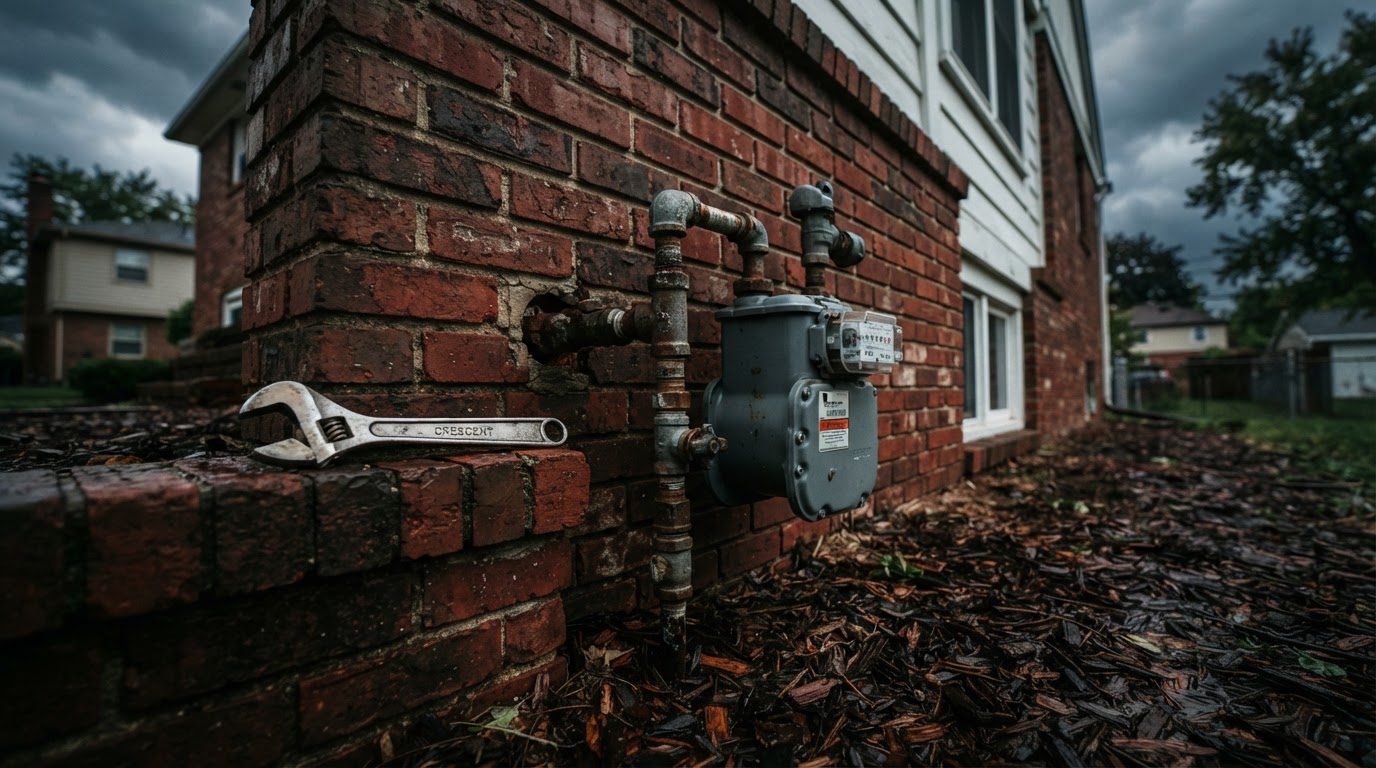
- Locate the gas meter. It is usually outside on the side or back of your house, or in a box near the street.
- Find the shutoff valve on the pipe coming from the meter. It is often a rectangular tang that requires a wrench to turn.
- Use a 12-inch or larger adjustable wrench to turn the valve a quarter turn in either direction until the tang is perpendicular to the pipe. The valve is closed when the tang crosses the pipe.
- After shutting off, avoid turning any electrical switches, lights, or appliances that could create a spark. Leave the house if you smell gas and call 911 from outside.
- Mark the valve with a tag or label for quick identification in an emergency.
Source: Ready.gov Earthquake Safety (gas shutoff guidance applies to all disasters).
How to Shut Off Water
When to Shut Off Water
Shut off the water if a pipe bursts, you have to evacuate, or flooding threatens your home. Turning off the water prevents interior flooding and contamination of your water supply. It also stops water from backing up into your house if sewers overflow.
Steps to Shut Off Water
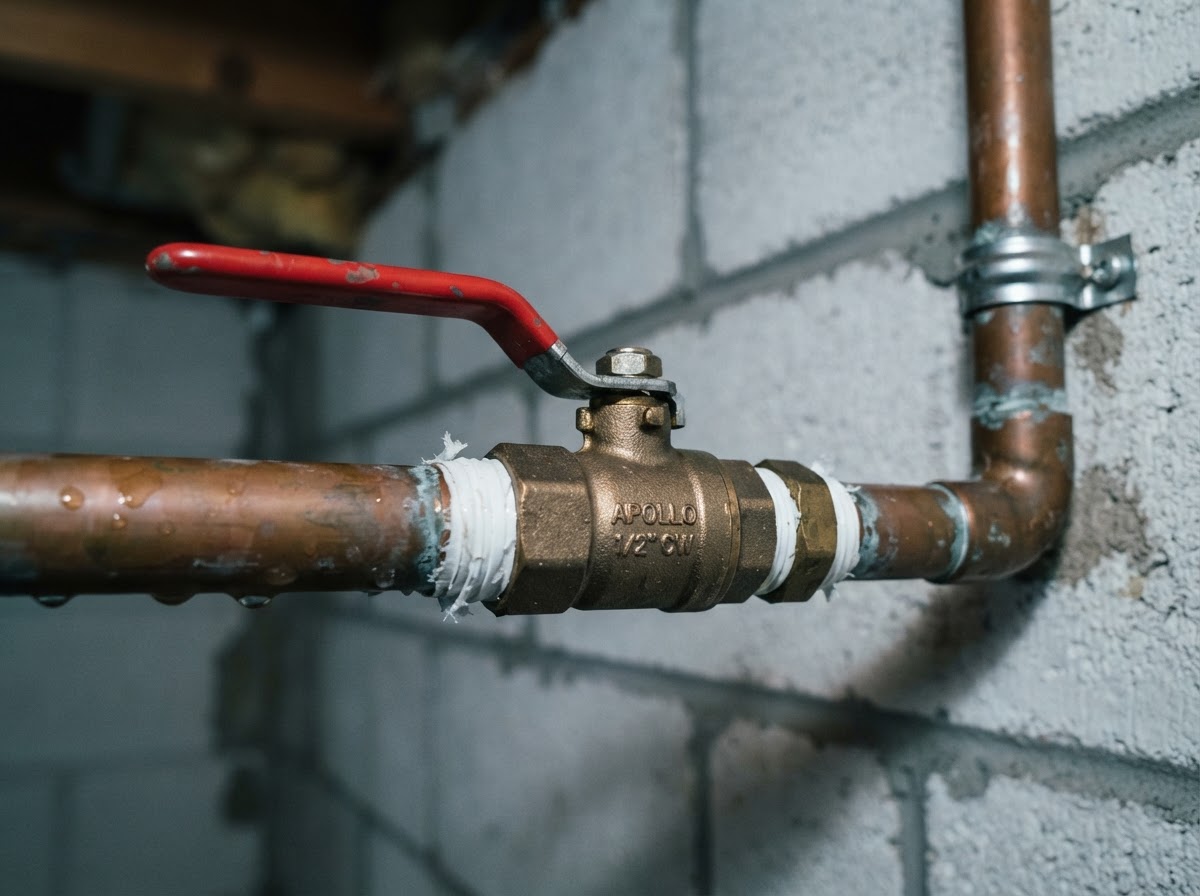
- Find your main water shutoff valve. It is often in the basement, crawlspace, garage, or near the water heater on an exterior wall. In warmer climates, it may be outside near the foundation.
- The valve could be a gate valve (wheel handle) or a ball valve (lever handle). For gate valves, turn the wheel clockwise until it stops. For ball valves, turn the lever a quarter turn until it is perpendicular to the pipe.
- Test the valve once a year to ensure it still works. Turn it off for a few minutes, then turn it back on slowly to avoid water hammer.
- If you have a well, also locate and shut off the well pump circuit breaker—but keep the main water valve closed to prevent pressure buildup.
- After the storm, turn the water back on slowly. Open a faucet at the highest point of the house to let air out, then open a lower faucet until water flows steadily.
Source: Ready.gov Water Safety and FEMA's Utility Shutoff Guide.
How to Shut Off Electricity
When to Shut Off Electricity
Shut off electricity if you see sparks, smell burning insulation, or if water is entering your home. Also, if you need to evacuate, it is wise to turn off the power at the main breaker to prevent fire from damaged wiring. If you are not sure whether your home is safe, err on the side of caution and shut it off.
Steps to Shut Off Electricity
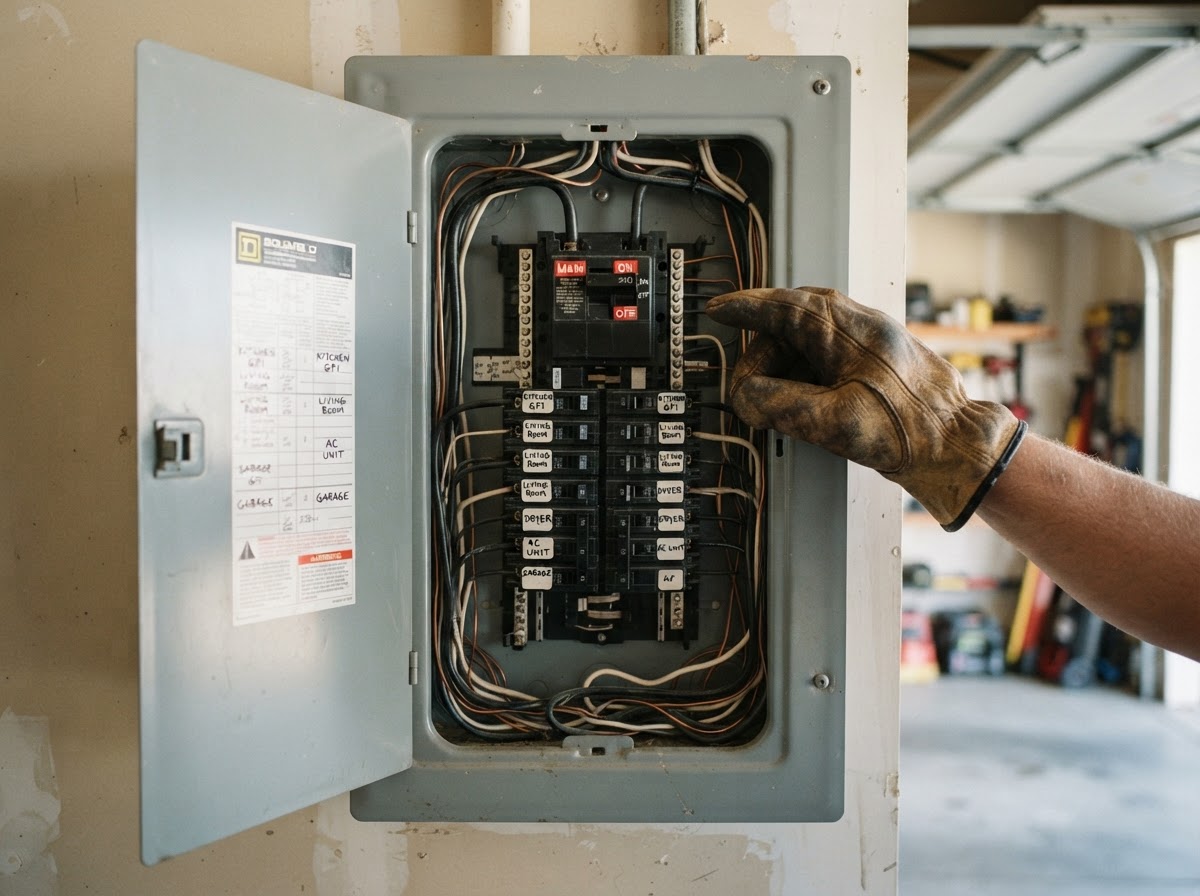
- Locate your main electrical service panel (breaker box). It is usually in a utility room, basement, garage, or on an exterior wall.
- Open the door and find the main breaker switch. It is typically a large switch at the top or bottom of the panel, or two switches that form a single unit.
- Turn the main breaker off. For a single switch, push it to the “off” position. For a double switch, flip both halves to off.
- Never stand in water when operating the breaker. If the floor is wet, wear rubber boots and use a dry wooden stick to flip the switch, or call an electrician.
- After the storm, turn the main breaker back on only after you have checked for damage and the area is dry. If the breaker trips again immediately, call an electrician.
Source: Ready.gov Electrical Safety and FEMA's Utility Shutoff Guide.
General Safety Tips
- Label your shutoff valves and breakers with permanent markers or tags. Use CDC guidelines for emergency kit items.
- Inspect your shutoff devices regularly. If a valve is stuck or a breaker is damaged, have a professional repair it before a storm.
- If you live in an apartment, know where the building's utility shutoffs are—but do not operate them yourself unless you are authorized. Contact building management.
- After the storm, do not turn gas back on yourself. Wait for a utility worker to inspect your system and relight pilot lights. For water and electricity, you can restore service if you are confident there is no damage—but when in doubt, call a professional.
- Keep a wrench with your emergency supplies. The Ready.gov Emergency Supply List recommends having a tool kit.
Conclusion
Knowing how to shut off your gas, water, and electricity is a critical skill for every homeowner. Take time today to locate your shutoffs, label them, and practice with your family. When a storm is forecast, review these steps and be ready to act if necessary. Remember: when in doubt, shut it off—but for gas, only do so if you suspect a leak. Stay safe, and empower yourself with knowledge from official sources like FEMA and Ready.gov.
About our guidance
Our guides are grounded in publicly available information from official sources such as FEMA, NOAA, USGS and Ready.gov. Information is general in nature — always verify details for your specific property and policy with official sources and your insurer.
Related guides
 InsuranceLender-Placed Flood Insurance: The Expensive Backup If Your Policy LapsesYour lender can force-place flood insurance if your policy lapses — and bill you for it, usually at a higher price. Here is how…Oct 15, 2026Read guide →
 InsuranceWhat Happens to Your NFIP Policy If Congress Lets the Program LapseCongress extended the NFIP through December 11, 2026. If the program lapses, existing policies stay in force and claims get paid…Oct 15, 2026Read guide →
 InsuranceExcess Flood Insurance: Coverage Above NFIP's $250,000 LimitThe NFIP caps flood coverage at $250,000 for the building and $100,000 for contents. If your home would cost more to rebuild,…Oct 15, 2026Read guide →