
How to Strap Your Water Heater for Earthquake Safety
5 min read
On this page
Learn why securing your water heater is critical after an earthquake and get step-by-step instructions to strap it properly, reducing risk of fire, gas leaks, and water damage.
When an earthquake strikes, one of the most dangerous hazards inside your home is an unsecured water heater. Experts from the Federal Emergency Management Agency (FEMA) and the Ready.gov campaign emphasize that a toppling water heater can rupture gas lines, cause serious flooding, and block exits—all while you're trying to get to safety. Fortunately, strapping your water heater is a straightforward, low-cost retrofit that dramatically reduces these risks. This guide explains why it matters and how to do it correctly.
Why Strap Your Water Heater?
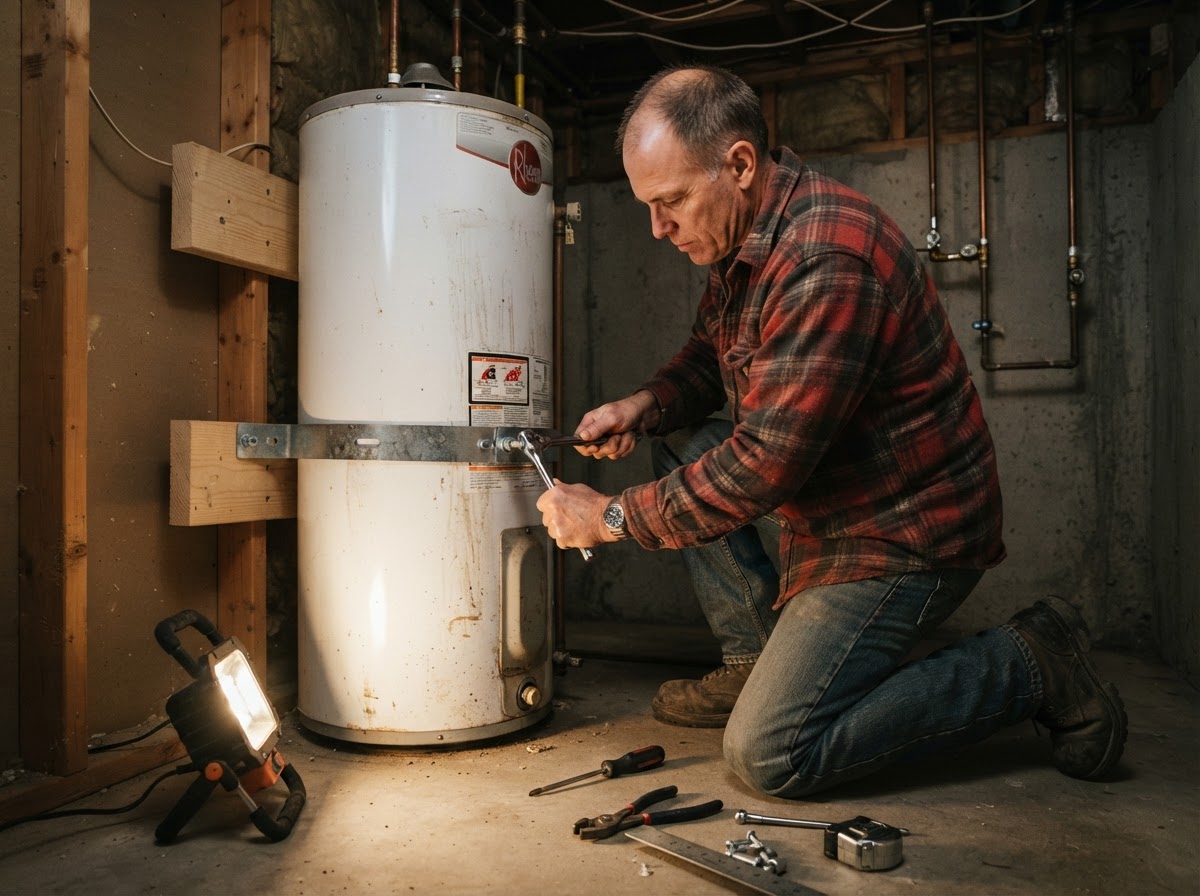
During an earthquake, ground shaking can easily tip over a tall, heavy object like a water heater. A standard 50-gallon tank weighs about 500 pounds when full. If it falls:
- Gas leaks and fire: The rigid gas line or connector can break, releasing flammable gas. A single spark from damaged wiring or other appliances can ignite an explosion.
- Flooding: Broken water lines can cause extensive water damage to your home, leading to mold and structural issues.
- Blocked exits: A fallen water heater can block doors or pathways, hindering evacuation or emergency response.
- Water contamination: If your heater uses a gas pilot light, the flame may go out, but gas can continue to flow, creating an asphyxiation hazard.
According to the FEMA Water Heater Strapping Guide, unsecured water heaters are a leading cause of post-earthquake fires. The Ready.gov website also recommends strapping as a key step in earthquake preparedness.
What You'll Need
Before you begin, gather these supplies. Most are available at hardware stores for under $20. Check with your local building department for any specific code requirements.
- Heavy-gauge metal strapping (at least 1 inch wide, 18-gauge or thicker) – enough to wrap around the tank twice.
- Lag bolts or concrete anchors – 3/8-inch diameter, long enough to penetrate studs or masonry.
- Screws and washers – to secure the strap to the tank and the wall.
- Drill with masonry/bits – for concrete or block walls.
- Wrench and screwdriver – for tightening.
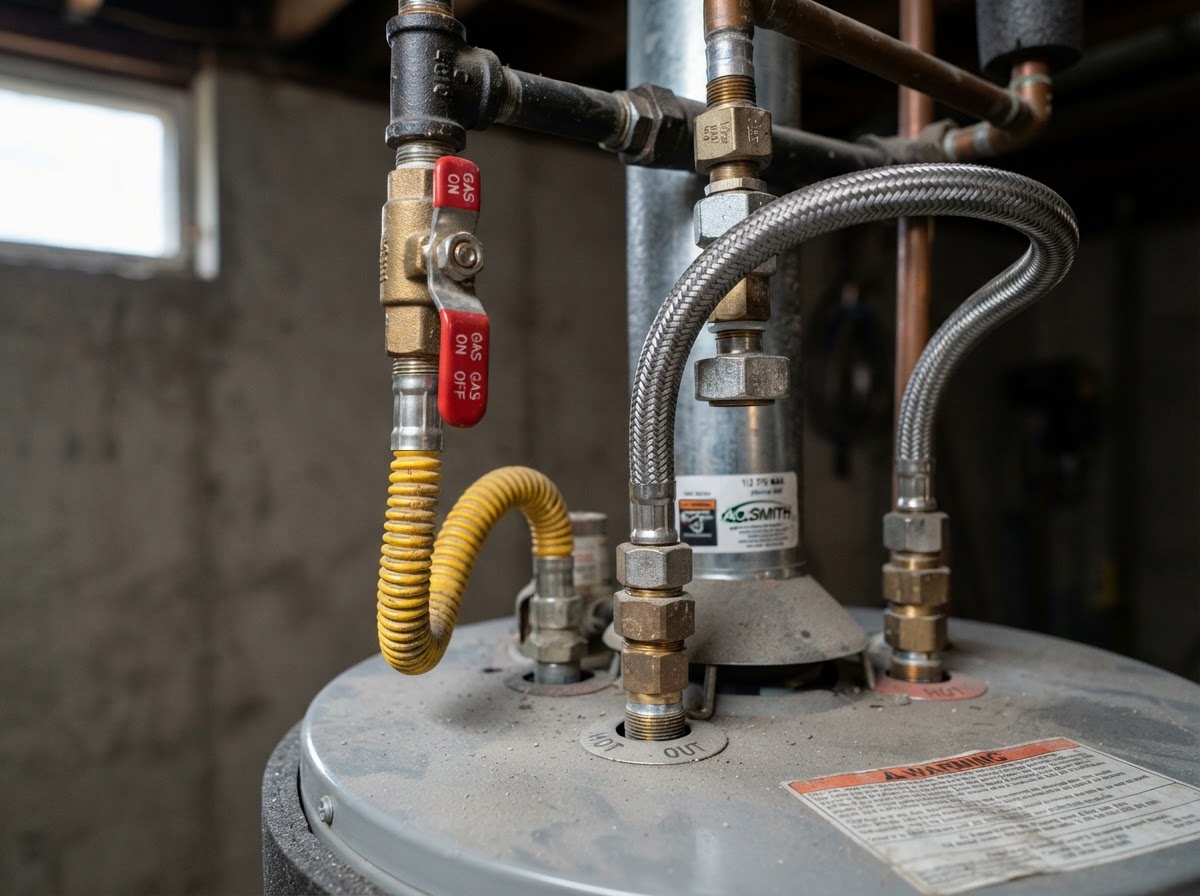
- Flexible water and gas connectors – to replace rigid pipes that can snap during shaking. Use a CSST (corrugated stainless steel tubing) approved for both gas and water.
Step-by-Step Strapping Instructions
Follow these steps based on FEMA and USGS guidance. Always wear safety glasses and ensure the water heater is cool to the touch before working near it.
1. Turn Off Utilities
Before any work, shut off the gas or electricity to the water heater. For gas, turn the valve off. For electric, switch off the breaker. Let the water cool if it has been recently used.
2. Assess Wall Type
Identify whether the wall behind the heater is drywall over wood studs, brick, concrete block, or masonry. Metal strapping must be anchored into the structure, not just into drywall. If you have a concrete or masonry wall, use appropriate anchors (e.g., expansion bolts).
3. Install Straps – One Near the Top, One Near the Bottom
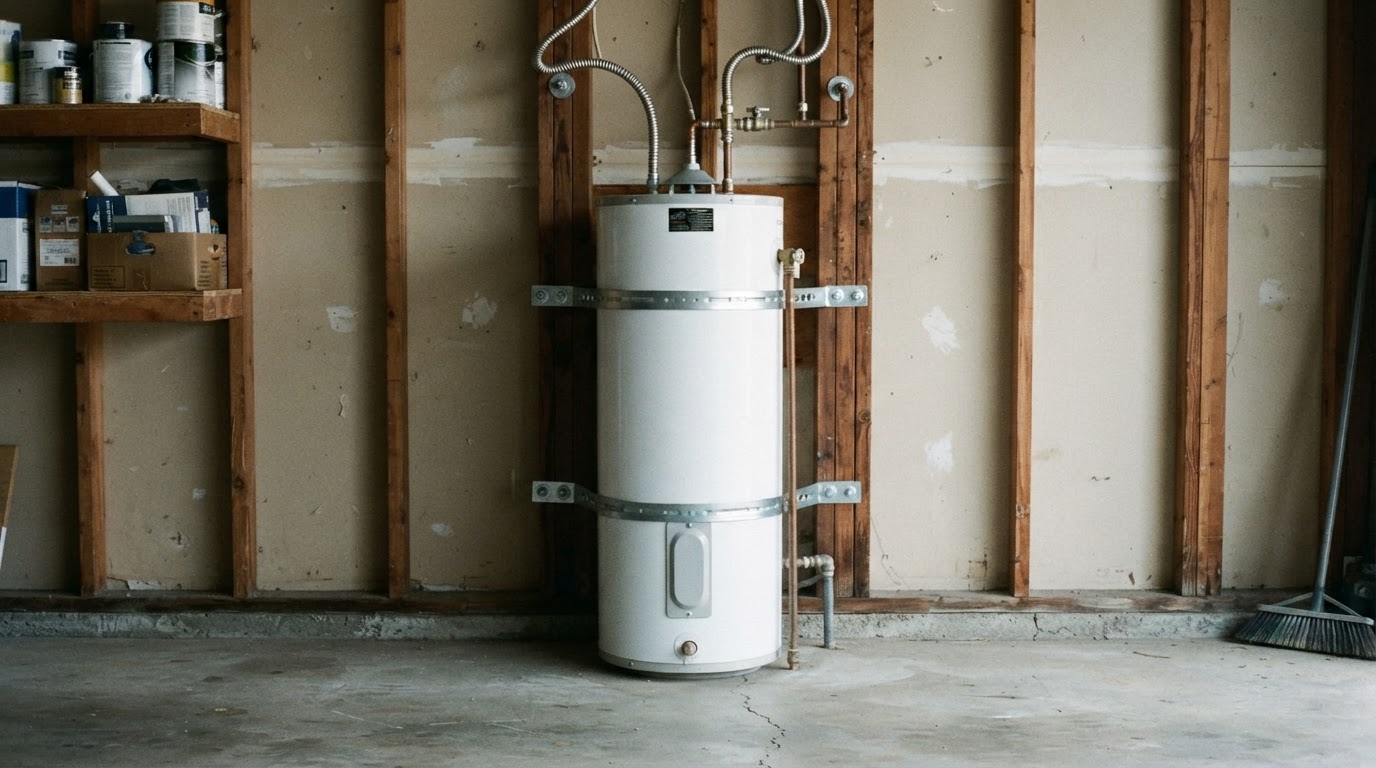
Measure the height of the water heater. Place the top strap about one-third of the way down from the top, and the bottom strap about one-third of the way up from the bottom. This prevents tipping in any direction. Wrap the metal strapping around the tank and secure it using the screws provided with the strap kit. Some straps have holes pre-punched; others you may need to drill. The strap should be snug but not crushing the tank insulation.
4. Secure Straps to Wall Studs or Masonry
Locate the nearest wall studs using a stud finder. For wood framing, drill pilot holes and drive lag bolts through the strap and into the stud. For concrete or brick, use a hammer drill with a masonry bit, insert anchors, then bolt the strap. If the water heater is not against a wall (e.g., in a closet), you may need to install a wood cleat between studs to attach straps. Follow local building codes; many require straps rated for seismic loads.
5. Replace Rigid Pipes with Flexible Connectors
After securing the tank, examine the water and gas lines. Replace any rigid copper or iron piping with flexible connectors designed for seismic movement. For gas lines, use a seismic gas shut-off valve or a flexible appliance connector rated for earthquake use. FEMA's detailed guide (PDF) strongly recommends this step to prevent gas leaks.
6. Check Stability
Gently push the water heater from different directions. It should not move more than a quarter inch. If it rocks, tighten the straps or add additional anchorage. Ensure the straps are not loose.
Additional Considerations
- Gas shut-off valves: Consider installing an automatic seismic gas shut-off valve. If the heater tips or a line breaks, the valve cuts gas flow. Check with your gas utility for approved models.
- Water connections: Use flexible copper or braided stainless steel water lines instead of rigid pipe. These reduce stress on connections.
- Elevation: If your water heater is on a raised platform, also strap the platform to the floor. FEMA recommends anchoring the platform separately.
- Check local codes: Many states, especially in seismic zones (California, Oregon, Washington, Utah, Alaska, etc.), have specific requirements. For example, the California Earthquake Authority offers guidance and may provide incentives for retrofits.
When to Hire a Professional
If you are uncomfortable working with gas lines or drilling into masonry, hire a licensed contractor. Plumbers or handymen familiar with seismic retrofits can strap your water heater quickly and ensure compliance with local codes. The cost is usually $100–$300, a small price for safety.
Conclusion
Strapping your water heater is one of the most effective and affordable earthquake retrofits you can do. It prevents tipping, reduces fire risk, and protects your home from water damage. For more preparedness tips, visit the Ready.gov Earthquake page or the USGS Earthquake Hazards Program. Take action today—it could save your home and your life.
About our guidance
Our guides are grounded in publicly available information from official sources such as FEMA, NOAA, USGS and Ready.gov. Information is general in nature — always verify details for your specific property and policy with official sources and your insurer.
Keep exploring
Related guides
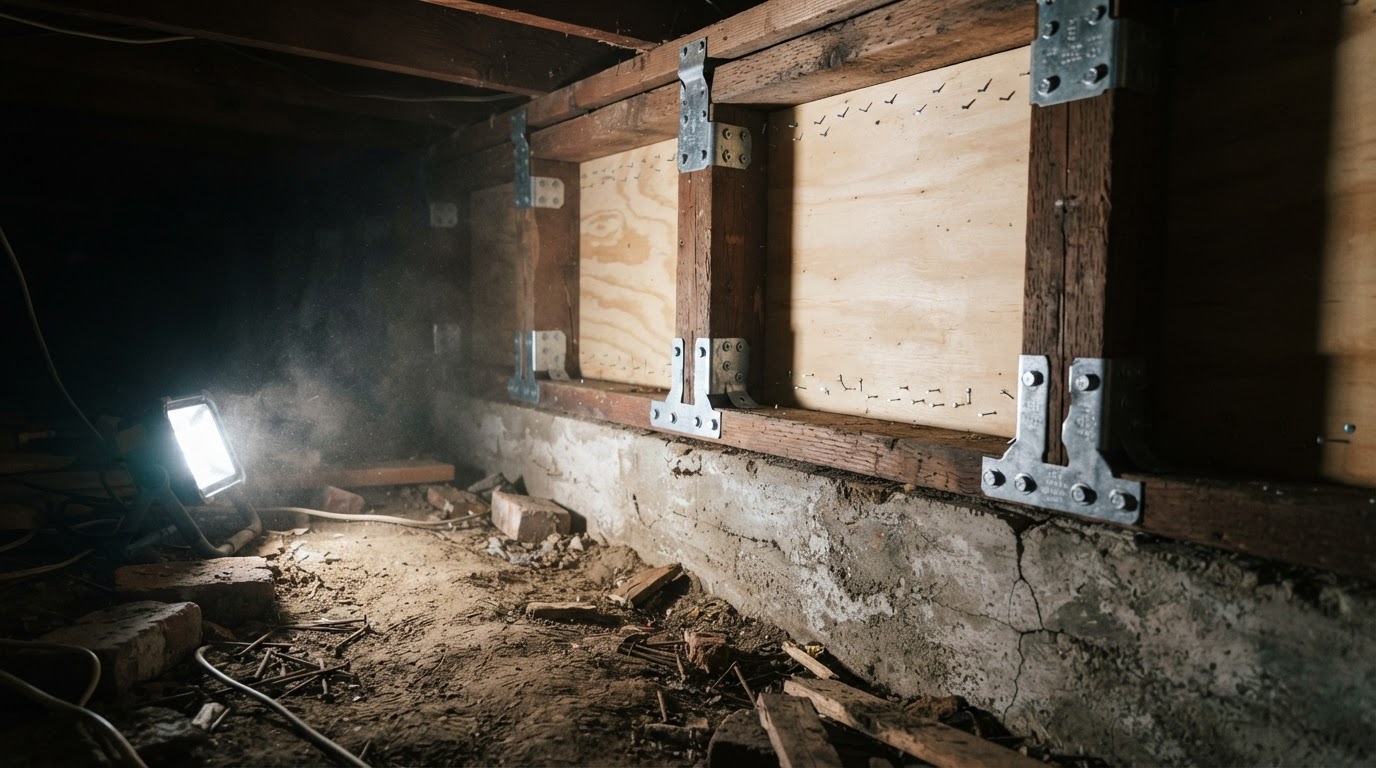 Cripple Wall Retrofit: Strengthen Your Home's Earthquake DefensesLearn how a cripple wall retrofit can prevent your older home from collapsing in an earthquake. Understand the basics, why it…Jun 21, 2026Read guide →
 Earthquake Drills for Kids and Seniors: Drop, Cover, Hold OnLearn how to practice 'Drop, Cover, and Hold On' with children and older adults. This guide provides step-by-step drills,…Jun 21, 2026Read guide →
 InsuranceLender-Placed Flood Insurance: The Expensive Backup If Your Policy LapsesYour lender can force-place flood insurance if your policy lapses — and bill you for it, usually at a higher price. Here is how…Oct 15, 2026Read guide →