
Wildfire Evacuation Prep in 60 Minutes: A Step-by-Step Guide
5 min read
On this page
- Why You Need a One-Hour Evacuation Plan
- Step 1: Build Your Go-Bag (15 Minutes)
- Step 2: Prepare Your Home and Vehicles (20 Minutes)
- Step 3: Final Evacuation Actions (15 Minutes)
- Create a Family Communication Plan (Before You Need It)
- Special Considerations for Vulnerable Populations
- Conclusion: Your 60-Minute Action Plan
When a wildfire threatens, you may have less than an hour to evacuate. Learn how to prepare a go-bag, safeguard your home, and create a family plan using proven strategies from FEMA and Ready.gov.
Why You Need a One-Hour Evacuation Plan
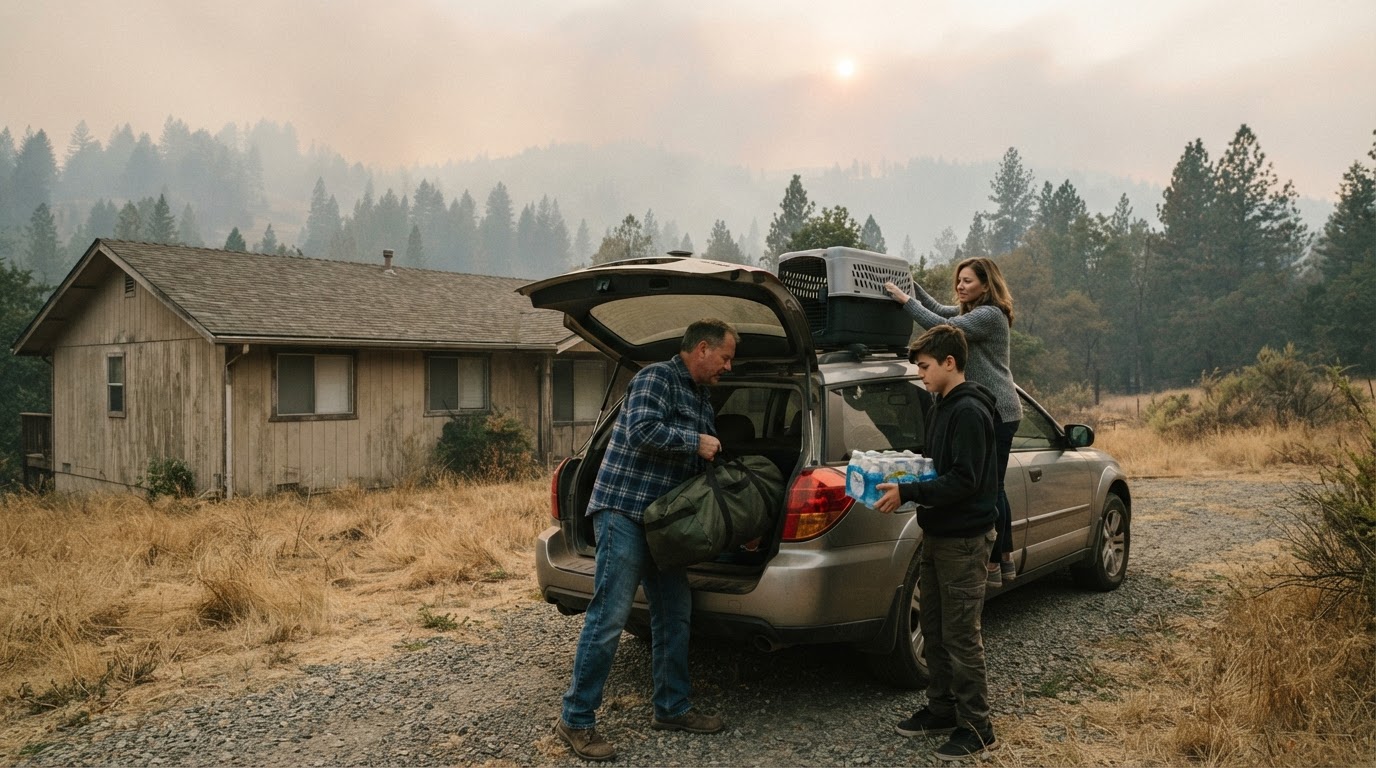
Wildfires can spread rapidly, especially in dry, windy conditions. According to FEMA, you should be ready to leave within minutes when an evacuation order is issued. In many cases, you may have less than an hour to gather essentials, secure your home, and get to safety. This guide provides a practical, checklist-based approach to prepare for a speedy evacuation, drawing on recommendations from Ready.gov, the National Fire Protection Association, and CDC wildfire guidance.
Step 1: Build Your Go-Bag (15 Minutes)
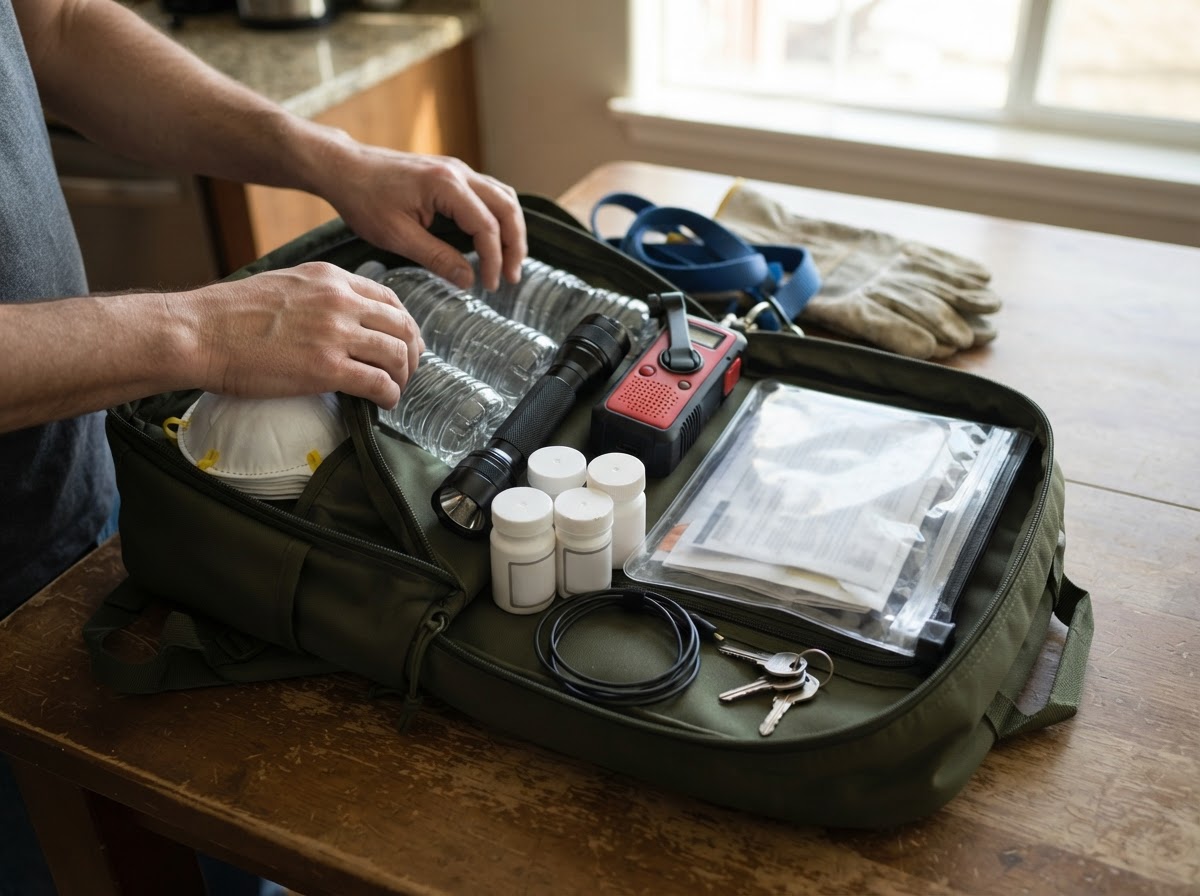
Your go-bag should be packed and kept in an easily accessible location. Time to assemble: 15 minutes if you've pre-organized supplies. Include:
- Documents: Copies of insurance policies, identification, medical records, and birth certificates in a waterproof container.
- Medications: At least a 7-day supply of prescription and over-the-counter medications, plus first aid kit.
- Cash and cards: A small amount of cash (ATMs may be down), credit cards, and checks.
- Electronics: Phone chargers, power banks, and a battery-powered radio (NOAA Weather Radio recommended).
- Clothing and comfort: One change of clothes per person, sturdy shoes, blankets, and personal hygiene items.
- Pet supplies: Leash, collar with ID, food, water, bowls, vaccination records, and a carrier if needed.
- Special needs: Items for infants, elderly, or disabled family members (diapers, formula, hearing aid batteries).
- Water and snacks: One gallon of water per person per day for three days, plus non-perishable food.
For a full checklist, see Ready.gov's emergency kit page.
Step 2: Prepare Your Home and Vehicles (20 Minutes)
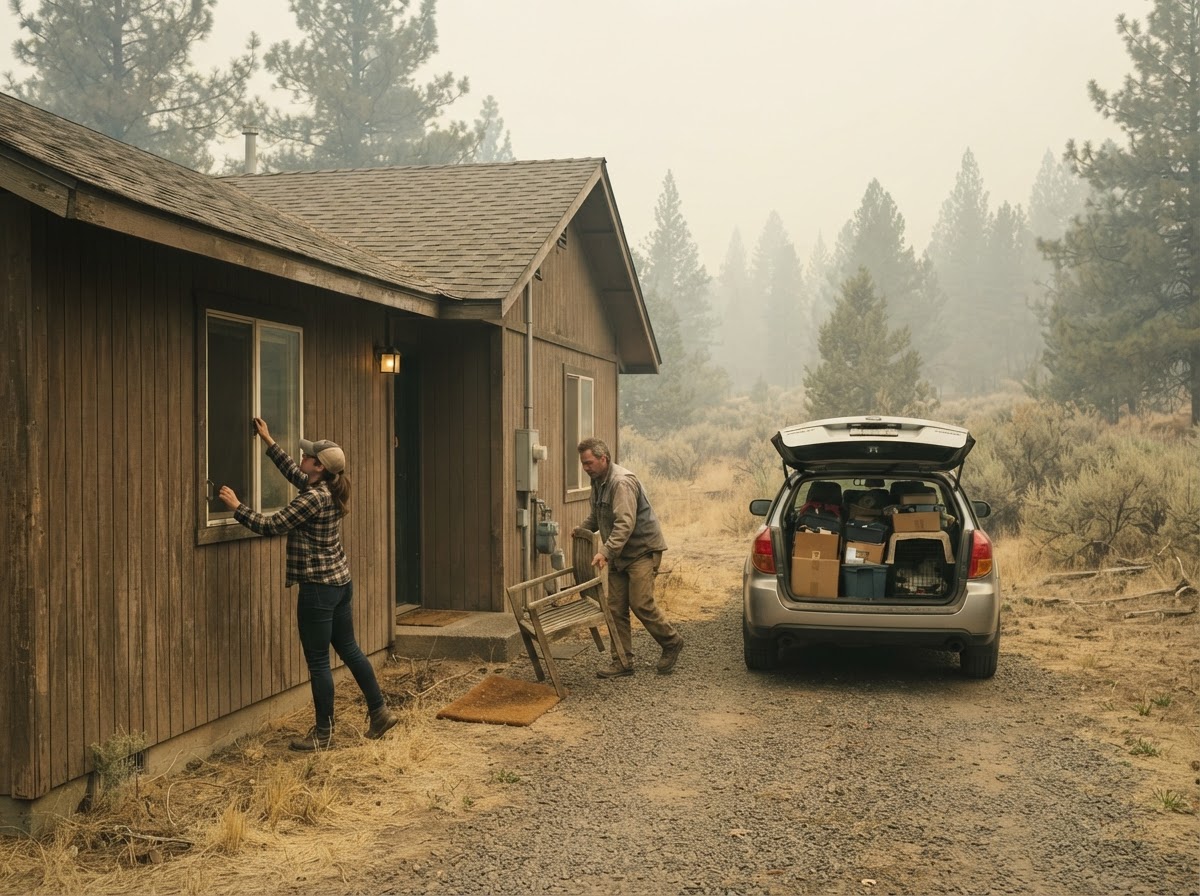
If you have 20 minutes to spare before evacuation, take these actions to reduce your home's vulnerability:
- Close all windows, doors, and vents. This prevents embers from entering.
- Move flammable items away from the house. Patio furniture, firewood, and propane tanks should be at least 30 feet from structures.
- Turn off natural gas at the meter if instructed by emergency officials.
- Fill garbage cans, buckets, or tubs with water and place them around the house for firefighters to use.
- Position garden hoses to reach all areas of the home and attach nozzles.
- Leave exterior lights on to help firefighters see in smoky conditions.
- Close garage doors but leave them unlocked so you can quickly pull out vehicles.
- Park vehicles facing the street and load them with go-bags. Keep car windows and doors closed.
For more home preparation tips, visit FEMA's wildfire safety tips.
Step 3: Final Evacuation Actions (15 Minutes)
When the evacuation order is given, execute the following in sequence:
- Alert all household members and ensure everyone is dressed in long pants, long sleeves, and sturdy shoes (cotton or wool preferred – avoid synthetics).
- Gather your go-bags and any important documents you may have missed.
- Double-check pets and pet supplies; ensure they are secured in carriers or on leashes.
- Locate car keys and your evacuation route – know at least two ways out of your neighborhood.
- Call a designated out-of-state contact to let them know you are evacuating and where you plan to go.
- Turn off the air conditioning to prevent smoke from entering.
- Wet down the roof and shrubs if you have time and water supply – use a hose with a spray nozzle.
- Load the car with go-bags, family members, and pets. Do not leave any windows open.
- Close all doors behind you but do not lock them – firefighters may need access.
- Drive carefully with headlights on, and follow the designated evacuation route. Avoid shortcuts through back roads.
Remember: Never return home until officials say it is safe. Embers and hotspots can reignite for days.
Create a Family Communication Plan (Before You Need It)
While the one-hour window is for immediate action, a family communication plan should be established well in advance. FEMA recommends:
- Choose an out-of-state friend or relative as a central contact. Family members should call that person to check in.
- Pre-arrange meeting points: one outside your home (in case of sudden fire), one outside your neighborhood (in case you can't return), and one outside your city (if evacuation is widespread).
- Ensure every family member carries a list of emergency numbers and knows the plan.
- Sign up for emergency alerts – local county alert systems and Wireless Emergency Alerts (WEA) via your phone. Download apps like FEMA (for Android/iOS) and NOAA Weather Radio.
- Practice your evacuation drill at least twice a year, timing yourself to see if you can leave within the target one-hour window.
More guidance on communication plans is available at Ready.gov's plan page.
Special Considerations for Vulnerable Populations
If you or a family member has a disability, medical condition, or limited mobility, adjust your plan accordingly:
- Label medical equipment with instructions and contact numbers.
- If you rely on a power-dependent device (e.g., oxygen concentrator), have a backup battery and notify your utility company about medical needs.
- Consider registering with your local fire department or emergency management office so they are aware of your location during a wildfire.
- For seniors or those with mobility challenges, identify neighbors or family members who can assist with evacuation.
- If you have pets, ensure they have microchips and current ID tags. Contact local animal shelters to ask about evacuation shelters that accept pets.
See Ready.gov's resources for people with disabilities for more details.
Conclusion: Your 60-Minute Action Plan
Preparing for a wildfire evacuation in under one hour is possible if you have a plan, a packed go-bag, and a calm, systematic approach. Here's a quick recap of the timeline:
- Minutes 1-15: Fill your go-bag (ideal if pre-packed).
- Minutes 16-35: Prepare your home and vehicles.
- Minutes 36-50: Execute final evacuation steps and leave.
- Minutes 51-60: Drive to safety and check in with your contact.
For more comprehensive guidance, explore Ready.gov's wildfire page and FEMA's blog on wildfire preparedness. Remember: your life and your family's safety are the highest priority. Don't delay if you feel threatened – evacuate immediately. By taking these steps now, you can respond quickly and confidently when every minute counts.
About our guidance
Our guides are grounded in publicly available information from official sources such as FEMA, NOAA, USGS and Ready.gov. Information is general in nature — always verify details for your specific property and policy with official sources and your insurer.
Keep exploring
Related guides
 Wildfire Smoke & Air Quality: How to Protect Your HomeLearn how to protect your home and family from wildfire smoke with practical steps from FEMA, CDC, and EPA. From sealing your…Jun 21, 2026Read guide →
 Wildfire Home Hardening: Roof, Vents, Gutters, and Deck ChecklistLearn how to harden your home against wildfire by focusing on four critical areas: roof, vents, gutters, and deck. This checklist…Jun 21, 2026Read guide →
 InsuranceLender-Placed Flood Insurance: The Expensive Backup If Your Policy LapsesYour lender can force-place flood insurance if your policy lapses — and bill you for it, usually at a higher price. Here is how…Oct 15, 2026Read guide →