
Wildfire Home Hardening: Roof, Vents, Gutters, and Deck Checklist
4 min read
On this page
Learn how to harden your home against wildfire by focusing on four critical areas: roof, vents, gutters, and deck. This checklist follows official guidance from FEMA, Ready.gov, and NFPA.
Wildfires pose a growing threat to homes in the wildland-urban interface (WUI). Embers are the primary cause of home ignition during a wildfire—they can travel over a mile ahead of the flame front and accumulate on or near your home. By hardening your home, you reduce the chance of ember ignition. This checklist covers four key areas: roof, vents, gutters, and deck. These recommendations are based on guidance from FEMA, Ready.gov, and the National Fire Protection Association (NFPA).
Roof: Your Home’s First Line of Defense
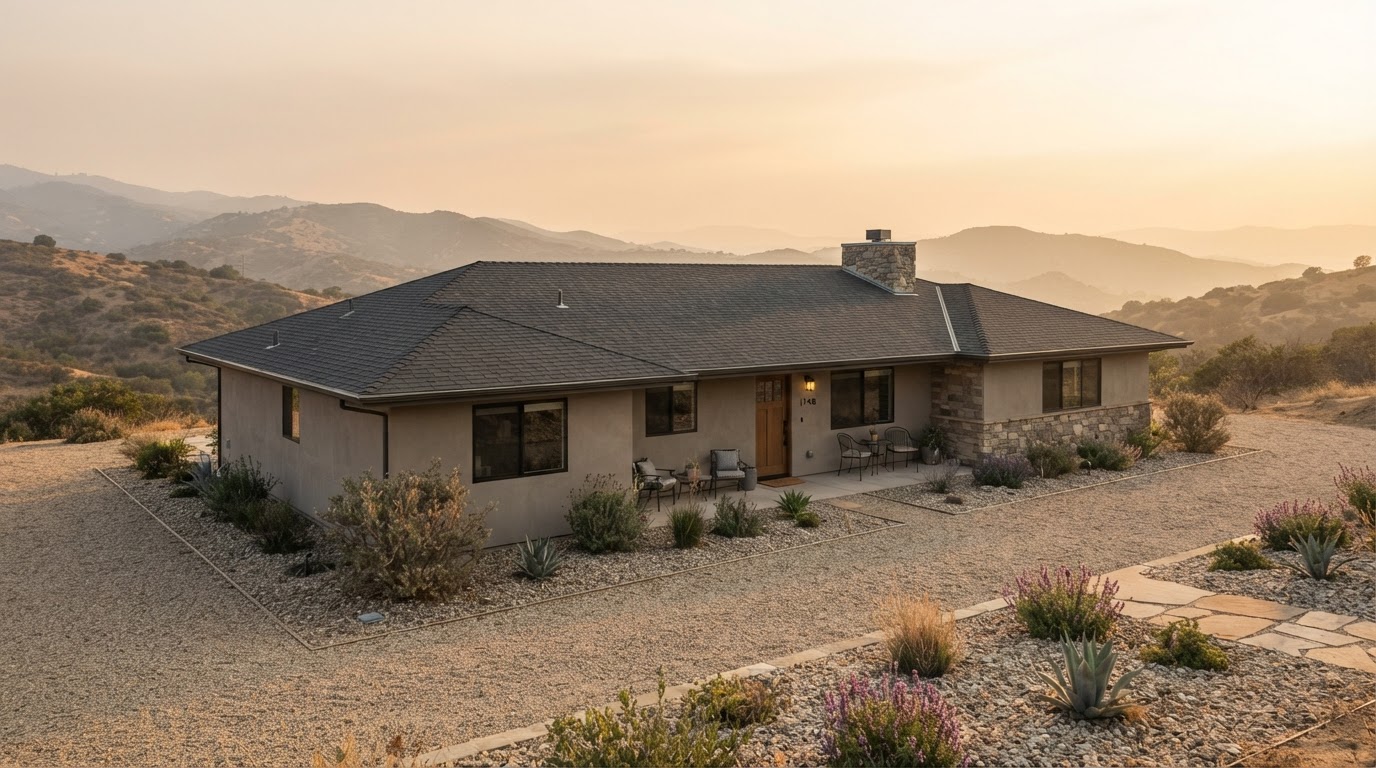
Your roof is the largest surface area exposed to flying embers. A fire-resistant roof can prevent embers from igniting your home.
Checklist Items
- Install a Class A fire-rated roofing material. According to FEMA, Class A roofing (e.g., asphalt shingles, metal, tile, slate) offers the best protection against severe fire exposure. Check for a listing by Underwriters Laboratories (UL) or similar.
- Replace or remove wood shingles or shake roofs. These are highly combustible and not recommended in wildfire-prone areas.
- Keep roof surfaces clean. Remove dry leaves, pine needles, and other debris that can catch embers. Clean gutters as well.
- Seal exposed edges. Use fire-resistant materials to seal gaps at roof edges, eaves, and intersections.
Vents: Block Ember Entry
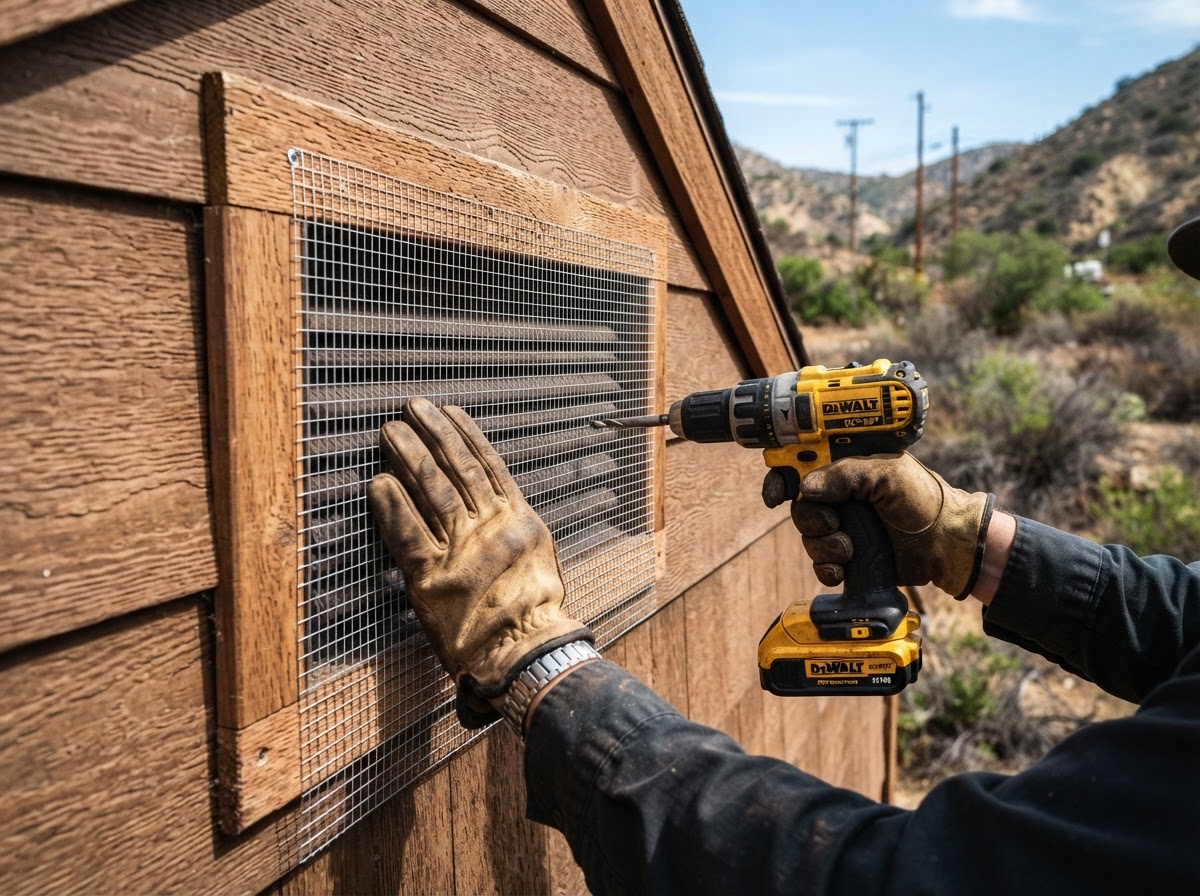
Embers can enter your attic or crawl space through vents and ignite combustible materials. Vents are a common weak point in home hardening.
Checklist Items
- Install 1/8-inch metal mesh screening. Use corrosion-resistant metal mesh with openings no larger than 1/8 inch over all vents (eaves, soffit, foundation, gable, and ridge vents). This prevents embers from passing through while maintaining airflow. Ready.gov recommends this measure.
- Choose ember-resistant vent designs. Some vents have internal baffles that further reduce ember entry. Look for vents tested to ASTM E2886 or similar standards.
- Replace plastic or nylon mesh with metal. Plastic mesh can melt or burn.
- Seal any gaps or holes. Use caulk or fire-resistant sealant around vent openings.
Gutters: Prevent Ember Accumulation
Gutters collect combustible debris like leaves and twigs. Embers landing in a debris-filled gutter can ignite and spread to the roof or fascia.
Checklist Items
- Clean gutters regularly. Remove all dead vegetation, pine needles, and leaves at least twice a year, or more often if you have overhanging trees.
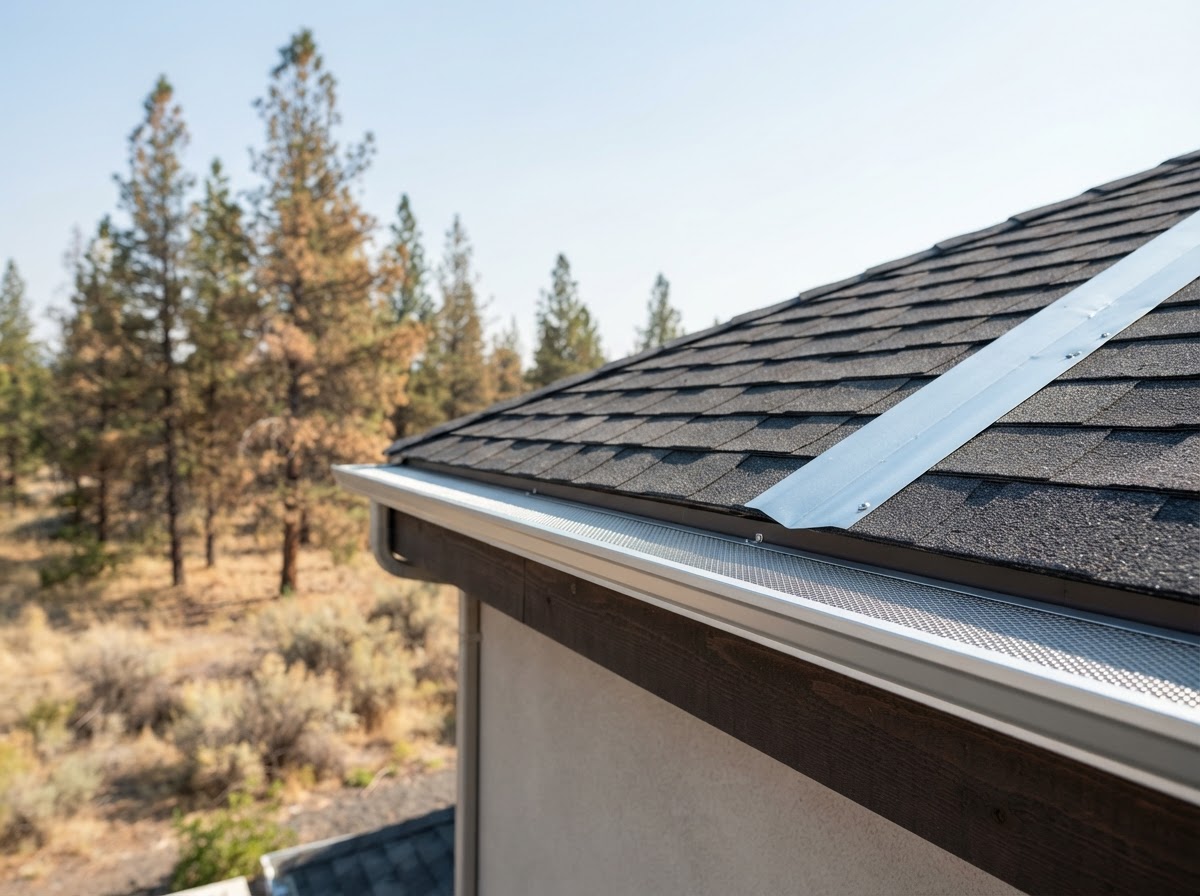
- Install non-combustible gutter covers. Metal screens or covers prevent debris accumulation while allowing water flow. Ensure they are made of metal or other fire-resistant material.
- Use metal gutters. Vinyl or plastic gutters can melt or burn. Aluminum or steel is preferable.
- Downspouts should divert water away. Keep downspouts clear of obstructions for proper drainage during firefighting efforts.
Decks: Reduce Fuel Near Your Home
Decks, porches, and other attached structures can act as a fuel source if they are made of combustible materials or store combustible items underneath.
Checklist Items
- Build or replace decks with fire-resistant materials. Use composite decking that is fire-rated, or use dimensional lumber treated with fire-retardant. Non-combustible materials like metal, stone, or concrete are best.
- Remove combustible items from under the deck. Keep the area open or enclosed with fire-resistant siding. Do not store firewood, patio furniture, or other burnable materials under the deck.
- Use metal flashing between deck and house. Install a metal or other non-combustible barrier where the deck meets the siding to prevent embers from wedging into gaps.
- Keep deck surfaces clean. Sweep off leaves, pollen, and debris regularly.
- Consider making the deck “ignition-resistant.” If you have an existing wood deck, you can apply a fire-retardant coating, but check with your local fire department for recommended products.
Actionable Conclusion
Home hardening is a proven strategy to increase your home’s chance of surviving a wildfire. Start with the roof, then address vents, gutters, and decks. Use the checklist above to identify improvements. For more detailed guidance, visit Ready.gov, FEMA, and your local NFPA Wildfire Division. Protect your home today.
About our guidance
Our guides are grounded in publicly available information from official sources such as FEMA, NOAA, USGS and Ready.gov. Information is general in nature — always verify details for your specific property and policy with official sources and your insurer.
Keep exploring
Related guides
 Wildfire Smoke & Air Quality: How to Protect Your HomeLearn how to protect your home and family from wildfire smoke with practical steps from FEMA, CDC, and EPA. From sealing your…Jun 21, 2026Read guide →
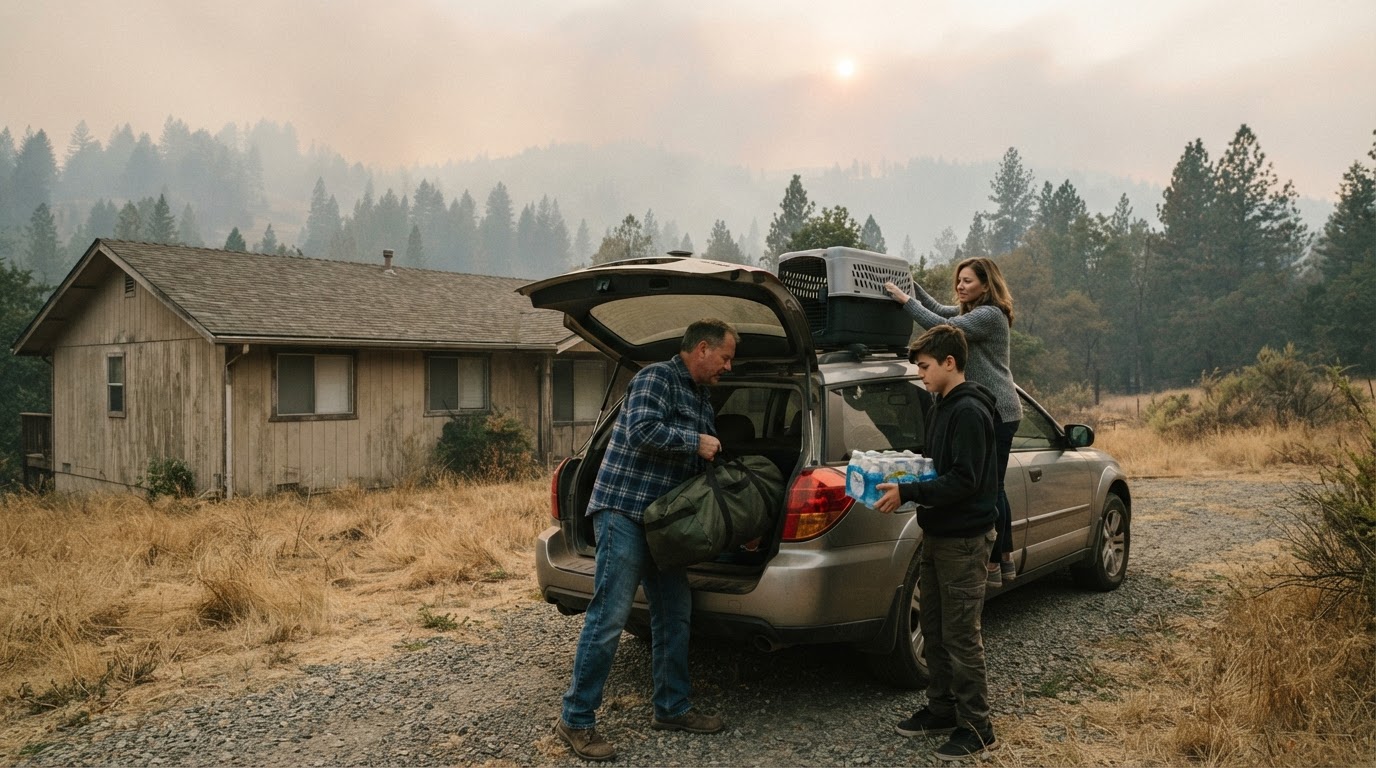 Wildfire Evacuation Prep in 60 Minutes: A Step-by-Step GuideWhen a wildfire threatens, you may have less than an hour to evacuate. Learn how to prepare a go-bag, safeguard your home, and…Jun 21, 2026Read guide →
 InsuranceLender-Placed Flood Insurance: The Expensive Backup If Your Policy LapsesYour lender can force-place flood insurance if your policy lapses — and bill you for it, usually at a higher price. Here is how…Oct 15, 2026Read guide →