
Sandbags vs. Flood Barriers: What Actually Protects Your Home?
6 min read
On this page
Sandbags and store-bought flood barriers can both help with shallow water — but neither is a match for hurricane storm surge. Here is what each one really does, and what protects your home.
When a hurricane is bearing down on your county, the hardware store aisle with sandbags and the online listings for reusable flood barriers start looking like the answer. Both products can genuinely reduce damage from shallow water. Neither one is designed to hold back the kind of flooding a hurricane can deliver. Knowing the difference — before the shelves are empty — is what keeps you from wasting a day, or worse, deciding to stay home because you think you have a wall.
First, understand what hurricane flooding actually is
Hurricane flooding usually arrives in more than one form, and often at the same time:
- Storm surge — ocean water pushed inland by wind and low pressure, which can move fast, carry debris, and cut off roads.
- Heavy rainfall flooding — flash flooding in low-lying areas, streets, and small streams, often well inland from the coast.
- River flooding — water that rises for days after the storm has passed, long after the wind has stopped.
FEMA's National Risk Index and your local flood insurance rate maps can tell you which of these apply to your address. That matters, because sandbags and residential flood barriers are shallow-water tools. They are meant for a few inches of water lapping at a door, not feet of moving surge pressing against a house.
What sandbags do well — and what they cannot do
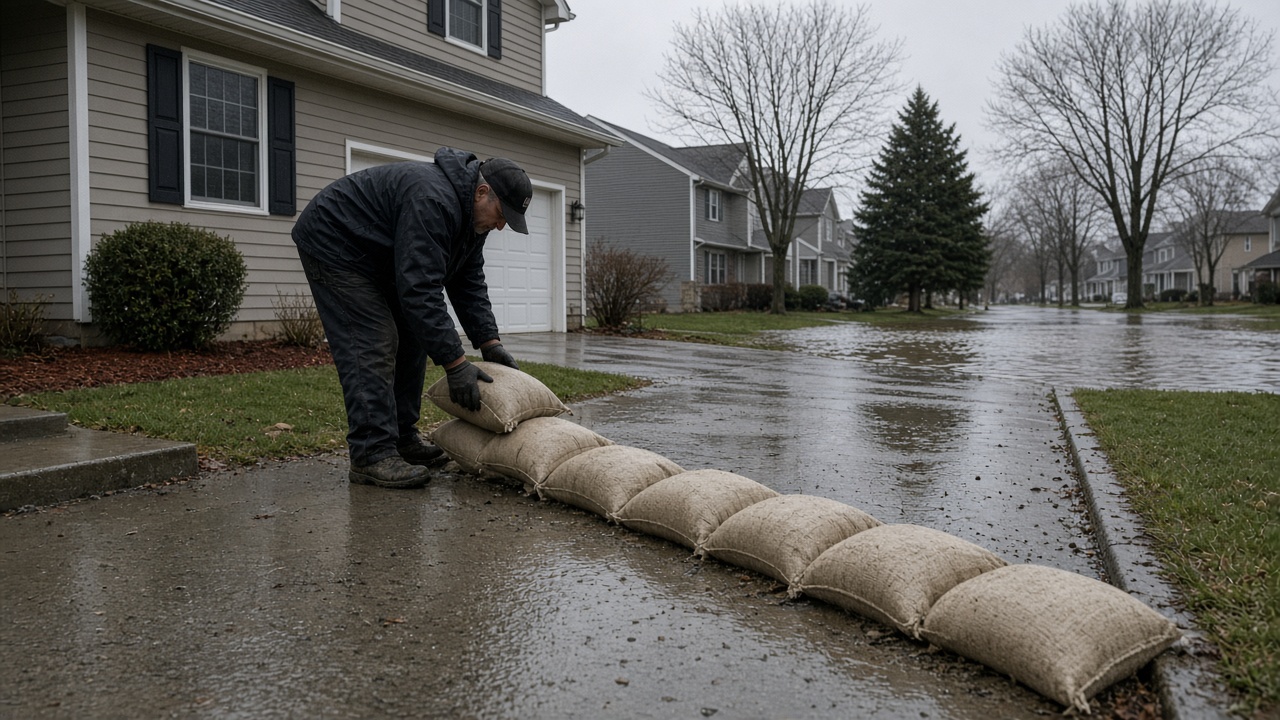
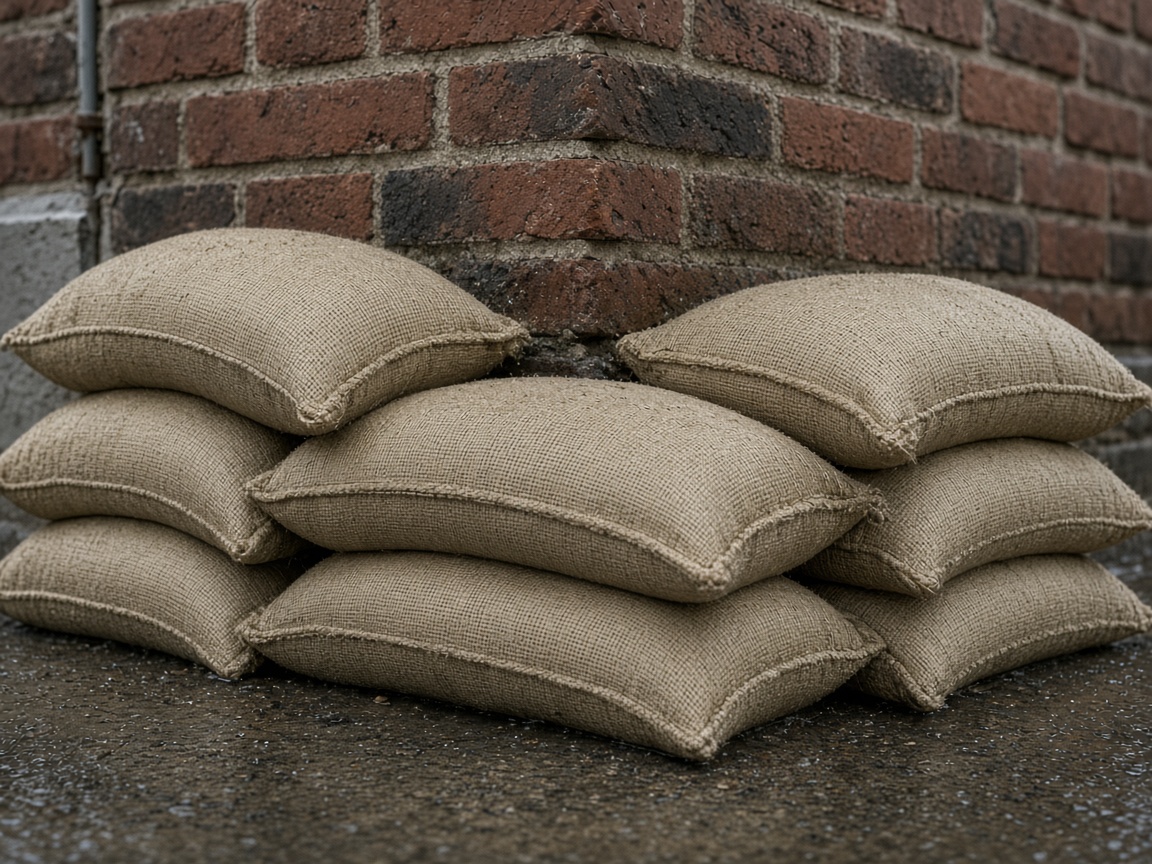
Sandbags are cheap, widely available, and flexible. They conform to uneven ground, they can be stacked around odd shapes like steps and garage aprons, and many city and county emergency management agencies distribute them or set up filling stations before a storm. They can also be reused only rarely — once a bag has been wet and dried, it tends to rot, and the sand is contaminated with whatever was in the floodwater.
What they are not is a dam. A sandbag wall is heavy, labor-intensive, and only effective at low water depths. Water is heavy, and the pressure it exerts grows quickly with depth, which is why a tall, narrow sandbag wall can slump or fail. Expect seepage through and under any sandbag wall, and plan for how you will remove that water.
How to build a sandbag wall that actually works
- Fill bags one-half to two-thirds full. Overfilled bags do not lie flat, and flat bags are what make a stable wall.
- Clear and level the ground first. Remove debris, rocks, and anything sharp that could puncture a plastic liner.
- Lay plastic sheeting under the first row and lap it up the face of the wall to slow seepage.
- Stack like brickwork. Stagger the seams, tamp each layer flat, and keep the base wider than the top.
- Wrap the wall around corners. A wall that stops at the corner of your house simply routes water around the end of it.
- Seal openings: vents, weep holes, crawlspace doors, garage thresholds, and utility penetrations.
- Keep the wall low and wide. Height without base width is how sandbag walls fail.
- Never block your only way out. You need an exit route that does not require climbing over a wall.
What manufactured flood barriers offer
Residential flood barriers come in several forms, and they solve sandbags' biggest weakness: speed and reusability.
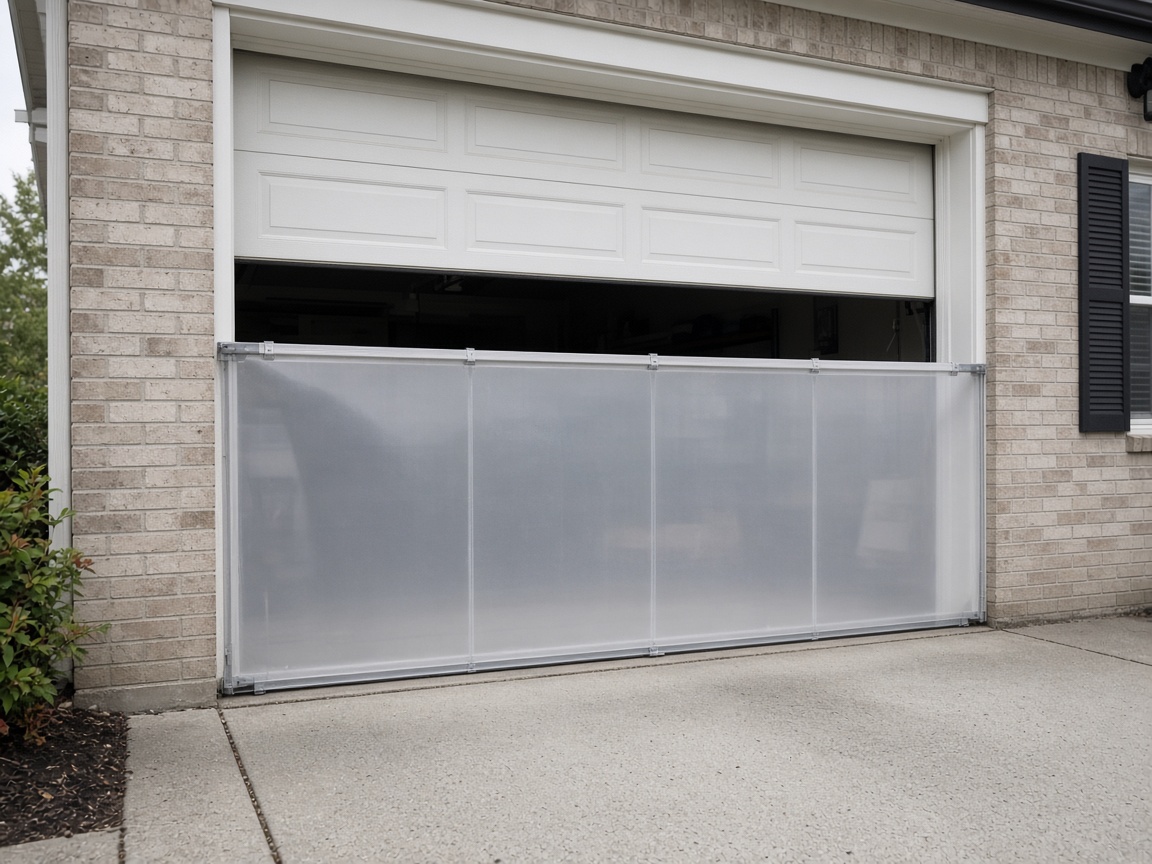
- Door and garage panels that clamp into a frame with rubber gaskets — fast to install, reusable, and easy to store.
- Water-filled tubes that you lay out and fill from a hose once they are in position. Empty, they are light; filled, they are very heavy and hard to move.
- Modular interlocking blocks or panels that snap or pin together into a longer run.
- Perimeter or self-rising systems built around a specific opening or driveway, often professionally installed.
Their advantages are real: a panel set can go up in minutes instead of hours, it stores in a garage, and it can be reused for years. A flood barrier is also a better fit for a doorway than a pile of sandbags, because a gasketed panel can seal an opening that bags cannot.
Where both approaches fail
This is the part that decides whether a product is worth your money:
- Seepage. Water finds gaps under sill plates, through mortar, around pipe penetrations, and beneath a barrier resting on a rough slab.
- Rising groundwater. After days of rain, the ground itself saturates. Water can come up through a slab or a crawlspace floor no matter how good your wall is.
- Sewer and drain backup. Floodwater entering the municipal system can push back into your home through floor drains and low fixtures. A barrier outside does not stop that.
- Overtopping. Once water is higher than the wall, the wall is irrelevant — and the water behind it now has nowhere to drain.
- Duration. Hurricane flooding can last for days. Gaskets leak, pumps lose power, and materials that were fine for a two-hour rain event get tested far beyond their rating.
- Rated vs. real conditions. Manufacturer ratings assume still water on a smooth, level surface. Moving surge carrying debris is a different problem entirely.
There is also a human risk. A barrier that gives you confidence can talk you out of evacuating. Emergency managers are clear that the safest choice during an evacuation order is to leave — and the National Weather Service reports that a large share of flood deaths happen in vehicles, when people try to drive through water on roads they thought were passable.
A layered plan that actually protects your home
- Know your risk. Check FEMA's National Risk Index, your community's flood maps, and USGS streamgages for nearby rivers. If your address is in a high-risk zone, plan accordingly.
- Buy flood insurance now. Standard homeowners policies do not cover flood. NFIP coverage generally has a 30-day waiting period, so coverage purchased the week of a storm will not help you.
- Plan to leave. Use Ready.gov's hurricane guidance and follow National Hurricane Center forecasts. Move important documents, medications, and valuables to high shelves or take them with you.
- Protect what you cannot move. Elevate or anchor water heaters, HVAC equipment, and electrical panels where local code allows. Consider a backflow valve on the sewer line and a battery-backed sump pump.
- Choose your barrier honestly. Sandbags for shallow water and short notice; a gasketed panel or tube system if you will be home to install it and the expected depth is low. Neither belongs in your plan for surge.
- Install early. Tropical storm winds arrive well before the storm center does, and installing a barrier in wind and rain is dangerous. Do the work the day before, not the hour before.
- Keep your exit. Never let flood protection trap you inside your home.
- Clean up safely. Follow CDC floodwater safety guidance — floodwater can carry sewage, chemicals, sharp debris, and wildlife, and can hide live electrical hazards and displaced snakes.
The bottom line
Sandbags and manufactured flood barriers are both useful, but only for shallow water — and only when they are installed early, built wide and sealed at the edges, and backed by a plan to deal with seepage, backup, and rising groundwater. For hurricane surge or deep flooding, no residential barrier is a substitute for elevation, flood insurance, and evacuation. Buy the barrier that fits the water depth you realistically expect, insure the rest, and be ready to leave. That combination protects your home far better than any wall you can stack in an afternoon.
About our guidance
Our guides are grounded in publicly available information from official sources such as FEMA, NOAA, USGS and Ready.gov. Information is general in nature — always verify details for your specific property and policy with official sources and your insurer.
Related guides
 InsuranceLender-Placed Flood Insurance: The Expensive Backup If Your Policy LapsesYour lender can force-place flood insurance if your policy lapses — and bill you for it, usually at a higher price. Here is how…Oct 15, 2026Read guide →
 InsuranceWhat Happens to Your NFIP Policy If Congress Lets the Program LapseCongress extended the NFIP through December 11, 2026. If the program lapses, existing policies stay in force and claims get paid…Oct 15, 2026Read guide →
 InsuranceExcess Flood Insurance: Coverage Above NFIP's $250,000 LimitThe NFIP caps flood coverage at $250,000 for the building and $100,000 for contents. If your home would cost more to rebuild,…Oct 15, 2026Read guide →