
Excess Flood Insurance: Coverage Above NFIP's $250,000 Limit
8 min read

On this page
- The NFIP's hard ceiling
- Why the cap matters more than ever
- What is excess flood insurance?
- How excess flood layers over your NFIP policy
- Who actually needs excess flood coverage?
- Excess flood vs. full private flood insurance: what is the difference?
- What excess flood policies typically cover — and what they do not
- What drives the cost
- How to buy excess flood insurance: a practical checklist
- Frequently asked questions
- Official sources
The NFIP caps flood coverage at $250,000 for the building and $100,000 for contents. If your home would cost more to rebuild, excess flood insurance closes the gap — here is how it works.
The National Flood Insurance Program caps residential coverage at $250,000 for the building and $100,000 for contents. If your home would cost more than that to rebuild, an NFIP policy alone leaves a gap — and excess flood insurance is how you close it. Here is what it is, who needs it, and how it layers over your NFIP policy.
The NFIP's hard ceiling
The National Flood Insurance Program (NFIP), run by FEMA, is the backbone of flood insurance in the United States. But its coverage limits are set by statute and have barely moved in decades:
- Residential building: $250,000 maximum
- Residential contents: $100,000 maximum
- Non-residential buildings: $500,000 building / $500,000 contents
These are hard caps — you cannot buy more NFIP coverage than this, no matter what your home is worth. For a modest home, $250,000 in building coverage may be plenty. For a higher-value home, it may cover only a fraction of the rebuild cost. If you are unsure where your property stands, our flood insurance explained guide walks through the NFIP basics first.
Why the cap matters more than ever
When the NFIP's limits were set, $250,000 bought a lot more house than it does today. Construction costs have climbed steadily, and in coastal and metro markets — Florida, coastal Texas, California — rebuilding a damaged home can easily run well past the federal ceiling.
The result: a growing share of homeowners carry an NFIP policy that would not come close to covering a full rebuild. Many do not discover the shortfall until after a flood, when the adjuster's number lands and the gap becomes painfully real.
Two gaps, not one
The building limit gets the attention, but there are actually two gaps to think about:
- The building gap: rebuild cost minus $250,000. On a $600,000 rebuild, that is a $350,000 exposure.
- The contents gap: NFIP contents coverage maxes at $100,000 and pays on an actual cash value basis — meaning depreciation is deducted. Replacing a furnished home at today's prices can blow past $100,000 fast.
What is excess flood insurance?
Excess flood insurance — sometimes called surplus flood insurance — is private-market coverage that sits on top of your NFIP policy. It kicks in after the NFIP policy pays out its maximum, covering the layer of loss between the federal cap and your chosen higher limit.
Think of it this way: your NFIP policy covers the first $250,000 of building damage. An excess policy can cover everything above that, up to limits that private carriers set — often $1 million or more for the building, depending on the carrier and your property.
Excess flood is not the same as replacing your NFIP policy with a private one (more on that below). It is specifically designed to supplement the federal program, and many carriers require you to keep your underlying NFIP policy in force.
How excess flood layers over your NFIP policy
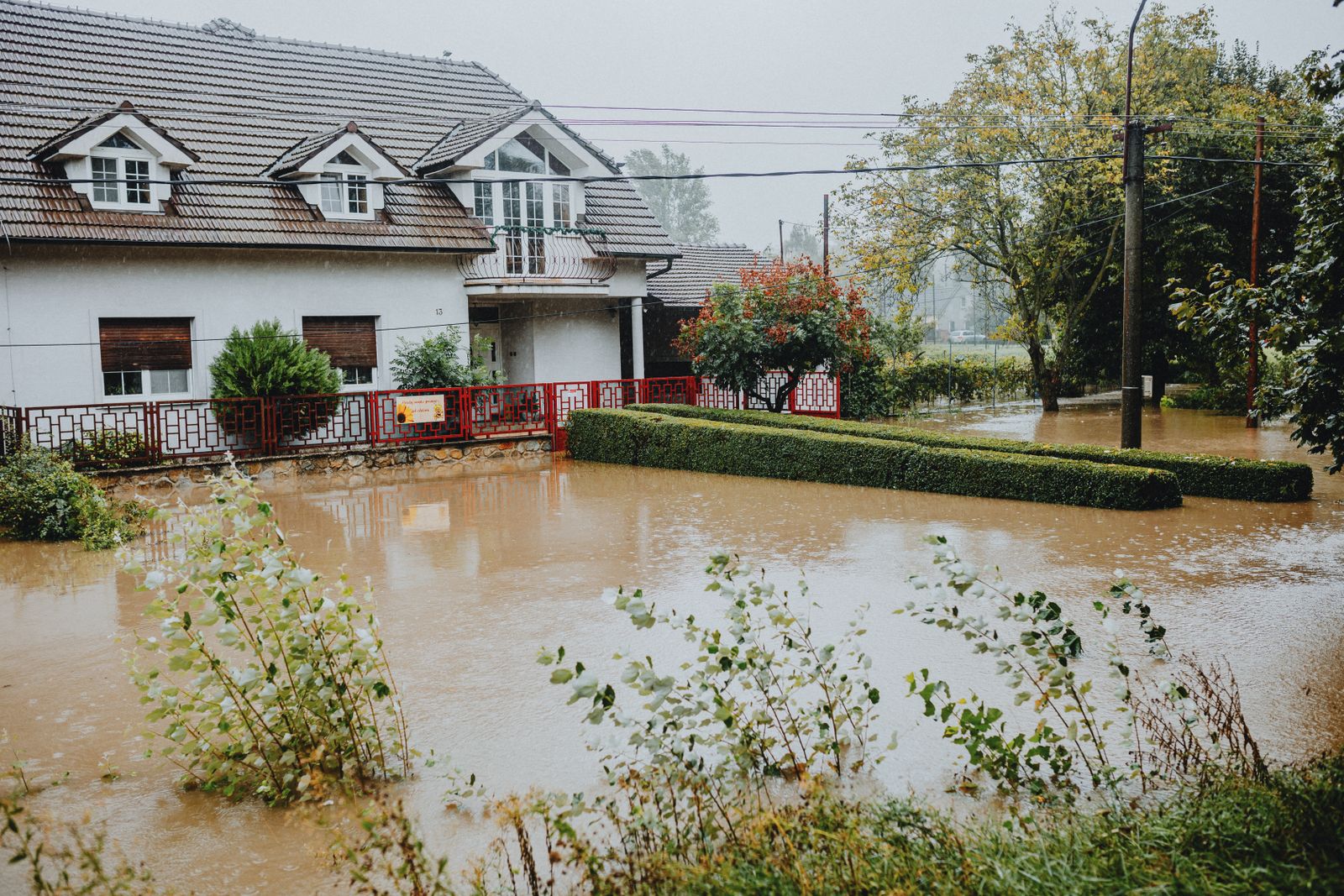
The layering works like this:
- Layer 1 — NFIP (base): covers building damage up to $250,000 and contents up to $100,000, on NFIP terms (actual cash value for contents, standard exclusions).
- Layer 2 — Excess flood (private): activates once NFIP limits are exhausted. Covers additional building and contents amounts up to the excess policy's limits, on the private carrier's terms — which are often broader (replacement cost options, additional living expenses in some policies).
At claim time, the NFIP policy responds first. The excess carrier pays the remainder of covered loss above the NFIP payout, up to its own limit. Because the two policies are separate contracts, it is worth confirming — in writing, before you buy — exactly how the excess policy defines the point where it attaches.
What about the deductible?
Excess policies typically have their own deductible, separate from the NFIP deductible. Some apply the deductible only to the excess layer; others may credit what you already paid toward the NFIP deductible. Ask the agent to walk through a sample claim scenario so you understand your true out-of-pocket exposure.
Who actually needs excess flood coverage?

Excess flood insurance is not for everyone. It makes the most sense if several of these describe you:
- Your home's replacement cost exceeds $250,000. This is the core trigger. Get a rebuild estimate — not market value, but what it would cost to reconstruct — and compare it to the NFIP cap.
- You are in a coastal or high-cost market. Higher-value homes in flood-prone states face the biggest gaps between NFIP limits and real rebuild costs.
- Your lender requires full coverage. If your mortgage balance exceeds $250,000, your lender may require flood coverage equal to the loan amount or the home's insurable value. An NFIP policy alone cannot satisfy that requirement — and if you do not arrange it, the lender can force-place coverage at steep cost.
- You have significant contents value. Furnished homes, home offices, and collections can exceed the $100,000 contents cap, especially with NFIP's depreciation.
- You want broader terms. Some excess policies offer replacement cost on contents or additional living expenses — coverages the NFIP does not provide at all.
If none of these apply — your rebuild cost sits comfortably under $250,000 and your lender is satisfied — a standard NFIP policy may be all you need. Our flood risk by state pages can help you gauge your area's exposure.
Excess flood vs. full private flood insurance: what is the difference?
This is the most common point of confusion, so let us be precise:
- Excess flood insurance supplements your NFIP policy. You keep the federal policy as the base layer and buy private coverage for the amounts above it. Best when you want to keep your NFIP policy (for example, a grandfathered rate) but need higher limits.
- Standalone private flood insurance replaces the NFIP policy entirely. One private policy covers your full limit, often with broader terms. Best when the private market offers you better pricing or terms across the board — but compare carefully, because leaving a discounted legacy NFIP rate behind is generally permanent.
Neither option is automatically better. Quote both structures, read the exclusions side by side, and confirm with your lender that whichever you choose satisfies their requirements.
What excess flood policies typically cover — and what they do not
Terms vary by carrier, since these are private contracts rather than the standardized NFIP policy form. That said, excess flood policies commonly offer:
- Building coverage above $250,000, up to the policy limit you select
- Contents coverage above $100,000, sometimes with replacement cost options
- Broader definitions of covered property than the NFIP in some policies
- Occasionally, additional living expenses — a coverage the NFIP never provides
Common exclusions and limitations to check:
- Earth movement, even if caused by flooding, is typically excluded
- Basement and below-grade coverage restrictions often mirror NFIP limitations
- Mold or moisture damage may have sub-limits
- Waiting periods apply — buy before storm season, not during it
What drives the cost
No one can quote your premium without your address, but these are the factors carriers weigh most heavily:
- Flood zone and elevation: properties in Special Flood Hazard Areas cost more to insure; elevation certificates help price accurately.
- Distance to water: proximity to rivers, coasts, and lakes is a primary rating factor.
- Coverage amount: higher excess limits cost more, though the per-dollar cost often drops as limits rise.
- Building characteristics: foundation type, number of stories, and flood mitigation features (elevation, flood vents, barriers).
- Claims history: prior flood claims on the property raise premiums.
Premiums vary widely by carrier and property — the only reliable number is a quote on your specific home. Get quotes from more than one excess flood carrier, and ask each one to explain how their policy coordinates with your NFIP coverage. For context on how location shapes all kinds of home insurance pricing, see our breakdown of home insurance costs by state.
How to buy excess flood insurance: a practical checklist
- Get a rebuild estimate. Ask your insurer or a contractor for replacement cost — not market value. Subtract $250,000 to size your building gap; tally contents separately against the $100,000 cap.
- Confirm your flood zone. Check FEMA's Flood Map Service Center for your official zone designation — carriers will ask.
- Talk to your lender. If you have a mortgage in a high-risk zone, ask exactly how much flood coverage they require and whether they accept excess policies.
- Find a knowledgeable agent. Not every agent handles excess flood. Look for one experienced with flood risk in your state who works with multiple surplus-lines carriers.
- Quote both structures. Price excess-over-NFIP and standalone private flood side by side before deciding.
- Read the coordination language. Confirm in writing when the excess policy attaches and how deductibles interact with your NFIP policy.
- Buy early. Waiting periods mean a policy bought days before a storm may not respond to it.
Frequently asked questions
Can I buy excess flood insurance without an NFIP policy?
Most excess flood products are designed to sit on top of an NFIP policy and require it as the underlying coverage. If you do not want an NFIP policy at all, you are generally looking at standalone private flood insurance instead — a different product.
Does excess flood insurance satisfy my lender's requirement?
Often yes, when combined with your NFIP base policy to reach the required total — but confirm with your specific lender before binding coverage. Lender requirements vary.
Is excess flood insurance available everywhere?
Availability varies by state and carrier appetite. Surplus-lines carriers operate under state regulations that differ across the country, so options in one state may not exist in another. An experienced local agent is the fastest way to find out what is available for your property.
What happens if my NFIP policy lapses?
Your excess coverage may be suspended or voided if the underlying NFIP policy lapses, since the excess contract assumes that base layer exists. Keep both policies in force and aligned on renewal dates.
Official sources
- FEMA — Flood Insurance: the federal program's official portal, including coverage information
- FloodSmart.gov: the NFIP's consumer site — coverage limits, costs, and how to buy
- FEMA Flood Maps: check your property's official flood zone designation
About our guidance
Our guides are grounded in publicly available information from official sources such as FEMA, NOAA, USGS and Ready.gov. Information is general in nature — always verify details for your specific property and policy with official sources and your insurer.
Keep exploring
Related guides
 InsuranceLender-Placed Flood Insurance: The Expensive Backup If Your Policy LapsesYour lender can force-place flood insurance if your policy lapses — and bill you for it, usually at a higher price. Here is how…Oct 15, 2026Read guide →
 InsuranceWhat Happens to Your NFIP Policy If Congress Lets the Program LapseCongress extended the NFIP through December 11, 2026. If the program lapses, existing policies stay in force and claims get paid…Oct 15, 2026Read guide →
 InsuranceHome Insurance Costs by State: Why Quotes Vary So MuchHome insurance costs by state can swing two or three times for the same house. Here's what actually drives your quote, and what…Oct 9, 2026Read guide →