
Is My House in a Flood Zone? How to Check Before You Close
6 min read
On this page
Your lender's flood cert says Zone AE, and you have 48 hours to decide. Here's how to read FEMA's map and ask better questions before you sign.
Your lender's flood certification just hit your inbox, and it says 'Zone AE.' You have a closing date, a rate lock, and maybe ten minutes to figure out whether that's a problem. Short version: Zone AE is a high-risk flood zone. If you're using a federally backed mortgage, your lender will likely require flood insurance. But the cert is a snapshot, not a prophecy. It tells you what FEMA's map says today. It doesn't tell you whether your street floods when the storm drain backs up, or whether the quote you got is fair.
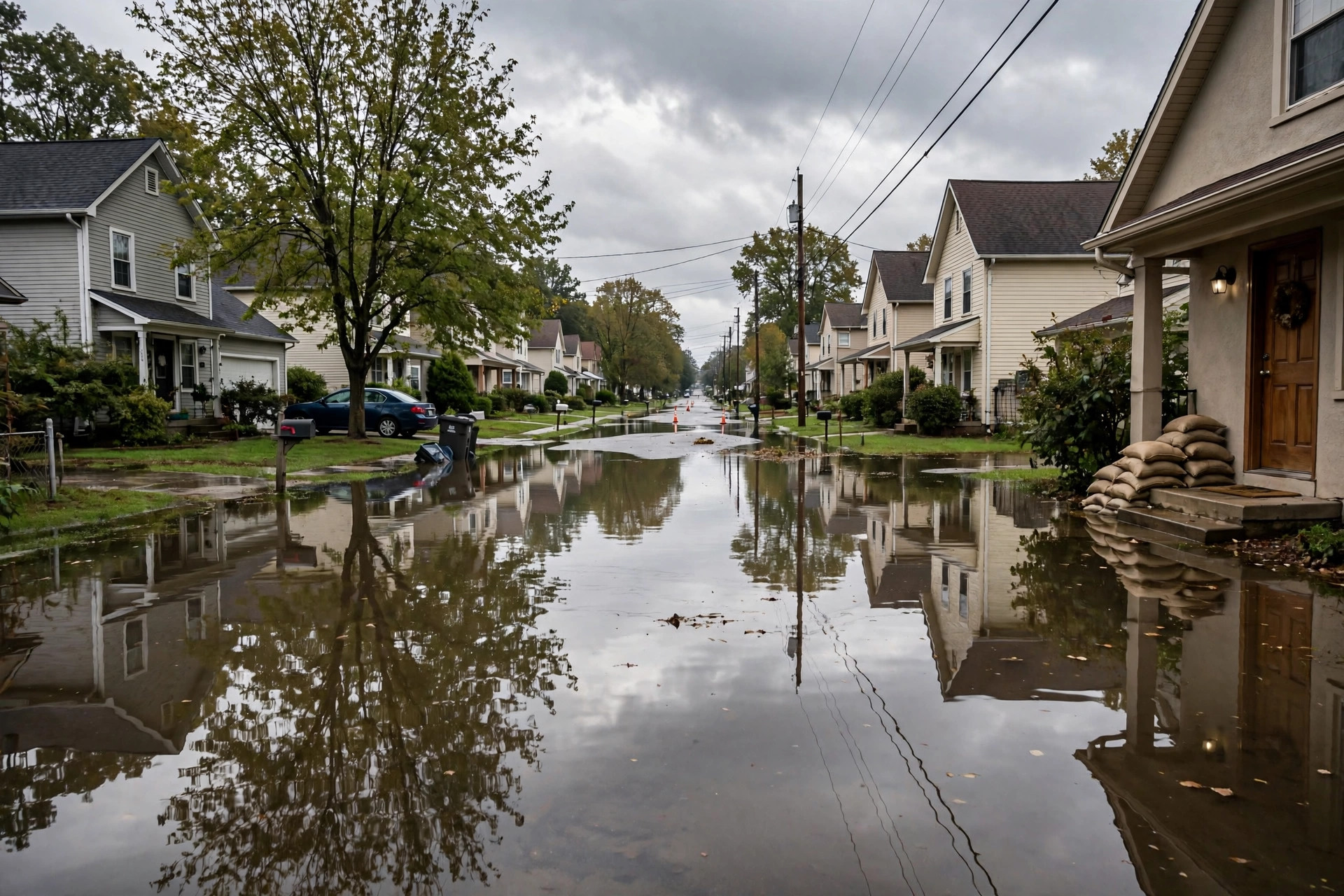
That gap is where people get surprised. Buyers treat a low-risk determination as a guarantee, then file a claim after a heavy rain. Sellers panic over a Zone A label they never appealed. The map matters. It's just not the only thing that matters.
The flood cert is not the whole story
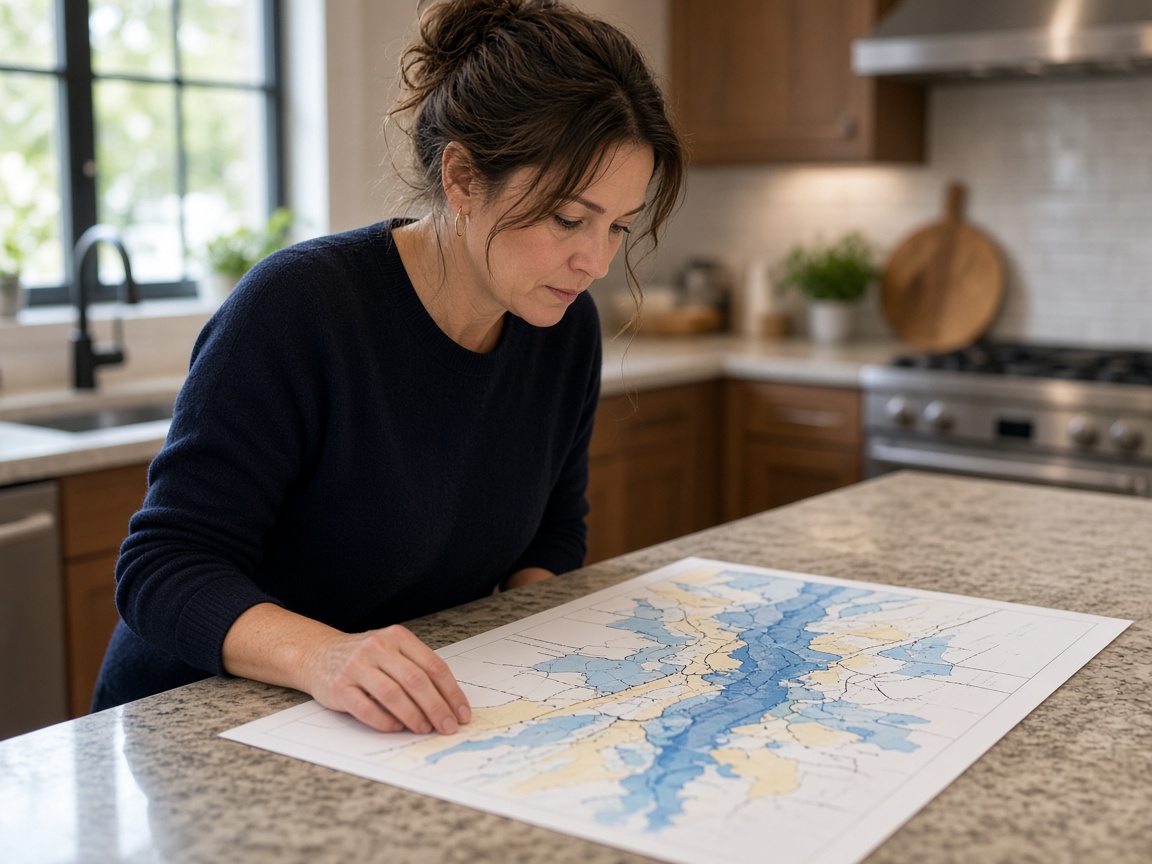
Your lender orders a flood zone determination to satisfy federal rules. It compares the property's location against FEMA's current Flood Insurance Rate Map, or FIRM. If the building sits in a Special Flood Hazard Area (SFHA), the lender typically requires flood insurance. If it doesn't, the lender usually drops the requirement. That's it. The determination doesn't evaluate your driveway's slope, the creek behind the shed, or the new subdivision going up across the road.
Whether you're in Florida, Texas, or a small town in Ohio, the process is the same: start with the map, then check the ground.
What that letter after 'Zone' actually means
FEMA zones are shorthand. Here's the plain-English version:
- Zone A — high-risk flood area, but no base flood elevation has been set for that spot. Insurance is usually required on a federally backed mortgage.
- Zone AE — high-risk, with a base flood elevation. This is the most common high-risk zone you'll see on a flood cert.
- Zone AO or AH — shallow flooding or ponding. Still high-risk.
- Zone V or VE — coastal high-hazard area with wave action. These carry the strictest building and insurance rules.
- Zone X (unshaded) — outside the high-risk zone. Lenders usually don't require insurance, but you can still buy it.
- Zone X (shaded) — the 0.2% annual chance flood area, sometimes called the 500-year floodplain.
- Zone D — undetermined risk. FEMA hasn't studied it enough to assign a zone.
If you see a 'B' or 'C' on an older document, don't worry. FEMA retired those and folded them into X. The underlying risk didn't disappear.
Check the map yourself in five minutes
You don't need an account. Go to FEMA's Flood Map Service Center. Enter the full address. Open the current FIRM panel and search for the parcel. You'll see the zone and, on many panels, the base flood elevation. Save the PDF. If closing is next week, that PDF belongs next to the inspection report.
Then make one phone call. Ask your local floodplain administrator:
- Has this parcel ever been flooded or had a flood claim?
- Have the maps changed recently, or are new maps coming?
- Do I need an elevation certificate to get an accurate quote?
That call is free. It often tells you more than an instant risk score. Ask neighbors whether the street drains during a normal summer storm. You're not being nosy. You're doing due diligence.
Your zone can change, and that changes the math
Flood maps are revised. A new levee study, a better survey, or a growing watershed can move a parcel from X into AE, or the other way around. If you buy in an X zone and FEMA remaps later, you could face a new insurance requirement. If you already have a policy, you may be able to keep it under grandfathering rules. That's one reason buying coverage before a map change can be smart: the rules often reward continuity.
If you have proof the map is wrong, you can file a Letter of Map Amendment (LOMA) for one lot or a Letter of Map Revision (LOMR) for a larger change. You'll usually need a surveyor or engineer. It's not fast, and it's not free. But if you're paying a high-risk premium on a house that sits two feet above the base flood elevation, it can pay for itself.
If you only do one thing
Pull the FIRM panel for your exact address from FEMA's Map Service Center and read the zone before you remove any contingencies. Then call your local floodplain administrator. Do that and you'll know whether you're negotiating an insurance requirement or just checking a box. Everything else—elevation certificates, private quotes, LOMAs—can wait.
What to do before you sign
Once you know the zone, price the risk. A few practical moves:
- Get quotes from both markets. The NFIP and private flood insurers don't price the same way. Sometimes private is cheaper. Sometimes it isn't.
- Ask about the 30-day waiting period. NFIP policies usually take 30 days to kick in. Don't assume you can buy coverage the day before a storm.
- Check for a community discount. Some towns participate in FEMA's Community Rating System, which can lower NFIP premiums. Ask your agent or floodplain administrator.
- Look at elevation. In an AE zone, the height of your lowest floor above the base flood elevation drives the rate. An elevation certificate is worth the cost if it saves you money every year.
- Don't rely on homeowners insurance. Standard homeowners and renters policies typically exclude flood. You need a separate policy.
- Think about contents and basements. Flood insurance can cover building and contents. Basements have limited coverage. If you store family photos or a furnace down there, ask how it's treated.
Also check FEMA's National Risk Index for your county. It won't tell you about your specific lot, but it can show whether flood is a headline risk where you live. Pair that with Ready.gov's flood guidance and NOAA's flood safety pages so you know what to do when water starts rising.
Questions we get
Does Zone X mean I'll never flood?
No. Zone X means you're outside the high-risk area on FEMA's current map. It doesn't mean dry. Heavy rain, flash flooding, and drainage problems can still put water in your house. FEMA has long said a meaningful share of flood claims come from outside high-risk zones. If you live in a low area or near a small creek, talk to your floodplain administrator anyway.
Can I buy flood insurance if I'm not in a high-risk zone?
Yes. You can usually buy an NFIP policy or a private policy in moderate- and low-risk zones. It's often cheaper than a high-risk policy, but the coverage still matters. Renters can buy contents-only coverage too.
Will my homeowners policy cover flood?
Usually no. Homeowners policies cover wind, fire, and some water damage from burst pipes, but they typically exclude flood. If you want flood coverage, you buy it separately. Read the exclusions before you file a claim, not after.
Official sources
- FEMA Flood Map Service Center
- FEMA Flood Maps
- FEMA National Risk Index
- FloodSmart
- FEMA Flood Insurance
- Ready.gov Floods
- NOAA National Weather Service Flood Safety
- USGS Floods and Floodplains
You don't need to become a hydrologist before closing. You need to know your zone, your elevation, and your insurance options. Pull the map. Make the call. Price the policy. Then decide with your eyes open.
About our guidance
Our guides are grounded in publicly available information from official sources such as FEMA, NOAA, USGS and Ready.gov. Information is general in nature — always verify details for your specific property and policy with official sources and your insurer.
Related guides
 InsuranceLender-Placed Flood Insurance: The Expensive Backup If Your Policy LapsesYour lender can force-place flood insurance if your policy lapses — and bill you for it, usually at a higher price. Here is how…Oct 15, 2026Read guide →
 InsuranceWhat Happens to Your NFIP Policy If Congress Lets the Program LapseCongress extended the NFIP through December 11, 2026. If the program lapses, existing policies stay in force and claims get paid…Oct 15, 2026Read guide →
 InsuranceExcess Flood Insurance: Coverage Above NFIP's $250,000 LimitThe NFIP caps flood coverage at $250,000 for the building and $100,000 for contents. If your home would cost more to rebuild,…Oct 15, 2026Read guide →