
After the Hurricane: Document Home Damage for Your Claim
7 min read
On this page
- Safety First: Before You Take a Single Photo
- Start Your Record as Soon as It's Safe
- How to Photograph and Video Hurricane Damage
- Make a Written Inventory of Damaged Belongings
- Keep the Evidence—Don't Haul It to the Curb Yet
- Wind vs. Flood: Why the Distinction Matters
- Prevent Further Damage—and Keep Every Receipt
- Keep a Claim Log and Back Up Your Files
- If You're Applying for FEMA Assistance
- Your Hurricane Damage Documentation Checklist
- The Bottom Line
Photos, a written inventory, and a simple claim log can make or break your hurricane insurance claim. Here's how to document damage the right way—before you clean up.
Once the storm passes and it's safe to go outside, the instinct is to grab a broom, a trash bag, and start hauling debris to the curb. Resist that instinct for an hour or two. Your insurance claim—and, in many cases, your eligibility for federal disaster assistance—depends on evidence, and evidence is easiest to collect before cleanup begins. Documentation is also the difference between a claim that moves quickly and one that drags on for months.
Safety First: Before You Take a Single Photo
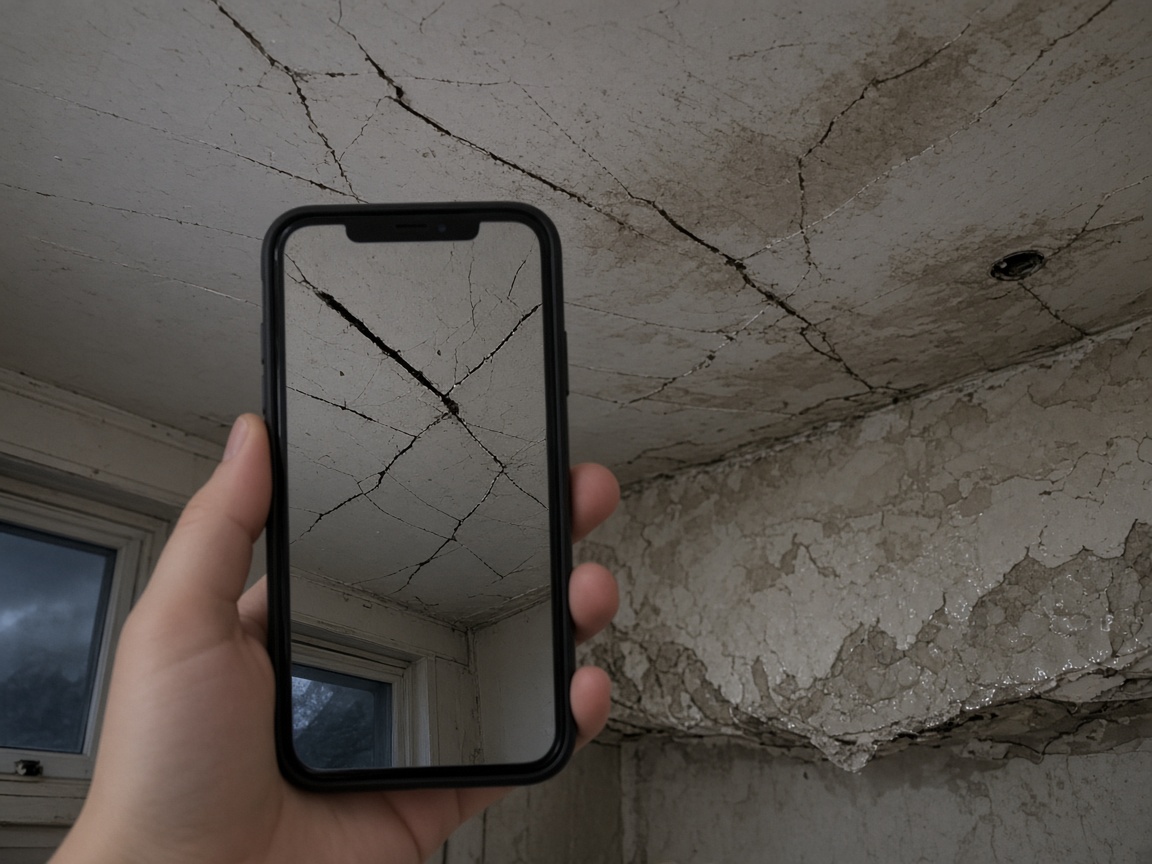
No photo is worth an injury. Ready.gov and the CDC both stress avoiding hazards in a storm-damaged home. Before you walk through:
- Watch for structural damage. Sagging ceilings, cracked beams, and leaning walls mean get out and call a professional.
- Never enter standing water if power may still be on. Water and electricity are a lethal combination, and floodwater often carries sewage and chemicals.
- Avoid downed or dangling power lines and report them to your utility—not your insurance agent.
- Never run a generator, camp stove, or grill indoors, in a garage, or near a window. Carbon monoxide is invisible and kills quickly.
- Wear sturdy boots, gloves, long sleeves, and eye protection, and treat any puncture wound or open cut as a medical matter—floodwater infections are common.
If the home is unsafe to enter, document what you can from the exterior and let your adjuster know. Your safety, and the safety of anyone helping you, comes before the claim.
Start Your Record as Soon as It's Safe
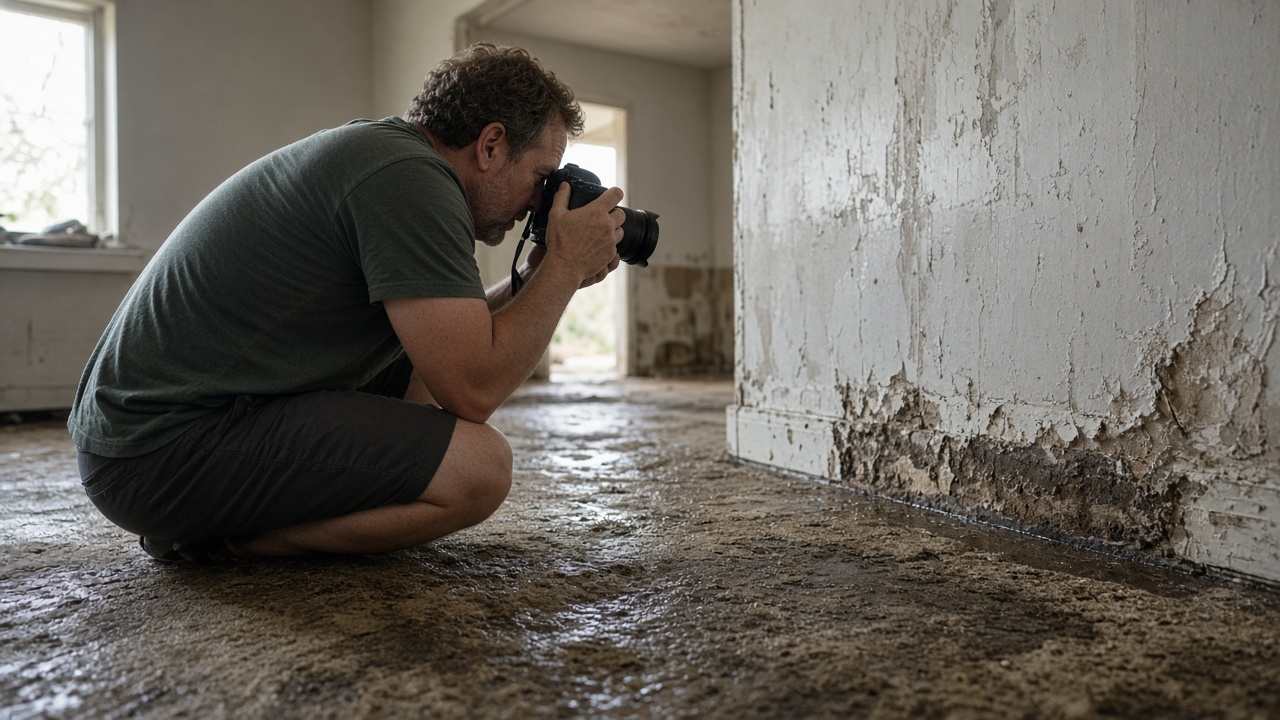
Photograph and write things down before you repair, clean, or discard anything. Most policies require you to show the insurer the extent of the loss, and once damaged drywall or flooring is gone, that proof is gone too.
If you evacuated, ask a trusted neighbor, relative, or your insurance adjuster about the condition of the home, and note the date and time of that conversation. If you couldn't return for days, say so—the timeline matters when an insurer asks why damage worsened.
How to Photograph and Video Hurricane Damage
Shoot more than you think you need. Digital photos cost nothing, and adjusters would rather sort through 300 images than wonder what happened to your kitchen.
Exterior shots
- Stand back and photograph each side of the house, plus the roof from ground level if it's visible.
- Capture the whole yard, fence line, driveway, and outbuildings (sheds, garages, pools).
- Shoot close-ups of missing shingles, dented siding, broken windows, downed trees touching the structure, and debris that may have struck the house.
- Include vehicles, boats, and lawn equipment if they were damaged.
Interior shots
- Photograph every room, including closets, the attic, crawlspace, and garage—even rooms that look fine.
- Show the water line. Use a tape measure or a ruler in the frame if you can, and mark the high-water line on walls with a pencil or tape before it fades or gets painted over.
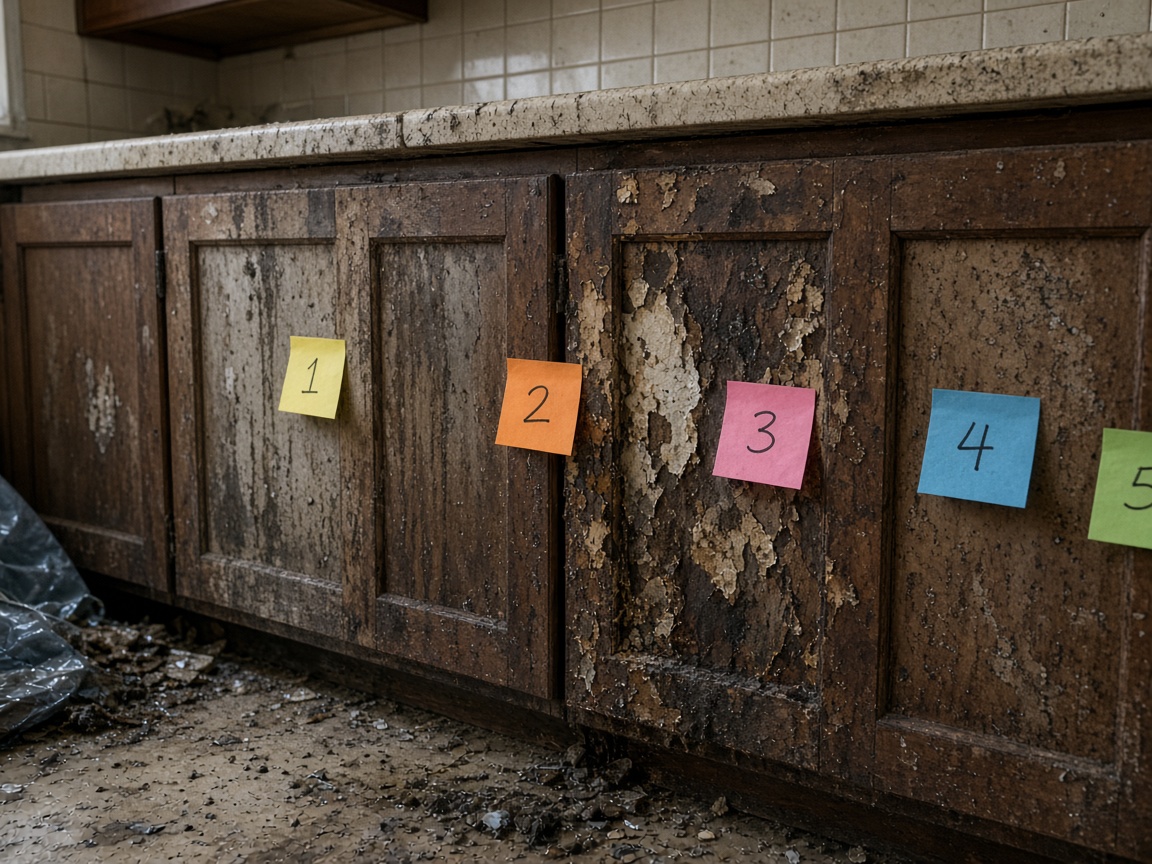
- Open cabinets and drawers and shoot the contents; photograph warped flooring, buckled baseboards, and stained ceilings.
- Photograph damaged appliances and electronics with brand and model number plates visible.
Video walk-through
A slow, narrated video is one of the most useful things you can give an adjuster. Walk through the home and say aloud what you're seeing—"this is the north wall of the living room, water came up about eight inches"—along with the date. Keep your phone's timestamp feature on, or hold a dated newspaper in the first frame.
Make a Written Inventory of Damaged Belongings
Photos alone rarely establish value. Create a simple list—a notebook, a spreadsheet, or a note on your phone—with this information for each damaged item:
- Item description (make, model, size, color)
- Approximate age and where it was purchased
- Estimated replacement cost
- Serial number, if available
Receipts, warranty cards, credit card statements, and old photos of the room can all help prove you owned what you say you owned. This is also where a home inventory you made before the storm pays off enormously—if you have one, pull it up now.
Keep the Evidence—Don't Haul It to the Curb Yet
Resist the urge to deep-clean before the adjuster visits. For items you truly must remove—soaked carpet, ruined mattresses, spoiled food—photograph them first, and consider saving a small sample, such as a square of carpet or a section of warped flooring. Many adjusters accept samples in place of the whole item.
Once your adjuster confirms the items have been documented, you can dispose of them. Ask for that confirmation in writing or by email.
Wind vs. Flood: Why the Distinction Matters
This is the single most consequential question in a hurricane claim. Standard homeowners insurance generally covers wind damage; flood damage is typically excluded and must be covered by a separate policy, usually through the National Flood Insurance Program (NFIP) or a private flood insurer.
Because of that split, document what caused each bit of damage:
- Note whether water came from storm surge, rising water, or rain entering through a wind-damaged roof or window.
- Photograph both the wind damage (missing shingles, broken glass) and the water damage separately.
- Write down dates and times as best you can recall—when the wind peaked, when water entered.
If you have both a homeowners and a flood policy, file claims with both carriers. Don't guess at which policy applies; let the adjusters sort it out.
Prevent Further Damage—and Keep Every Receipt
Nearly every policy requires you to take reasonable steps to prevent additional damage after a loss. That usually includes tarping a damaged roof, boarding broken windows, and removing standing water. Save all receipts for materials, equipment rentals, and hired labor—these costs are often reimbursable.
The CDC notes that mold can begin growing within roughly 24 to 48 hours of water exposure, so drying out quickly is both a health measure and a claim-protection measure. If you need to make emergency repairs before the adjuster arrives, photograph the damage first and keep every receipt.
Keep a Claim Log and Back Up Your Files
Keep a running record of everyone you speak with:
- Date and time of each call
- Name, company, and phone number of the person you spoke with
- What was discussed and what was promised
- Your claim number
Save your photos and documents in more than one place—cloud storage or email them to yourself. Also set aside receipts for hotel stays, meals, and laundry if you had to leave home; those may fall under additional living expenses coverage in your policy.
If You're Applying for FEMA Assistance
Register with FEMA at DisasterAssistance.gov or by calling 1-800-621-3362. FEMA generally asks for proof that you owned or rented the home and that it was your primary residence, so keep deeds, lease agreements, utility bills, and IDs handy alongside your damage photos.
Be cautious with unsolicited contractors who appear right after a storm. Never pay in full upfront, never sign a document you haven't read, and know that you can contact your insurer directly to verify anyone claiming to represent them.
Your Hurricane Damage Documentation Checklist
- Confirm the home is safe to enter.
- Photograph and video the exterior and every interior room before cleanup.
- Mark and document the high-water line.
- Write down an inventory of damaged items with ages and values.
- Keep damaged items or samples until the adjuster confirms.
- Make emergency repairs only as needed—and save receipts.
- File claims with both your homeowners and flood carriers if applicable.
- Keep a dated log of every conversation and back up all files.
The Bottom Line
Take a breath, take out your phone, and document before you clean. An hour spent photographing rooms, writing down a water line, and listing damaged belongings can save weeks of back-and-forth with your insurer. Call your agent to report the loss as soon as you reasonably can, keep copies of everything in the cloud, and never throw away damaged property until an adjuster has confirmed it's been recorded.
About our guidance
Our guides are grounded in publicly available information from official sources such as FEMA, NOAA, USGS and Ready.gov. Information is general in nature — always verify details for your specific property and policy with official sources and your insurer.
Related guides
 InsuranceLender-Placed Flood Insurance: The Expensive Backup If Your Policy LapsesYour lender can force-place flood insurance if your policy lapses — and bill you for it, usually at a higher price. Here is how…Oct 15, 2026Read guide →
 InsuranceWhat Happens to Your NFIP Policy If Congress Lets the Program LapseCongress extended the NFIP through December 11, 2026. If the program lapses, existing policies stay in force and claims get paid…Oct 15, 2026Read guide →
 InsuranceExcess Flood Insurance: Coverage Above NFIP's $250,000 LimitThe NFIP caps flood coverage at $250,000 for the building and $100,000 for contents. If your home would cost more to rebuild,…Oct 15, 2026Read guide →