
How to Protect Your Home From Storm Surge Before Isaias
6 min read
On this page
- Storm Surge Is the Water — and It's the Biggest Threat
- Step 1: Know Your Risk and Your Evacuation Zone
- Step 2: Secure the Outside of Your Home
- Step 3: Keep Water Out of the House
- Step 4: Move Valuables and Prepare the Interior
- Step 5: Document Everything for Insurance
- Step 6: Stay Safe After the Surge
- If Officials Tell You to Evacuate, Go
- The Bottom Line
Storm surge, not wind, is often the biggest threat a hurricane brings. Here's how to prepare your home — and your family — before Hurricane Isaias arrives.
Storm Surge Is the Water — and It's the Biggest Threat
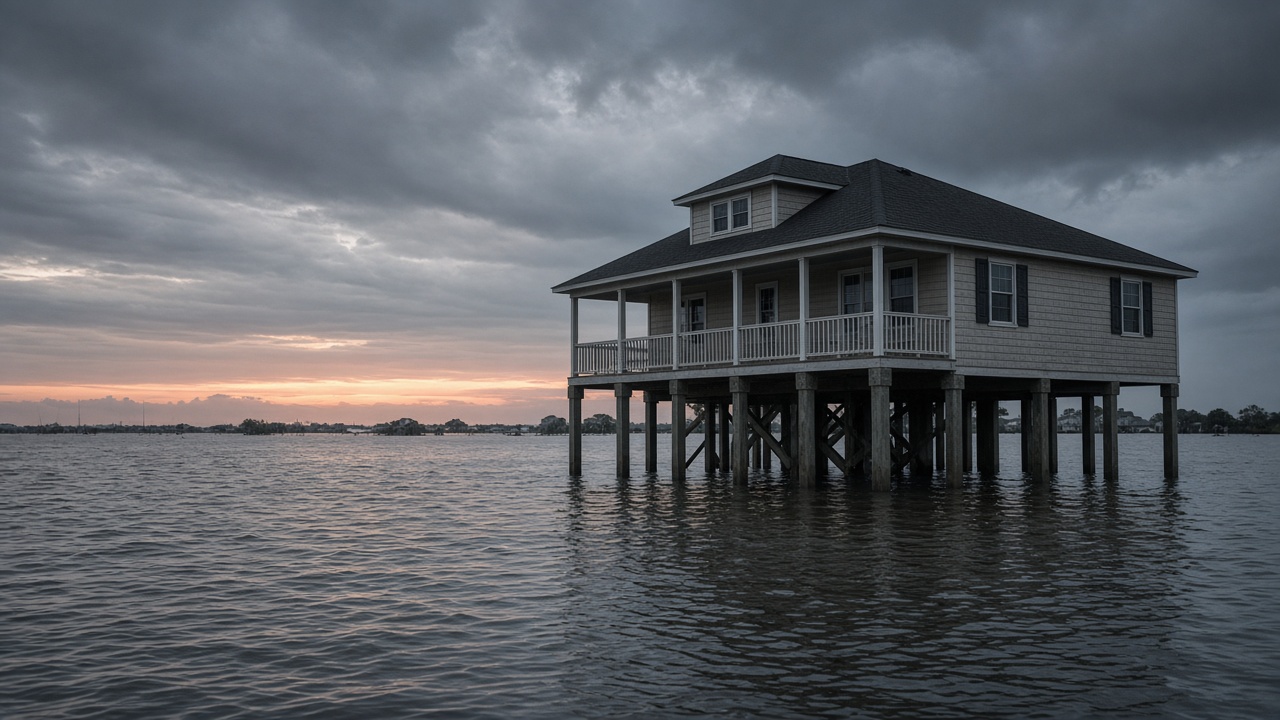
When a hurricane approaches, most of us fixate on wind speed and category. But the National Hurricane Center and FEMA both emphasize that storm surge — the abnormal rise of ocean water driven ashore by a storm's winds — is often the greatest threat to life and property during a hurricane.
Surge doesn't politely stop at the beach. It can travel several miles inland through bays, rivers and inlets, flooding streets and homes far from the ocean. As Hurricane Isaias approaches, the most valuable thing you can do is prepare for water, not just wind.
Here's a practical, prioritized plan based on guidance from FEMA, NOAA, the National Weather Service, the USGS and the CDC.
Step 1: Know Your Risk and Your Evacuation Zone
Before you buy a single sandbag, find out whether your home sits in a surge-vulnerable area and which evacuation zone you're in.
- Find your evacuation zone. Many coastal states and counties publish "Know Your Zone" maps. Check your county emergency management website or your state emergency management agency, and review the preparedness basics at Ready.gov. Know the route you would take and where you would go.
- Look up your surge exposure. NOAA's National Storm Surge Hazard Maps show how deep water could get in a worst-case scenario for your area. The USGS also studies coastal change and flooding through its Coastal and Marine Hazards program.
- Don't judge by category alone. Surge height depends on the storm's size, forward speed, angle of approach, the tide, and the shape of your coastline. A lower-category storm with a broad wind field can push more water ashore than a compact, stronger one.
If your zone is told to evacuate, that instruction is based on surge modeling, not guesswork. Plan to leave early — before bridges close and roads back up.
Step 2: Secure the Outside of Your Home
Doors, windows and garage doors
- Close and lock all windows and exterior doors. Locking helps them resist wind pressure.
- Install storm shutters or precut plywood panels over windows and glass doors if you have them ready. Follow manufacturer instructions so you don't damage frames or void warranties.
- Reinforce or brace your garage door. Garage doors are a common failure point; once one fails, wind pressurizes the house from inside and can contribute to roof loss.
- Remove or secure sliding screen doors, awnings and shutters that could become projectiles.
Yard, vehicles and fuel
- Bring in or tie down patio furniture, grills, trash cans, planters, toys, and anything else the wind can throw.
- Trim dead limbs that could fall on the house — but don't start major tree work once the storm is close.
- Move vehicles to higher ground, away from trees and low-lying roads.
- Fill fuel cans and your vehicle's tank. Store gasoline safely — never inside the home or garage.
- Turn off and, if possible, anchor propane tanks; move pool chemicals and other hazardous materials above potential flood level.
Step 3: Keep Water Out of the House
Sandbags and temporary barriers
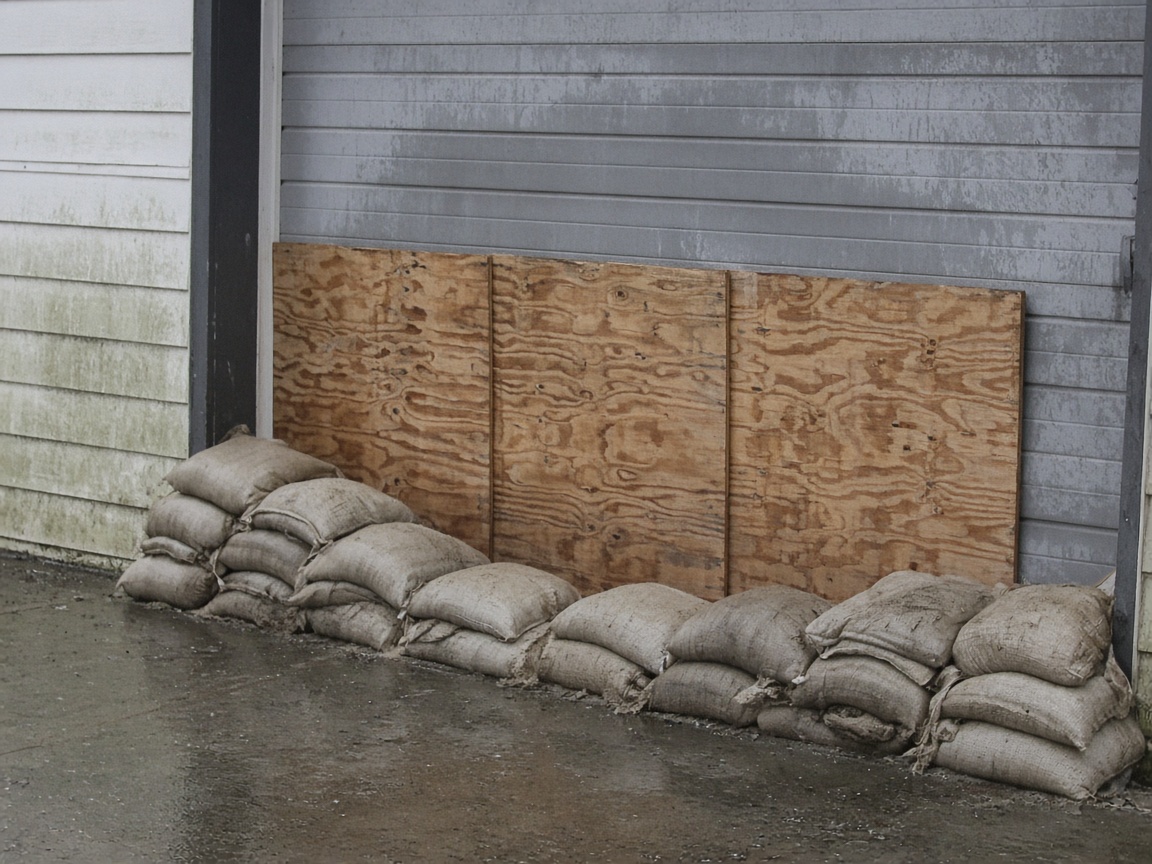
For shallow flooding around doors and garage openings, sandbags, water-filled barriers and commercial flood panels can help — but only if installed before the water arrives. They are not watertight dams and won't stop deep surge, which is why evacuation matters more than any barrier.
- Place sandbags in overlapping layers, sealing corners and gaps; line the base with plastic sheeting when possible.
- Clear gutters, downspouts and storm drains so rainfall can drain away.
- Check that your sump pump works and has a backup power source.
Protect utilities
- If your water heater, furnace, washer/dryer or electrical panel sits at or near floor level, have a qualified professional elevate it or explain shutoff procedures for your utility.
- Know how to shut off electricity, gas and water at the source. Never touch a breaker box while standing in water or on a wet floor.
- Ask a licensed plumber about a backflow valve on sewer lines to reduce the chance of sewage backing into the home.
Step 4: Move Valuables and Prepare the Interior
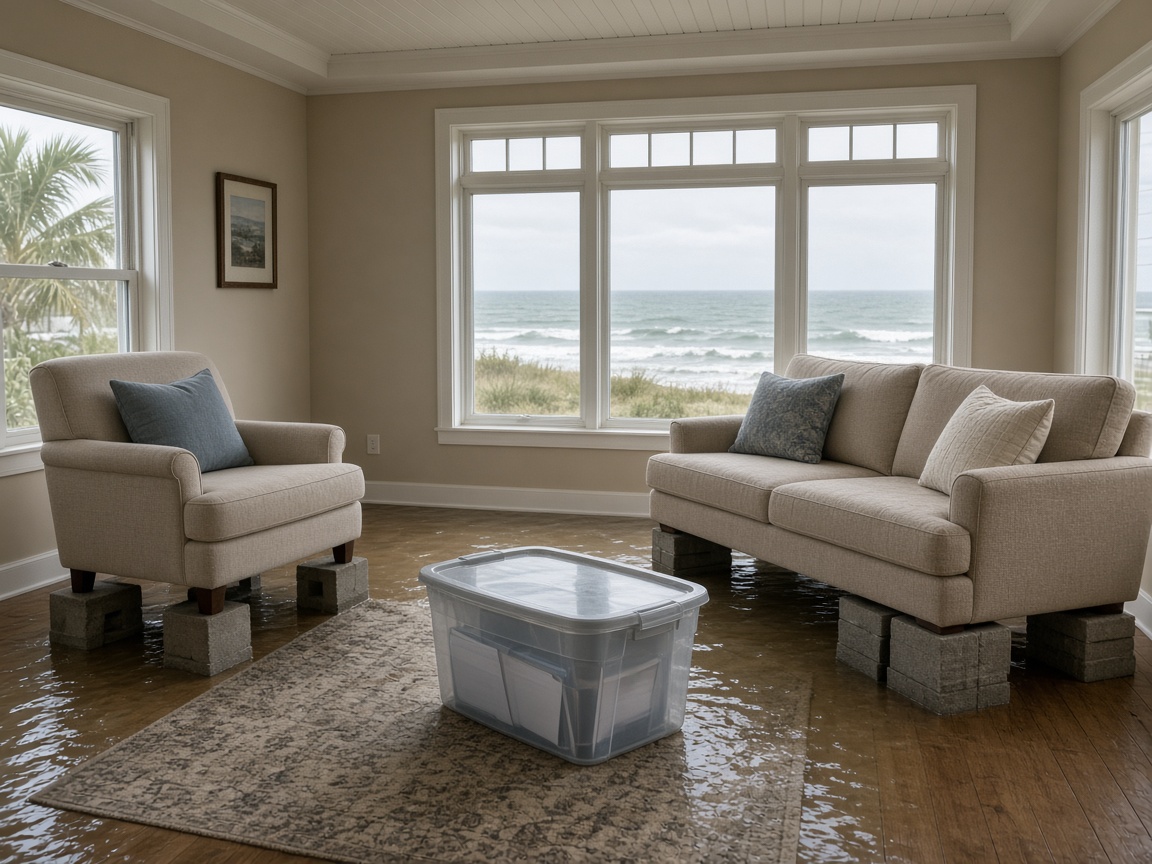
- Move electronics, documents, photographs and irreplaceable items to the highest floor or into sealed plastic bins.
- Unplug electronics and small appliances.
- Roll up area rugs and lift furniture off the floor if you have time and space.
- Stock at least a few days of water, non-perishable food, medications, flashlights, batteries and a battery-powered radio — see Ready.gov's hurricane checklist and flood safety guidance.
- Charge phones and power banks. Fill bathtubs and clean containers with water for flushing and cleaning if supplies are interrupted.
Step 5: Document Everything for Insurance
After the storm passes, you may need proof of what you owned and what condition your home was in before the water came.
- Walk through every room and take dated photos or video, including serial numbers on major appliances and electronics.
- Photograph the exterior, roof, garage and any recent improvements. Keep receipts for major purchases in a waterproof container or in the cloud.
- Store policy numbers and your agent's contact information where you can reach them without power.
- Remember that standard homeowners insurance generally does not cover flood or storm surge damage. Flood coverage comes through the National Flood Insurance Program or a private insurer, and new NFIP policies typically have a 30-day waiting period — so coverage has to be in place well before a storm is named. Learn more at FloodSmart.gov.
Step 6: Stay Safe After the Surge
Many storm-surge injuries and deaths happen during and after the event, not before it. The CDC and the National Weather Service offer clear guidance:
- Never drive or walk through floodwater. As Turn Around, Don't Drown explains, just six inches of moving water can knock an adult off their feet, and a foot of water can float many vehicles. Floodwater may also be electrically charged or contaminated with sewage.
- Don't return home until officials say it's safe. Roads, bridges and power lines may still be dangerous.
- Use generators outdoors only, well away from windows, doors and vents, to prevent carbon monoxide poisoning. Never run a generator, grill or camp stove indoors or in a garage.
- Assume floodwater is contaminated. Wear gloves and boots during cleanup, wash hands often, and throw away food or medicine that touched floodwater. See the CDC's hurricane safety resources.
- Document damage before you clean up for your insurance claim, including waterlines on walls.
If Officials Tell You to Evacuate, Go
No amount of sandbagging or bracing makes a home safe in deep surge. Evacuation is the single most effective way to protect your family. Leave early, take your go-bag, medications and pets, and follow official routes. If you are not in an evacuation zone, plan to shelter in place, away from windows, and stay off the roads so emergency crews can work.
The Bottom Line
Storm surge is water, and water is the hazard that most often makes hurricanes deadly. Before Hurricane Isaias arrives: confirm your evacuation zone, move valuables up, secure the exterior, block the shallow water you can, document your home for insurance, and be ready to leave the moment officials say so. A few hours of preparation today is the best protection your home can get.
About our guidance
Our guides are grounded in publicly available information from official sources such as FEMA, NOAA, USGS and Ready.gov. Information is general in nature — always verify details for your specific property and policy with official sources and your insurer.
Related guides
 InsuranceLender-Placed Flood Insurance: The Expensive Backup If Your Policy LapsesYour lender can force-place flood insurance if your policy lapses — and bill you for it, usually at a higher price. Here is how…Oct 15, 2026Read guide →
 InsuranceWhat Happens to Your NFIP Policy If Congress Lets the Program LapseCongress extended the NFIP through December 11, 2026. If the program lapses, existing policies stay in force and claims get paid…Oct 15, 2026Read guide →
 InsuranceExcess Flood Insurance: Coverage Above NFIP's $250,000 LimitThe NFIP caps flood coverage at $250,000 for the building and $100,000 for contents. If your home would cost more to rebuild,…Oct 15, 2026Read guide →