
Isaias Evacuation Orders: Florida Panhandle and Gulf Coast
6 min read
On this page
- Quick Answer: Isaias Did Not Trigger Gulf Coast Evacuations
- What Actually Happened With Isaias
- How Florida Panhandle and Gulf Coast Evacuation Orders Work
- Which Gulf Coast Counties Carry the Most Surge Risk
- If an Evacuation Order Is Issued for Your Area
- Where to Get Verified Information — Not Rumors
- Build Your Kit Before Hurricane Season Peaks
- One Coverage Gap Most Homeowners Miss
- The Bottom Line
Isaias tracked Florida's Atlantic coast, not the Gulf — so no Panhandle or Gulf Coast county issued evacuation orders for it. Here's what happened, and how to check your zone before the next storm.
Quick Answer: Isaias Did Not Trigger Gulf Coast Evacuations
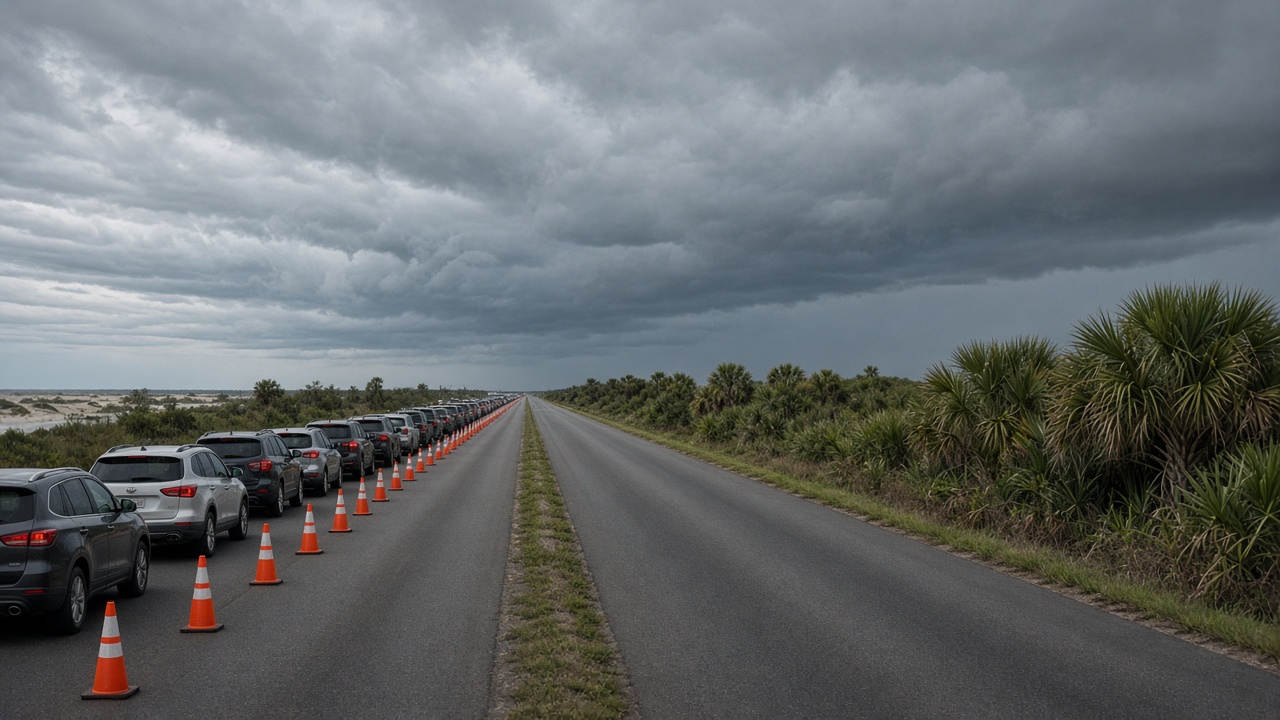
If you're looking for evacuation orders in the Florida Panhandle or along the Gulf Coast because of Hurricane Isaias, here's the honest answer: there weren't any. Isaias tracked along Florida's Atlantic coast in 2020, not through the Gulf of Mexico, and counties from Escambia down to Collier were outside the storm's forecast threat area.
That said, "which counties are under evacuation orders?" is exactly the right question to ask during any hurricane. The answer changes county by county and hour by hour — and it's almost never the answer people assume. Here's how Florida's evacuation system actually works, and how to get verified information for your address.
What Actually Happened With Isaias
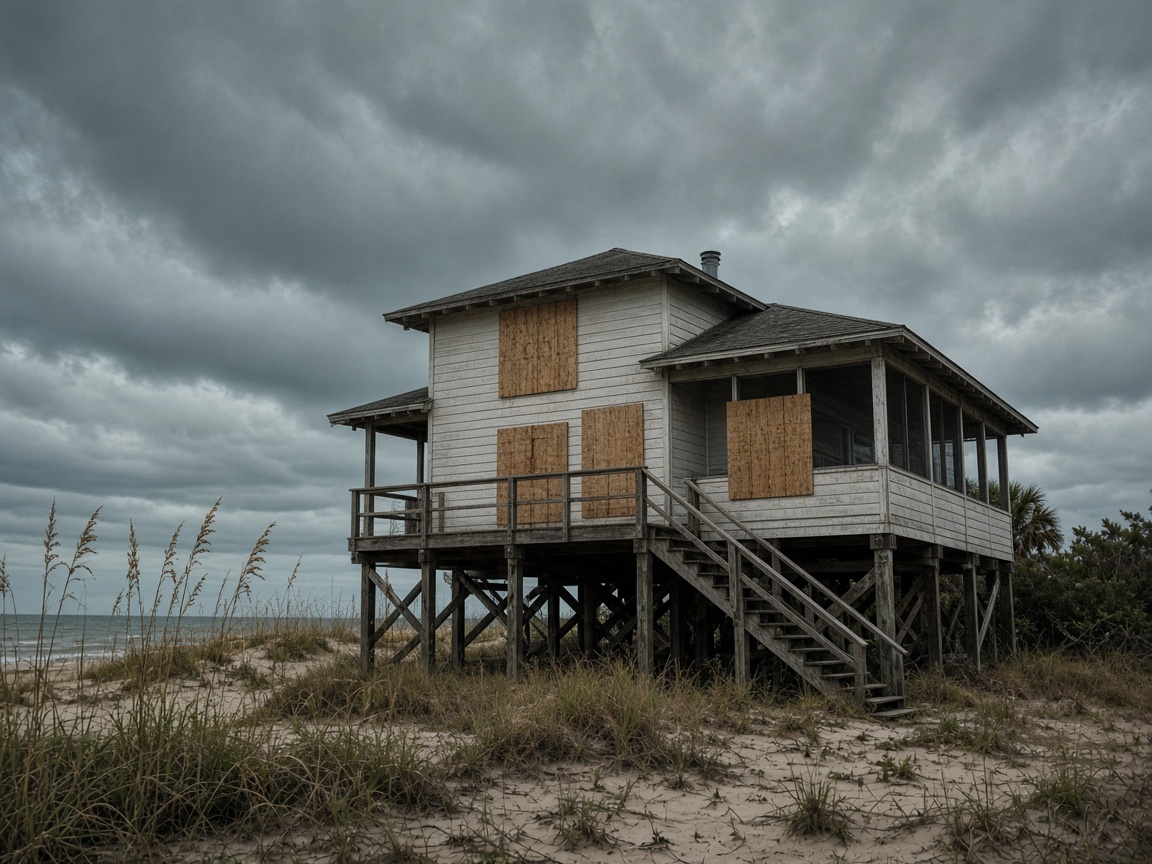
Isaias became a hurricane in late July 2020 and moved through the Bahamas before turning north and skirting Florida's east coast. The National Hurricane Center's forecast track kept the center of the storm offshore of Florida's Atlantic beaches, so the strongest impacts — tropical storm-force winds, heavy rain and localized coastal flooding — fell on the Treasure Coast and Space Coast rather than the Gulf side.
Isaias later made landfall in North Carolina and went on to produce significant flooding and tornado damage in the Mid-Atlantic and Northeast. For the Panhandle — Pensacola, Destin, Panama City, Apalachicola — Isaias was never an evacuation event.
If you're reading this while a different storm is approaching, don't carry this answer over. Track, forward speed, angle of approach and intensity all determine who gets told to leave.
How Florida Panhandle and Gulf Coast Evacuation Orders Work
Evacuations go by zone, not by whole county
Florida counties do not evacuate an entire county at once. They evacuate zones, usually labeled A, B, C, D and E. Zone A covers the areas most vulnerable to storm surge: barrier islands, beaches, low-lying coastal neighborhoods, and land near rivers, bays and inlets. Higher-letter zones are progressively farther inland and higher in elevation.
Orders typically roll out in sequence — Zone A first, then B, and so on — as the forecast worsens. The Florida Division of Emergency Management maintains a statewide Know Your Zone tool that lets you look up your evacuation zone by address. Every Gulf Coast household should look theirs up now, not during a storm.
Your county issues the order
Evacuation orders in Florida are issued by county emergency management officials, often through the county administrator or board of county commissioners. The state coordinates and supports, but the decision is local. That means two neighboring counties can be under completely different orders at the same hour — and the only authoritative source is your own county's emergency management office.
"Voluntary" versus "mandatory"
- Voluntary evacuation: Officials strongly urge people in a specific zone to leave, but it isn't legally required. It's a head start — traffic is lighter and hotel rooms are still available.
- Mandatory evacuation: A legally enforceable order for a defined zone. It doesn't mean police will drag you out of your house, but it does mean emergency responders may not be able to reach you. Agencies typically suspend field operations once sustained winds make road travel unsafe, so calling 911 after that point may not get you help.
Either way, the practical advice is the same: if your zone is called, go early.
Which Gulf Coast Counties Carry the Most Surge Risk
Evacuation planning in Florida is driven primarily by storm surge, not wind. NOAA has long identified storm surge and related flooding as among the deadliest hazards in a landfalling hurricane.
Counties with substantial surge-exposed Zone A areas include Escambia, Santa Rosa, Okaloosa, Walton, Bay, Gulf, Franklin, Wakulla, Taylor, Dixie, Levy, Citrus, Hernando, Pasco, Pinellas, Hillsborough, Manatee, Sarasota, Charlotte, Lee, Collier and Monroe. Within those counties, the highest-risk places are barrier islands, coastal mobile home parks, ground-floor units in low-rise beach construction, and neighborhoods near river mouths and back bays.
You can see your community's relative risk in two official tools: NOAA's National Storm Surge Hazard Maps and FEMA's National Risk Index. The USGS Coastal Change Hazards program also publishes hurricane and shoreline-change forecasts during active storms.
If an Evacuation Order Is Issued for Your Area
Before you leave
- Follow your county's designated evacuation route — not the one your GPS picks, which may send you into congestion.
- Take your go-kit: medications, prescriptions, glasses, phone chargers, IDs, insurance paperwork, cash, pet supplies and water.
- Tell a friend or relative outside the area where you're going and how to reach you.
- Turn your refrigerator and freezer to the coldest setting and freeze water bottles — a full freezer holds temperature longer.
- Secure or store outdoor items that can become projectiles. Shut off propane tanks if instructed.
- Leave early in daylight if you can. Nighttime evacuation on unfamiliar roads is far more dangerous.
If you're outside the evacuation zone
Stay put, but expect power outages and downed trees. Keep the roads clear for people who are evacuating, and don't call 911 or local officials for storm-status information — those lines need to stay open for emergencies. Track conditions through the National Weather Service and your county's emergency management social media accounts.
Where to Get Verified Information — Not Rumors
- Your county emergency management agency — the only source that issues your order. Sign up for its alert system today.
- Florida Division of Emergency Management — statewide status and Know Your Zone lookups.
- NOAA National Hurricane Center — official forecast tracks, watches and warnings.
- Ready.gov — federal preparedness checklists, including hurricane-specific guidance.
- CDC — health and safety guidance for before, during and after a storm.
Be skeptical of screenshots and forwarded maps. A "cone of uncertainty" is not an evacuation order, and a county name appearing in a news graphic does not mean that county ordered anyone out.
Build Your Kit Before Hurricane Season Peaks
Ready.gov recommends a basic disaster kit with at least three days of supplies for every person:
- One gallon of water per person per day, plus non-perishable food
- Battery-powered or hand-crank radio and a NOAA Weather Radio
- Flashlights, extra batteries, first aid kit, whistles
- Prescription medications, glasses, infant formula and pet food
- Copies of important documents in a waterproof bag, plus cash
- Phone chargers, power banks and a written contact list
One Coverage Gap Most Homeowners Miss
Standard homeowners insurance typically does not cover flood damage — including surge-driven flooding. Coverage comes through the National Flood Insurance Program or a private flood policy, and NFIP policies generally take 30 days to take effect. If a storm is already in the forecast, it's too late to buy coverage for that storm. This is a year-round task, not a last-minute one.
The Bottom Line
Isaias did not put Florida's Panhandle or Gulf Coast under evacuation orders — it was an Atlantic-coast storm. But the lesson is durable: evacuation decisions are local, zone-based and made with very little notice. Look up your zone at Florida Know Your Zone, register for your county's emergency alerts, build a three-day kit, and check your flood insurance today. When the next storm turns toward the Gulf, you'll be making decisions from information instead of fear.
About our guidance
Our guides are grounded in publicly available information from official sources such as FEMA, NOAA, USGS and Ready.gov. Information is general in nature — always verify details for your specific property and policy with official sources and your insurer.
Related guides
 InsuranceLender-Placed Flood Insurance: The Expensive Backup If Your Policy LapsesYour lender can force-place flood insurance if your policy lapses — and bill you for it, usually at a higher price. Here is how…Oct 15, 2026Read guide →
 InsuranceWhat Happens to Your NFIP Policy If Congress Lets the Program LapseCongress extended the NFIP through December 11, 2026. If the program lapses, existing policies stay in force and claims get paid…Oct 15, 2026Read guide →
 InsuranceExcess Flood Insurance: Coverage Above NFIP's $250,000 LimitThe NFIP caps flood coverage at $250,000 for the building and $100,000 for contents. If your home would cost more to rebuild,…Oct 15, 2026Read guide →